


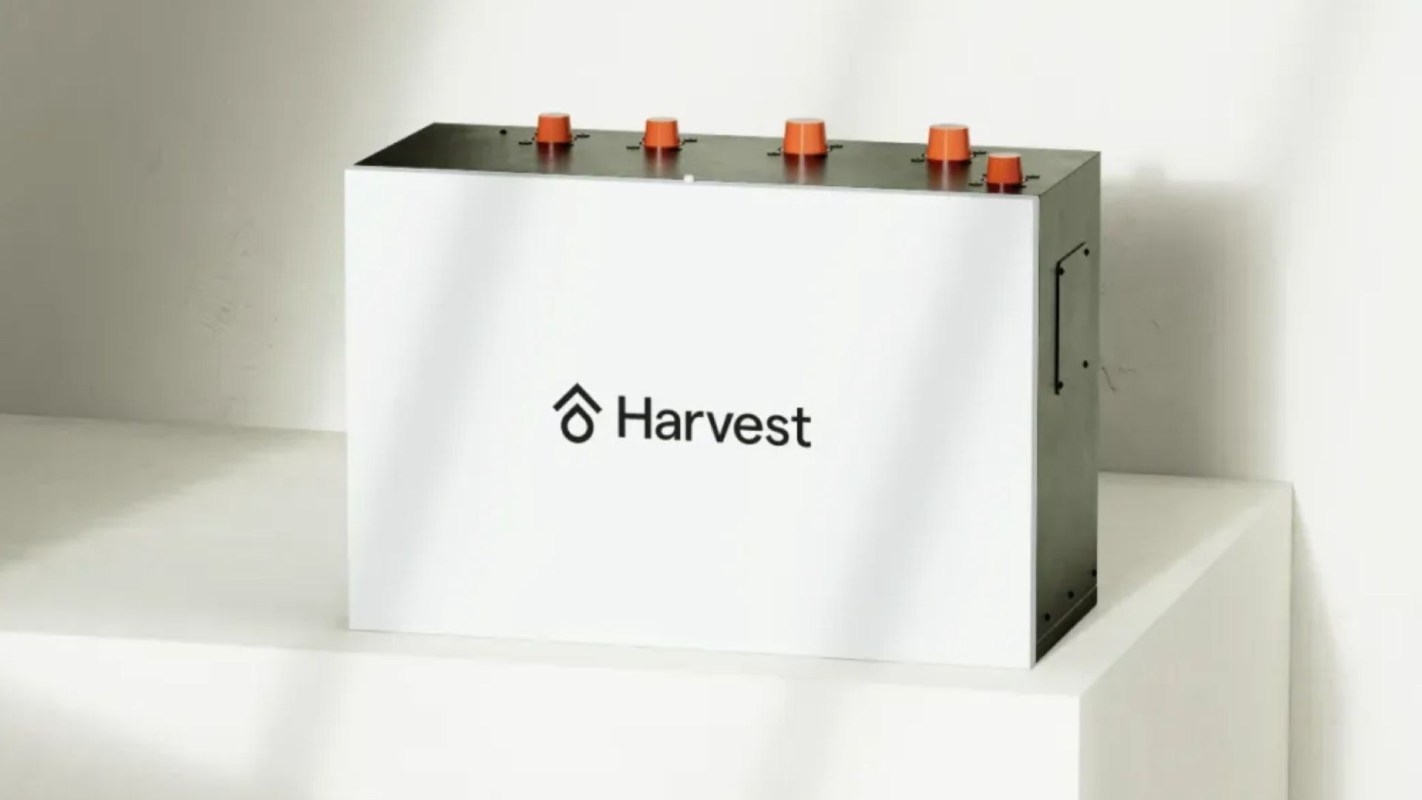
Heat pumps are becoming more and more popular across the country (now outselling gas furnaces and traditional AC units) because they're incredibly efficient at heating and cooling homes — which often leads to lower utility bills and greater comfort. But like any new HVAC system, they're not exactly cheap.
That's why Harvest — an innovative startup that's built a system that combines heat pump technology and a "smart thermal battery" to heat, cool, and provide hot water for a home — has recently started offering a subscription pricing option. It's called the Harvest Comfort Plan, and according to Harvest's cofounder Jane Melia, the cost of monthly payments can actually net out to being less than the cost of the system upfront.
Transparent subscription options for clean energy appliances (like solar panels and heat pumps) are a relatively new option for homeowners, who previously were often looking at having to take out a loan, getting stuck with a high-priced lease, or buying a new system outright and no longer having that money available for other projects or investments.
Thankfully, these subscription models are starting to pop up more in the industry, as brands realize many people want uber-efficient, money-saving appliances, they just don't want to foot a massive upfront invoice in one payment.
So for Harvest, Melia explained the Comfort Plan allows customers to instead use that upfront money for "whatever they need," like college payments, car payments, or other life expenses.
She continued: "And for me, what's exciting is it really opens the market up to a much wider swath of the population … many more people can access cost-effective, … comfortable electric systems [and lower bills], and that's what [our] work is all about."
Plus, "you don't have to wait 10 years to save up the money," she said.
Melia spent time with The Cool Down recently to chat through how the subscription model works for homeowners, as well as the nitty-gritty on things like maintenance, moving, and monthly bills.
What's the cost breakdown for a Comfort Plan subscription?
Melia explained that homeowners interested in the Harvest Comfort Plan pay a low monthly fee (the exact figure depends on your home's setup, but it's typically a few hundred dollars) and in return, they get the installation of a brand-new Harvest system to heat and cool the whole home and also provide hot water all in one efficient system.
There's no upfront cost at all. In addition, customers don't have to shell out for maintenance and repairs — that's included in the monthly subscription price.
And that doesn't even include the monthly bill savings that customers then enjoy by using this next-gen tech system. Harvest reports that the 3-in-1 system can lower energy bills by as much as 30% each month.
It almost feels too good to be true. But Melia assured us the math works out on this one for customers.
"This is not a scam," she told us, pointing to it as just a way to meet customers where they are by essentially getting paid for their work over time rather than upfront. "This is useful. This helps [users] electrify today rather than 10 years' time."
Who's in charge of annual maintenance and repairs?
Like we said above, customers on the subscription plan don't have to shell out when something breaks. Nor for annual maintenance to keep things running smoothly, which typically costs at least a few hundred dollars every year.
Instead, maintenance and repairs are bundled into the monthly subscription cost (as are the installation costs).
What happens if a homeowner wants to move during the program?
Melia said this is one of the more common questions they get about the subscription option, and there's an easy answer.
"If you sell your house," she explained, "you can either buy it out [the system], you can transfer it to the next owner, or the next owner can buy it out."
"It's super flexible, and customers like that," she continued. "I've had people say, 'Oh, you know what, I wasn't getting a Harvest system, because I may be selling my house in six or seven years' time,' and now they say, 'Well, no, it doesn't matter, I'm just going to pay for the number of years I'm here, and the next homeowner could take over the lease for after that.'"
And after the subscription terms end? What happens then?
Melia noted that the Comfort Plan is a 10-year term, and after that, customers can buy the system for a fee that's less than or equal to $1,000.
"So it's a relatively modest amount," she said, "and then it is all yours. The system carries on working there, like 10 to 15 years, and you're still getting those reduced bills."
"Another benefit there is [because] the maintenance is included for those 10 years, what you're buying at the end of that agreement is something that's been actually taken very well care of, which I don't think a lot of people could say typically," she added.
What sets Harvest's battery apart from other HVAC options?
One of the main reasons Harvest's Comfort Plan is so reasonably priced month-to-month is because of how tax incentives have shaken out in the past few years. Whereas federal residential tax incentives are no longer available for clean energy technologies like heat pumps, the corporate version hasn't expired. And Harvest's subscription option can take advantage of that tax break, passing it along in the pricing.
All of which means that paying a monthly fee to use Harvest's HVAC system turns into a really good deal, likely better, in fact, than paying upfront initially.
"The tax credit is going towards the technology," Melia said, "which is allowing homeowners to electrify while reducing their bills, but at the same time being grid-friendly."
Because the Harvest system includes a "smart thermal battery," it can store energy from the grid when it's cheapest and most likely to be powered by renewables (like wind and solar). Then, throughout the day it can use that energy for heating, cooling, and hot water as needed.
And it's this battery component that allows for the great subscription pricing (in turn because of the corporate tax incentive). Many other clean energy appliance companies can't use this tax break because they're creating heat pumps that don't include the thermal energy storage element.
What else is Harvest up to these days?
Melia noted that the team has installed nearly 600 systems since launching a few years ago. "We're … hoping to hit the 1,000th this year," she said.
They've installed systems mainly in California, as well as projects in Massachusetts, Washington, Oregon, Colorado, and New Mexico.
She noted that the subscription program will roll out in the Bay Area to start, and expand from there.
Melia also added that their tech team continues to upgrade the Harvest system, including new features like a "boost mode" that helps homeowners prepare for planned power outages (especially during wildfire season) by loading up on hot water in that thermal battery, so there's hot showers for multiple days even without power.

Get TCD's free newsletters for easy tips, smart advice, and a chance to earn $5,000 toward home upgrades. To see more stories like this one, change your Google preferences here.






