


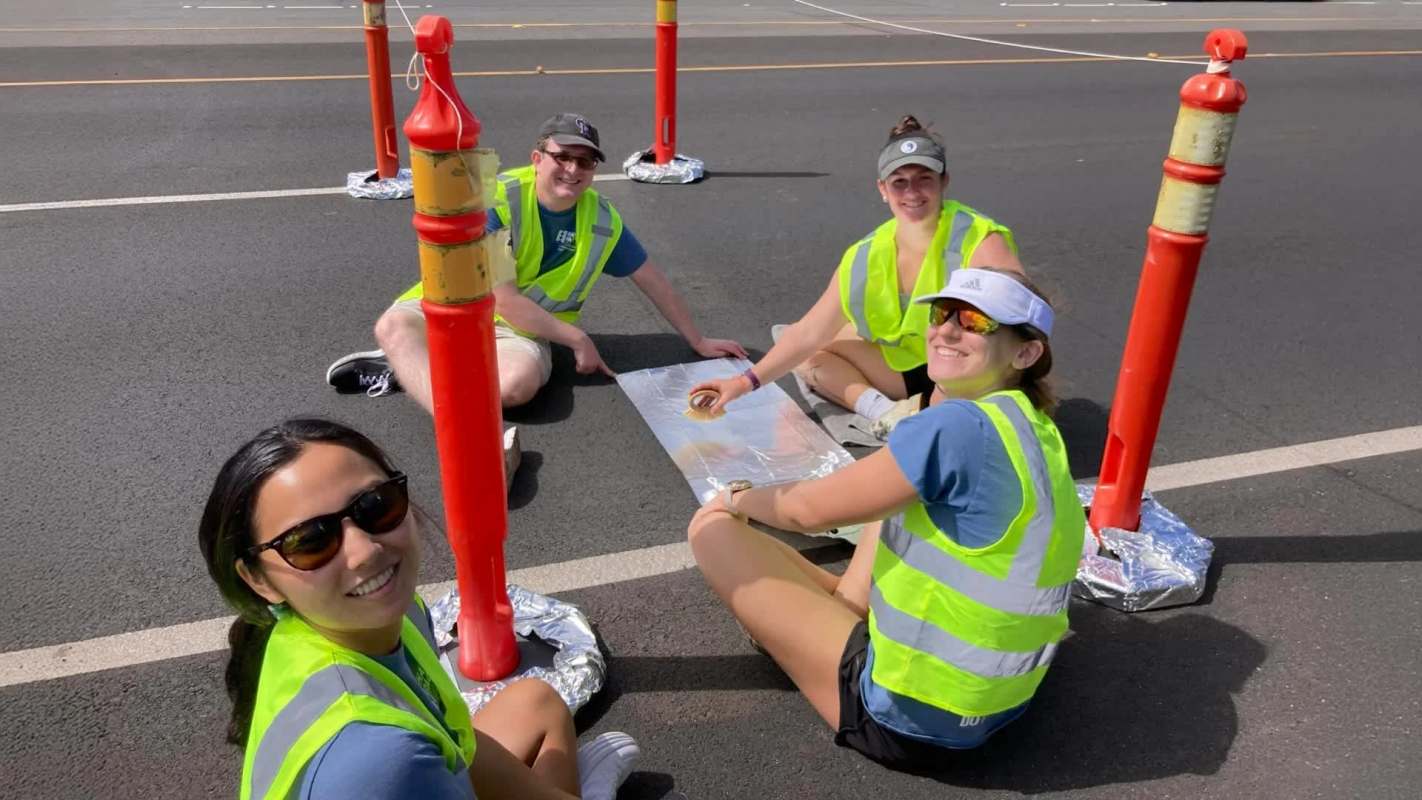
Part of Hawaiʻi's growing plastic waste stream, from discarded fishing gear to household plastics, could eventually be put to work in pavement.
What's happening?
Since 2020, Hawaiʻi has largely built its roads with polymer-modified asphalt, which is valued because it is more flexible and more resistant to cracking and water damage in Hawai'i's tropical climate, according to ScienceDaily.
Researchers decided to investigate whether they could incorporate abandoned fishing gear and plastic waste into asphalt roads to move toward a more circular system.
To test the concept beyond the lab, the Hawaiʻi Department of Transportation partnered with Jennifer Lynch, director of the Center for Marine Debris Research.
For the field trial on Oahu, a paving contractor resurfaced sections of a neighborhood street with three formulas: the usual styrene-butadiene-styrene mix, one blended with recycled polyethylene from Honolulu's residential recycling system, and one made with polyethylene taken from abandoned fishing nets.
Early results are reportedly promising, showing that these hybrid roads don't appear to increase the rate of microplastic dust compared to conventional pavements.
TCD Picks » Quince Spotlight
💡These best-sellers from Quince deliver affordable, sustainable luxury for all




Why does it matter?
The idea could address several concerns at once.
Hawaiʻi faces high costs to ship waste elsewhere, has limited landfill capacity, and experiences a steady flow of marine debris onto its shores and into nearby waters. If fishing nets and household plastics can be used in long-lasting pavement, which could help reduce disposal costs, support cleaner coastlines and local wildlife, and cut demand for virgin plastic.
Lynch emphasized the scale of the problem, saying, per ScienceDaily, "Foreign plastic derelict fishing gear is the largest contributor of Hawaiʻi's marine debris problem."
She added that CMDR's Bounty Project "has removed 84 tons of large, derelict fishing gear" from the ocean.
What are people saying?
Jeremy Axworthy, who works with Hawaiʻi Pacific University's Center for Marine Debris Research, presented the findings at the spring meeting of the American Chemical Society.
"By reusing plastic waste that is already in Hawaiʻi we can reduce the environmental and economic impacts of transporting waste plastics from the islands, incinerating it, or dumping it in Hawaiʻi's overflowing landfills," Axworthy said, per ScienceDaily.
Now, researchers will investigate whether the roads are durable enough for the long term. Lynch was optimistic that their work would make plastic recycling a more practical waste management solution. To put the scale of the problem into context, Greenpeace warned that as little as 5% of plastics were recycled in the U.S.
"Some people think plastic recycling is a hoax — that it doesn't work; it's too challenging," Lynch said, per ScienceDaily. "But this work demonstrates that recycling can work when society prioritizes sustainability."

Get TCD's free newsletters for easy tips, smart advice, and a chance to earn $5,000 toward home upgrades. To see more stories like this one, change your Google preferences here.






