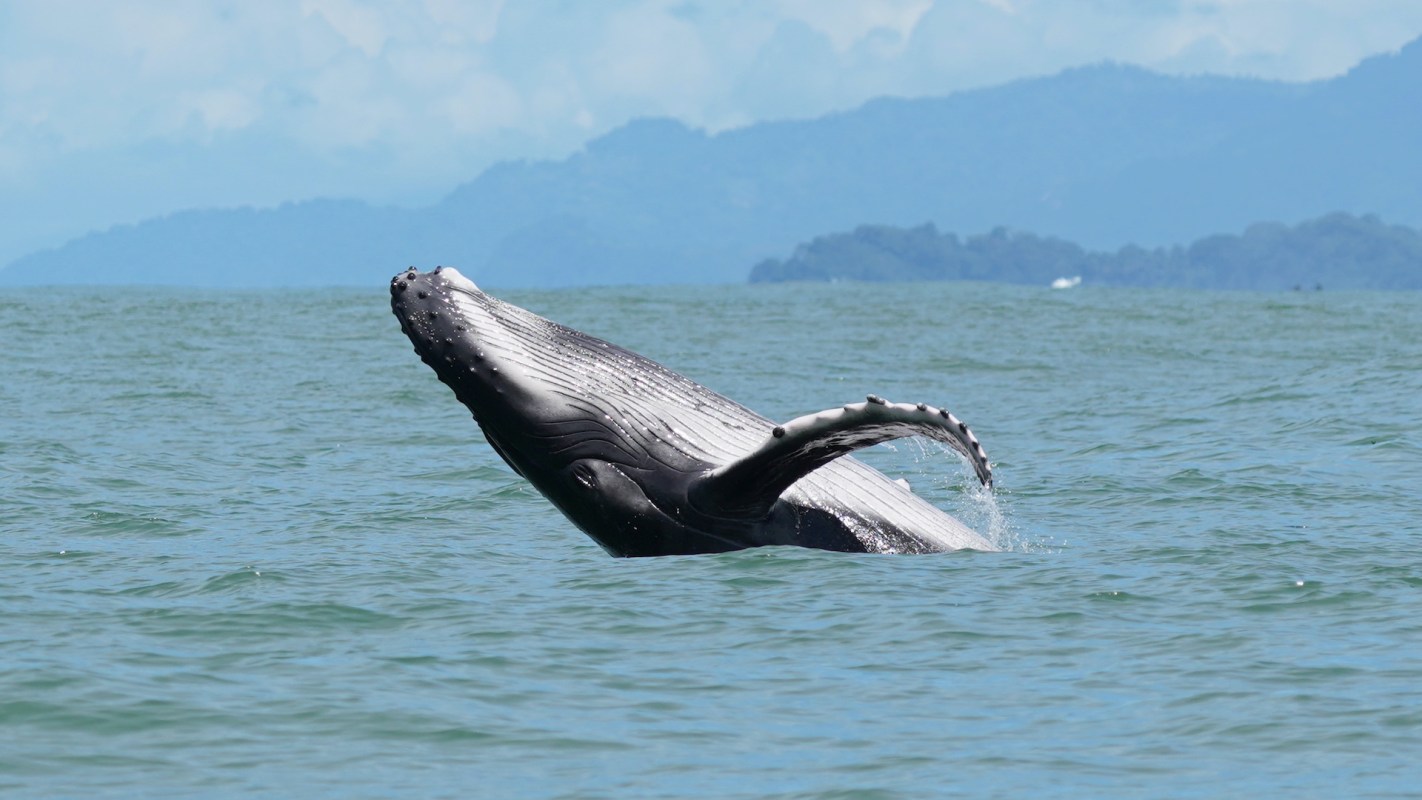
Luban, a female humpback whale from a tiny endangered population centered off Oman, made an unexpected 7,000-kilometer (4,350-mile) round trip across the Arabian Sea to India and back.
For the scientists tracking her, the route was a major surprise. Arabian Sea humpback whales number only about 82 and are known for staying in local waters rather than roaming far from home.
Researchers say this was the first time such a journey was directly recorded in that genetically distinct population.
That makes the voyage especially notable for a group already considered highly vulnerable.
The movement could push scientists to rethink how these rare whales live and survive.
What happened?
The paper, published in Frontiers in Marine Science, drew on 14 satellite tags deployed from 2014 to 2017 and found that Luban was the whale that broke with expectations.
TCD Picks » EDF Spotlight
💡EDF's Vital Signs newsletter delivers stories about game-changing solutions close to home and around the world




Discover Wildlife noted that tracking data showed her traveling from Oman to Goa, remaining near India's coast for about a month, and then heading back, countering the population's "homebody life."
Study author Andrew Willson, a marine scientist and founding director of Future Seas Global, said the team had seen only brief snapshots of the whales' lives.
"Leading into this study we had so many questions about the daily life of the mysterious humpback whales found in the Arabian Sea, of which we would only get fleeting glimpses during long, hot hours of boat surveys," Willson said in a news release, per Discover Wildlife.
"Tagging these whales allowed us to peel back the lid of the sea and check in online to see where they were each day," he added.
TCD Picks » Quince Spotlight
💡These best-sellers from Quince deliver affordable, sustainable luxury for all




Why does it matter?
Arabian Sea humpback whales are unusual even among humpbacks.
Researchers say this population separated from other humpback whales about 70,000 years ago, and the Arabian Sea's food-rich waters usually spare them from making the long seasonal migrations common for other populations.
Luban's trip may suggest feeding or breeding activity that scientists have not directly observed before or offer clues about how the whales react as environmental conditions change.
Study co-author Suaad Al Harthi, executive director of the Environment Society of Oman, said the region has already shaped the whales in uncommon ways.
"The Arabian Sea provides unique conditions, allowing a once-migratory species to completely change its ecology. It's a testament to how extraordinary the region is," Al Harthi said, according to Discover Wildlife.
Knowing more about where these whales go could help reduce risky encounters with fishing gear and ship traffic, both major dangers for such a fragile population.
More detailed tracking may also improve marine planning, balancing wildlife protection with safer, more sustainable coastal livelihoods.
What are people saying?
Willson said, as Discover Wildlife reported, that Luban's route stood out because most tagged whales "stayed within a very restricted home range along the coast of Oman."
He also noted it is reassuring when researchers spot these whales again after periods out of sight.
"It's always a relief when we make resightings of these amazing whales given the limited size of the population," he said.
Aida Al Jabri, a marine expert at the Oman Environment Authority, said the whales have long held an important place for local communities.
"Coastal fishing communities in Oman have revered and respected these whales for many generations," Al Jabri said, per Discover Wildlife.
Al Harthi said the result also carries weight as the changing climate increasingly affects the whales' habitat.
"We hope their adaptability will help ASHWs in uncertain times when their domain is influenced by accelerated climate change," she said, according to Discover Wildlife.

Get TCD's free newsletters for easy tips, smart advice, and a chance to earn $5,000 toward home upgrades. To see more stories like this one, change your Google preferences here.