


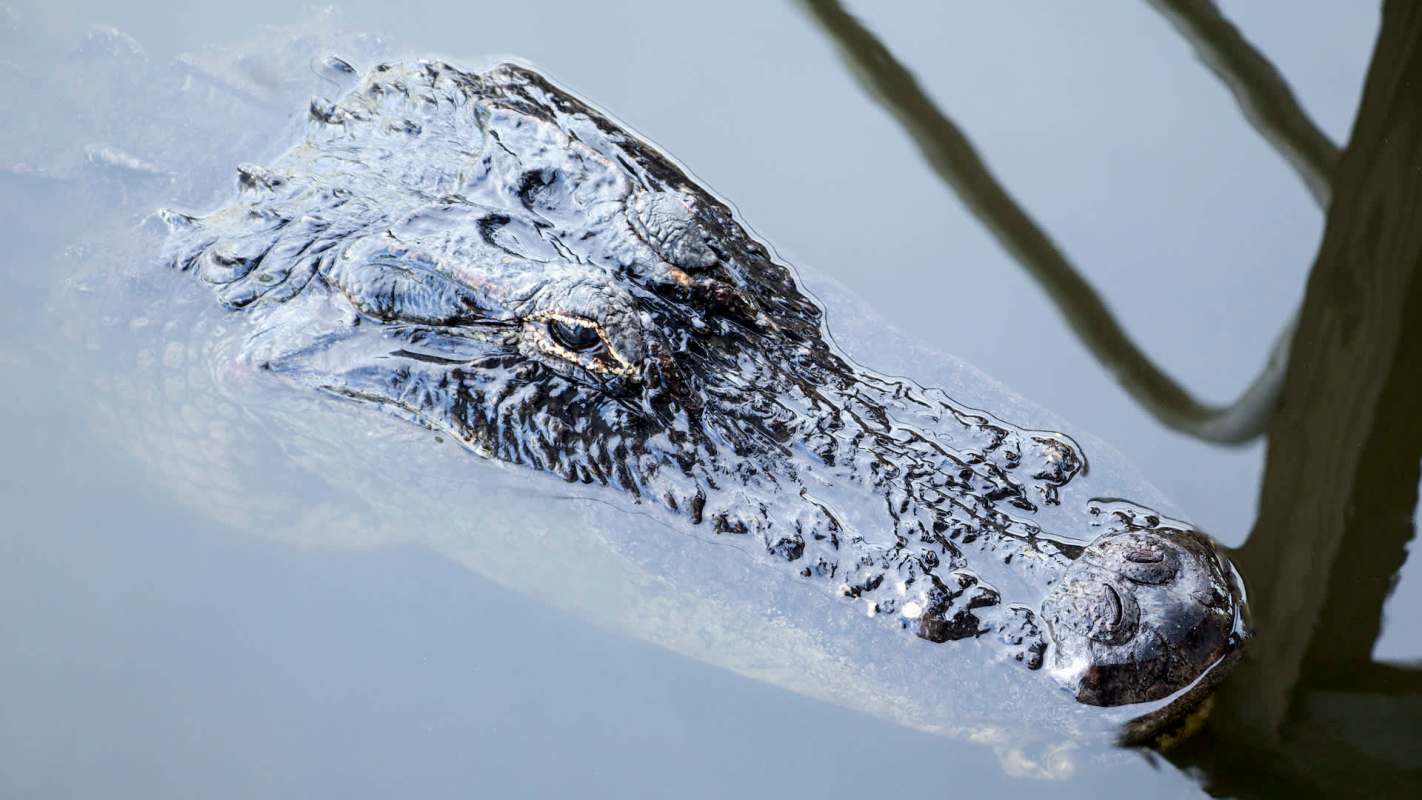
In a striking example of how suburban homes and wild animals can collide in Florida, a homeowner stepped outside to find a 7-foot alligator floating in the backyard pool.
The video has drawn attention not only because of where the animal ended up, but also because deputies and a professional trapper had to remove it.
What happened?
According to Fox 35 Orlando, the incident happened Saturday, May 31, in the Pinecrest Lakes neighborhood of Jensen Beach.
Deputies with the Martin County Sheriff's Office were called about an "uninvited pool crasher," the agency said, and on arrival found a 7-foot alligator "lounging in the backyard pool, completely unfazed by its unexpected audience."
Video posted by the sheriff's office shows deputies working alongside professional trapper Matt Hines to get the animal out with an animal control pole. During the effort, the gator swings its head sharply from side to side while trying to break free, a move officials described as a "death spiral," an alligator's natural defense tactic.
Officials added that it was the area's second call of the day involving an alligator in a residential pool. They said the animal was safely removed and may have entered the yard by climbing over the backyard fence or slipping beneath it.
TCD Picks » Quince Spotlight
💡These best-sellers from Quince deliver affordable, sustainable luxury for all




Why does it matter?
In Florida, neighborhoods, roads, ponds, and fenced yards are often built near wetlands and waterways, meaning people and large reptiles are sharing space more frequently, particularly during mating season.
The sheriff's office reminded residents that May and June are peak mating months for alligators, when, as Fox 35 Orlando reported, they can become more active and wander into places they normally avoid, including private backyards.
That can pose a risk for homeowners, pet owners, and anyone spending time outside near water.
"Alligators are wild animals and can be extremely dangerous if provoked," the Martin County Sheriff's Office said. "As you can see by the powerful 'death spiral,' an alligator's natural defense tactic, it is not safe to attempt to remove a gator unless you are a trained professional."
Officials said anyone who spots a gator in the wrong place should keep their distance and seek assistance, rather than trying to handle the animal themselves.
What are people saying?
The Martin County Sheriff's Office said residents should stay alert during mating season, when alligators are more likely to roam beyond their usual habitat.
Authorities also stressed that if an alligator appears to threaten "people, pets or property," residents should contact the Florida Fish and Wildlife Conservation Commission's State Nuisance Alligator Hotline, aka SNAP.

Get TCD's free newsletters for easy tips, smart advice, and a chance to earn $5,000 toward home upgrades. To see more stories like this one, change your Google preferences here.







