


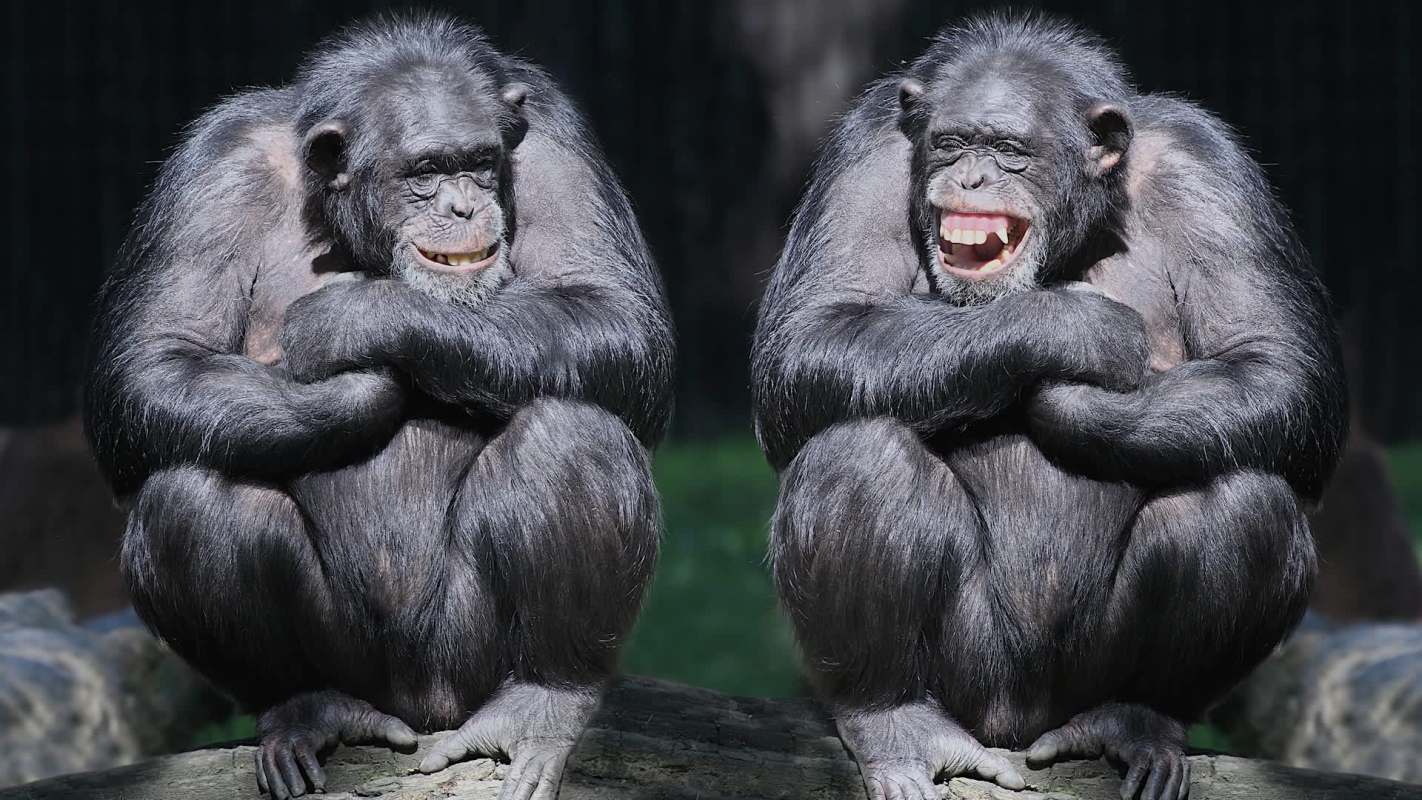
The next time you crack up with friends, you may be hearing something far older than you realize.
Researchers involved in a new U.K. study say human laughter still resembles the giggling of other great apes, with that similarity dating back to a shared ancestor from about 15 million years ago.
What happened?
As ABC News reported, the researchers returned to archival recordings from 13 captive great apes: gorillas, orangutans, chimpanzees, and bonobos.
For the human side of the comparison, they collected recordings of four young children laughing at home while playing and being tickled.
Across both groups, the sounds followed a similar rhythm, with bursts that arrived at regular intervals.
The researchers said that kind of timing is more likely to reflect shared evolutionary roots than chance.
TCD Picks » Quince Spotlight
💡These best-sellers from Quince deliver affordable, sustainable luxury for all




"In a way, we are very similar to other great apes because we've been laughing in a similar way for 15 million years," study author Chiara De Gregorio, a primatologist at England's University of Warwick, said, per ABC News.
The findings appeared in the journal Communications Biology.
Why does it matter?
The study adds to a broader scientific question about how laughter evolved and what it can reveal about human communication.
Because sounds do not fossilize the way bones do, scientists have to reconstruct their history by comparing living species, which makes laughter a useful clue.
Many animals make sounds during play, but this study suggests great ape giggles may match human laughter more closely than other cases scientists have examined.
Rats, for example, can make laughter-like sounds when tickled, but those come in the form of ultrasonic squeaks.
At the same time, the research pointed to what sets human laughter apart.
Human laughs are faster, more complex, and more shaped by social context, whether that means a polite chuckle among colleagues or a loud, uncontrollable laugh among close friends.
The research could also give scientists another way to understand how speech developed over time.
What are people saying?
Brittany Florkiewicz, who studies animal communication at Lyon College and was not involved in the research, said more comparisons across species could help scientists "understand what makes us uniquely human but also what is similar between humans and other animals."

Get TCD's free newsletters for easy tips, smart advice, and a chance to earn $5,000 toward home upgrades. To see more stories like this one, change your Google preferences here.






