


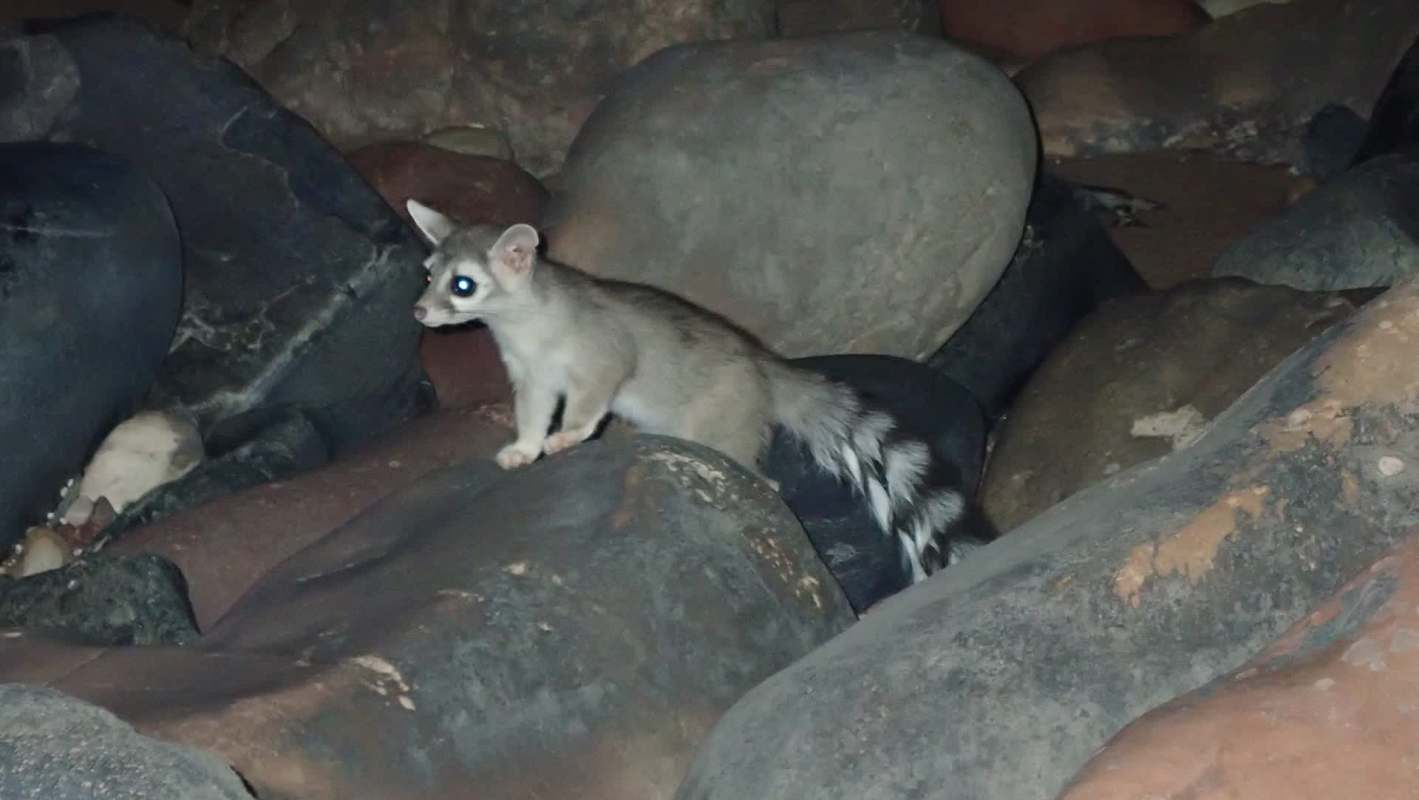
One of Oregon's hardest-to-find mammals made a fleeting appearance on a trail camera in southern Oregon: a ringtail, also known as a miner's cat.
Its appearance was especially notable because the species is so rarely seen, and it showed up on forestland that has been managed for decades to reduce future wildfire risk.
What happened?
The footage came from the Epstein Family Forest near Ashland. Good Good Good reported that Bill and Sarah Epstein bought the 400-acre property in 1987, after the 1973 Hillview Fire devastated the region. Roughly half the property had already been leveled by the blaze.
The short video shows the ringtail rushing through the brush, stopping to raise its head, and then slipping back into the trees.
According to Good Good Good, Oregon lists the North American ringtail as a "sensitive" species. Because it is nocturnal, the mammal is notoriously difficult to spot in the wild.
Early colonial settlers and coal miners reportedly kept ringtails in cabins to catch rodents, which helped earn them the nickname "miner's cat," as noted by mammalogist Lowell Sumner. The forest lies within the Oregon Conservation Strategy's Siskiyou Crest Conservation Opportunity Area, a region home to 16 rare and threatened animal species.
TCD Picks » Quince Spotlight
💡These best-sellers from Quince deliver affordable, sustainable luxury for all




Why does it matter?
After buying the land with the intention of turning it into a forest preserve, the Epsteins realized that protecting it would also mean actively managing it to lower the risk of another major wildfire. Over the years, that work has included reducing ignition risk on public trails, thinning dense forest areas, and using prescribed burns to create a more fire-resistant landscape.
That kind of management can help protect the Ashland wildland-urban interface from high-intensity fires while also preserving habitat, storing carbon, and supporting biodiversity.
Researchers only recently learned that the species uses hollows in living trees and standing dead trees, known as snags, for shelter and dens, according to Good Good Good. A healthier forest with a mix of habitat features can give rare animals a better chance of survival while also contributing to safer, more resilient landscapes.
The Epstein family has also partnered with the Pacific Forest Trust to place the land under a conservation easement, helping ensure the forest remains protected in perpetuity.
What are people saying?
Researchers at Oregon State University said, "In 1988, they began implementing forest management activities with the primary goal of reducing both the likelihood of fire ignition and the potential for high-intensity fire behavior," Good Good Good reported.
They added that the shift came because "almost all the values of importance to the Epsteins, if not the entire Ashland wildland-urban interface area, would be negatively affected by another large, high-severity wildfire."
The Epsteins said the permanent protection offers peace of mind: "It is a profound comfort to know the goals we have for our property will be steadfastly managed and protected in perpetuity. With this conservation easement, we will be preserving 400 acres of natural carbon sequestering woodland, assuring protection of wildlife habitat and a riparian zone replete in biodiversity."

Get TCD's free newsletters for easy tips, smart advice, and a chance to earn $5,000 toward home upgrades. To see more stories like this one, change your Google preferences here.







