


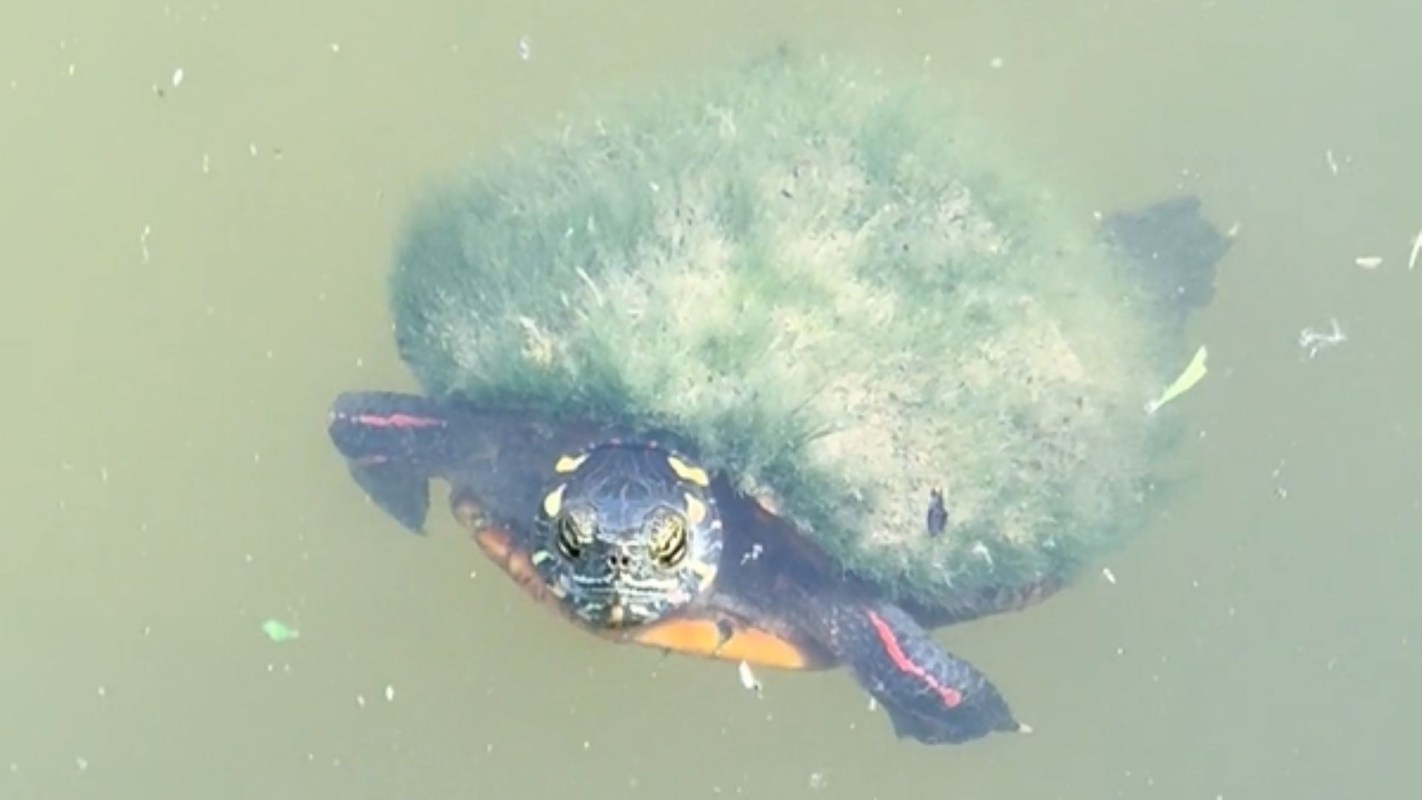
An unusual turtle video from Texas is gaining some attention online, with the animal appearing to wear a thick coat of green algae on its shell.
The heavy algal growth gave the turtle built-in camouflage, but it also led to a real discussion about whether so much buildup could be a problem for the animal.
What happened?
A Reddit user from Live Oak shared the clip that shows a turtle so heavily coated in algae that it barely registers as a turtle at first.
(Click here if the embedded video does not play.)
The reaction in the comment section was equal parts amusement and curiosity.
Why does it matter?
People in the thread noted that a thin film of algae could help a turtle disappear into the water and stay hidden from predators, which is why some saw the shell as a natural form of camouflage. But they also argued that such dense growth could have drawbacks.
TCD Picks » Quince Spotlight
💡These best-sellers from Quince deliver affordable, sustainable luxury for all




According to commenters, a thick layer like this could reduce the ultraviolet exposure a turtle gets, which helps keep the shell strong. It could also make swimming and body temperature regulation harder and create more space for bacteria to build up.
One user wrote that the growth is overall likely negative for the small animal.
"Turtles need to bask in the sunlight to regulate their temperature, and this would greatly hinder it. They should probably go to a rehab to get this off and allow them time to heal if possible," one user wrote.
"Turtles usually can shed their scutes to prevent this; maybe this little guy has a health issue," another said.
The discussion moved back and forth between jokes and concern, with one commenter describing the algae as "a little ghillie suit," a fitting comparison for how well the turtle appeared hidden.
However, despite the jokes, if you encounter a similar situation in your region, it may be best to contact local wildlife professionals to see whether the animal needs medical attention.

Get TCD's free newsletters for easy tips, smart advice, and a chance to earn $5,000 toward home upgrades. To see more stories like this one, change your Google preferences here.







