


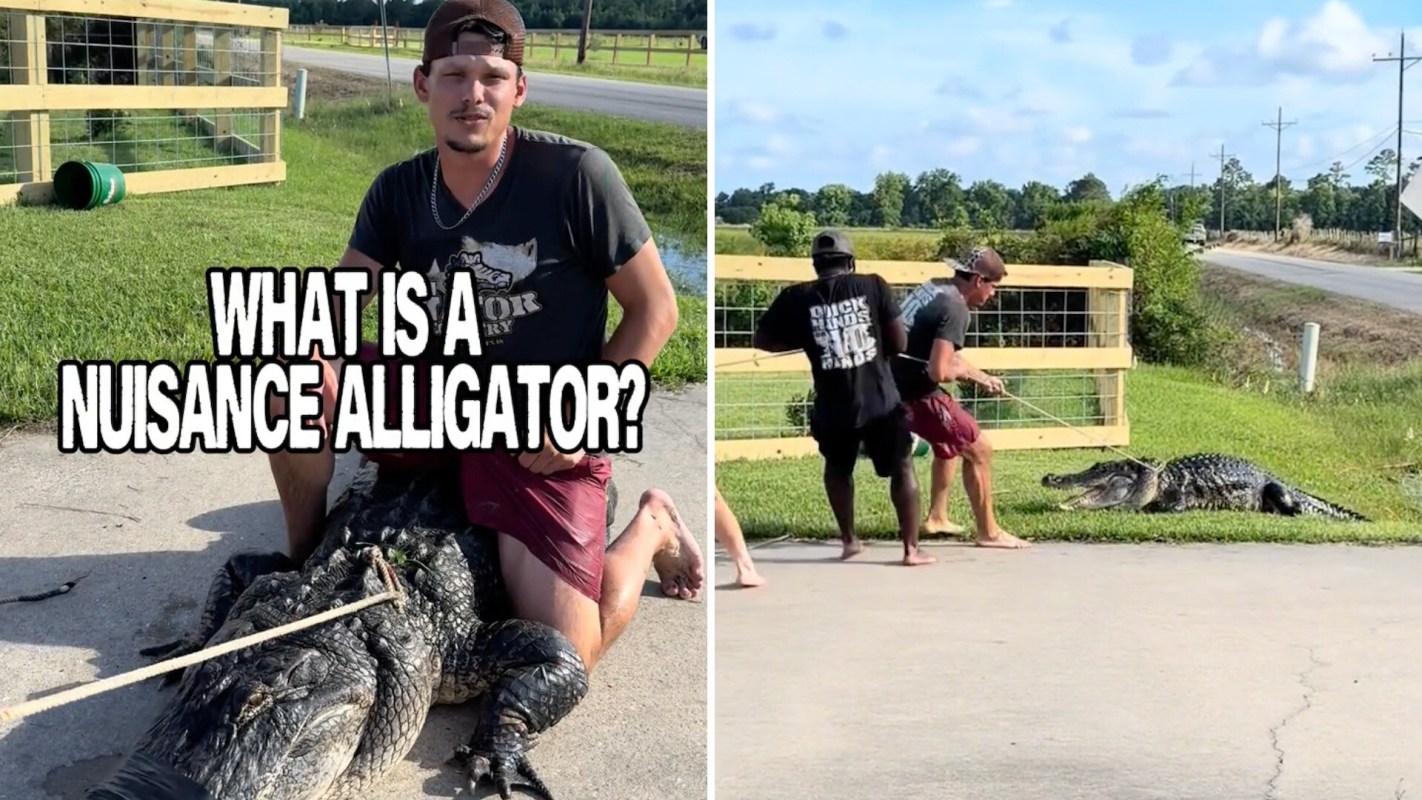
Trash collection in one neighborhood was interrupted after an extremely large alligator settled into a culvert, scaring away the workers.
The animal, identified as "Hector the Gator," and estimated to be more than 10 feet long, was positioned where sanitation workers needed access to residents' trash cans.
What happened?
The video, shared by Gator Country (@gator_country_beaumont_texas) on Instagram, shows an ordinary suburban day grinding to a halt when wildlife and human infrastructure collided.
In the caption, the group wrote: "Meet Hector the Bone Collector — The nearly 11-foot alligator that made a neighborhood culvert his weekend hangout spot."
"We got the call after the trash service informed the homeowners a gator was guarding their trash cans," it added.
The video then showed the removal, with Hector thrashing and resisting efforts to take him out of the culvert. At one point, Hector even performed what appeared to be a death roll, despite not having prey in his mouth.
TCD Picks » Quince Spotlight
💡These best-sellers from Quince deliver affordable, sustainable luxury for all




Why does it matter?
So-called "nuisance alligators" become accustomed to humans or getting fed by them, raising the likelihood of a dangerous encounter.
According to the Florida Fish and Wildlife Conservation Commission, these nuisance alligators are also larger than 4 feet in length, because ones smaller than that are not as big of a threat to humans.
Alligators are native to aquatic environments, but neighborhoods, stormwater systems, roads, and canals can reshape those landscapes in ways that bring people and predators into closer contact.
A gator in a residential culvert can disrupt basic services, raise safety concerns for sanitation workers and residents, and put the animal at risk if people get too close or try to intervene on their own.
In this case, the safer outcome came from professionals handling the removal.
Human expansion into wetlands and the creation of artificial waterways can make encounters like this more common.
When encounters do happen, wildlife experts generally recommend keeping your distance and calling trained responders rather than escalating the situation. This is especially true when the animal involved is a massive alligator.

Get TCD's free newsletters for easy tips, smart advice, and a chance to earn $5,000 toward home upgrades. To see more stories like this one, change your Google preferences here.







