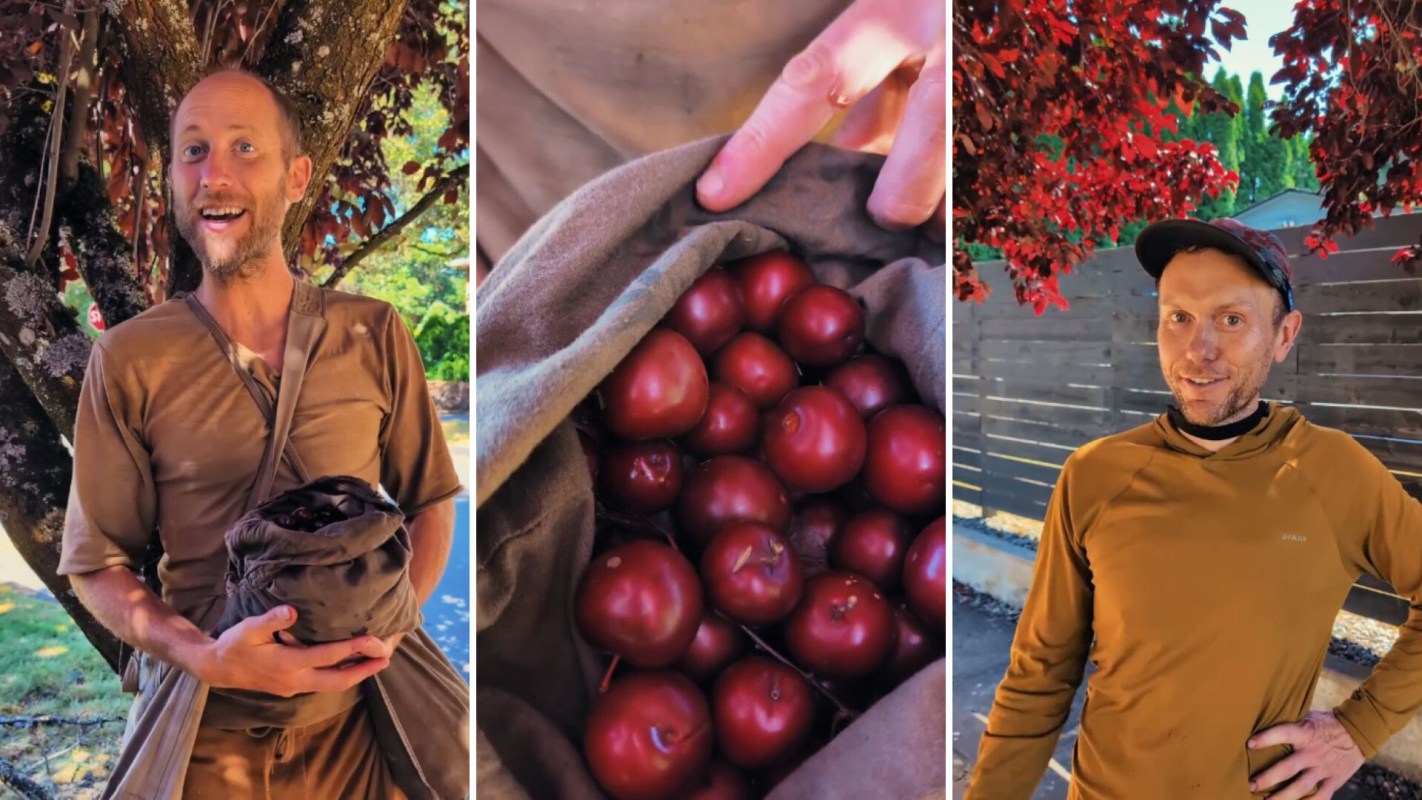
Free fruit may be closer than many shoppers realize.
One longtime forager is now drawing attention to a simple digital tool that can help people find publicly accessible fruit trees right in their own neighborhoods.
What's happening?
While documenting a yearlong attempt to gather all of their food and medicine through foraging, an experienced forager highlighted Falling Fruit, a website and app that maps where edible plants are in cities and towns across the world, so that people can spend less on produce.
On Instagram, the forager, Robin Greenfield, wrote, "Find fruit trees to forage from in your community with the Falling Fruit website and app!"
Greenfield added that the resource "has been a helpful tool for me for the last decade… Day 251 of foraging 100% of my food and medicine!"
Users can search a map for fruit trees and other edible plants growing in public spaces or in places where harvesting is allowed, making it easier to find food that might otherwise go unnoticed.
TCD Picks » Quince Spotlight
💡These best-sellers from Quince deliver affordable, sustainable luxury for all




In the clip, Greenfield explained that "If you want to find fruit that is growing freely and abundantly in your community, a great place to start is with Falling Fruit… We can all do this in our communities."
Why does it matter?
For many households, fresh fruit is one of the first grocery items to start feeling expensive. A tool that points people toward free, locally available produce can help stretch budgets without requiring a major lifestyle change.
It also addresses a waste problem. In many communities, fruit falls from trees and rots because no one knows it is there, no one is able to use it in time, or people assume it belongs to someone else. A shared map can help connect available food with people who can actually use it.
Eating fruit that is already growing nearby can reduce reliance on store-bought produce that has to be packaged, transported, and refrigerated before it reaches shoppers.
People interested in this should confirm that fruit is truly public or that permission has been given, and avoid overharvesting. It's also kind to leave enough for others and for wildlife.
If you want to try it, start by searching your area on the website and looking for easy-to-identify produce such as apples, pears, plums, or berries. Reading any notes attached to a listing can help clarify whether the plant is public, in season, or best accessed at a certain time.
Bring a reusable bag, inspect fruit carefully, and take only what you can use. Washing everything thoroughly and learning basic food-safety practices are important steps, especially when harvesting near roads or busy public areas.
If you discover a legitimate public fruit source that is not already listed, contributing to community maps can make the tool more useful for others trying to cut costs and keep edible food from going to waste.

Get TCD's free newsletters for easy tips, smart advice, and a chance to earn $5,000 toward home upgrades. To see more stories like this one, change your Google preferences here.