


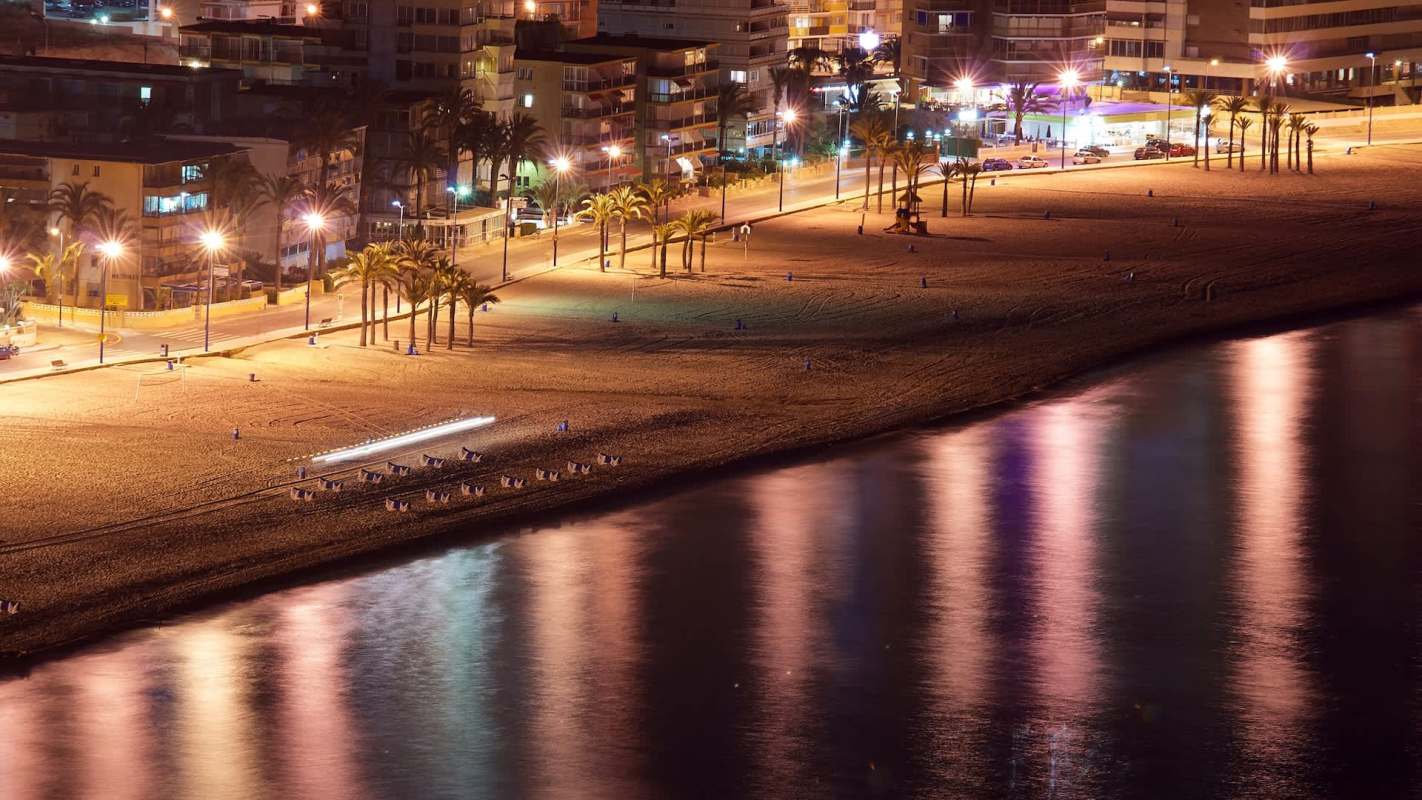
Artificial light from coastal cities and waterfront infrastructure may be significantly affecting fish that depend on nearshore coral reef ecosystems. According to a new study, light from hotels, ports, roads, and other waterfront development reaches the reef and disrupts the animals' normal rest.
The researchers report that even fairly low nighttime light levels were enough to shift reef fish behavior and stress-related biology, making them more active and more aggressive — a worrying signal for ecosystems that coastal communities depend on.
What happened?
At Bar-Ilan University's Faculty of Life Sciences, researchers Oren Levy and Lior Appelbaum worked with doctoral student Shachaf Ben-Ezra to examine the blue-green damselfish in Israel's Gulf of Aqaba/Eilat.
As Earth.com reported, the scientists used infrared video, machine-learning tracking, lab experiments, and field studies on real reefs to observe how the fish behave after dark.
Without added light, the fish entered a clear sleep-like state. They remained still, stayed tucked inside coral, and stopped feeding or fighting during the night.
Adding artificial light after dark disrupted that routine. Fish exposed to it moved beyond their normal resting areas, ate at unusual times, became more aggressive, and slept much less, Earth.com reported.
TCD Picks » Quince Spotlight
💡These best-sellers from Quince deliver affordable, sustainable luxury for all




The team also detected elevated levels of markers associated with DNA damage in a part of the brain associated with sleep-related functions, Earth.com reported.
"These sleep disruptions correlated with increased DNA damage in neurons of the dorsal pallium, a brain region involved in sleep-dependent brain functions," the researchers wrote.
The study did not show that the light directly harms DNA. Instead, the results suggest that disrupted sleep could interfere with the brain's usual overnight repair processes.
Why does it matter?
Artificial light at night already affects about 22% of the world's coastal regions and 35% of marine protected areas, Earth.com reported. In the Gulf of Eilat, light near developed coastlines can be as much as 60 times brighter than natural starlight.
Because coral reefs operate as tightly connected systems, changes in fish behavior can have wider effects. Fish help move nutrients, manage algae, and support reef balance.
So when animals lose sleep and start behaving abnormally, the fallout does not remain neatly underwater. Those disruptions can weaken ecosystems that people rely on for food, jobs, and resilience.
Better lighting practices could reduce that pressure, Earth.com reported, including using less light at night and directing it away from shorelines.
What are people saying?
Levy told the outlet the scale of the issue is growing quickly: "Artificial light at night is rapidly expanding across coastal environments worldwide."
He added, "We found that even relatively low levels of illumination can disrupt natural sleep patterns and are associated with changes in markers of neuronal health."
Appelbaum told Earth.com: "Sleep is a critical period for biological repair. Our findings suggest that disrupting sleep with artificial light may have measurable consequences even in wild marine animals."
Levy also warned that the effects may spread through the ecosystem: "Coral reefs depend on tightly connected biological interactions. If artificial light is affecting both corals and the fish that depend on them, the consequences could ripple throughout the reef ecosystem," Earth.com reported.

Get TCD's free newsletters for easy tips, smart advice, and a chance to earn $5,000 toward home upgrades. To see more stories like this one, change your Google preferences here.






