


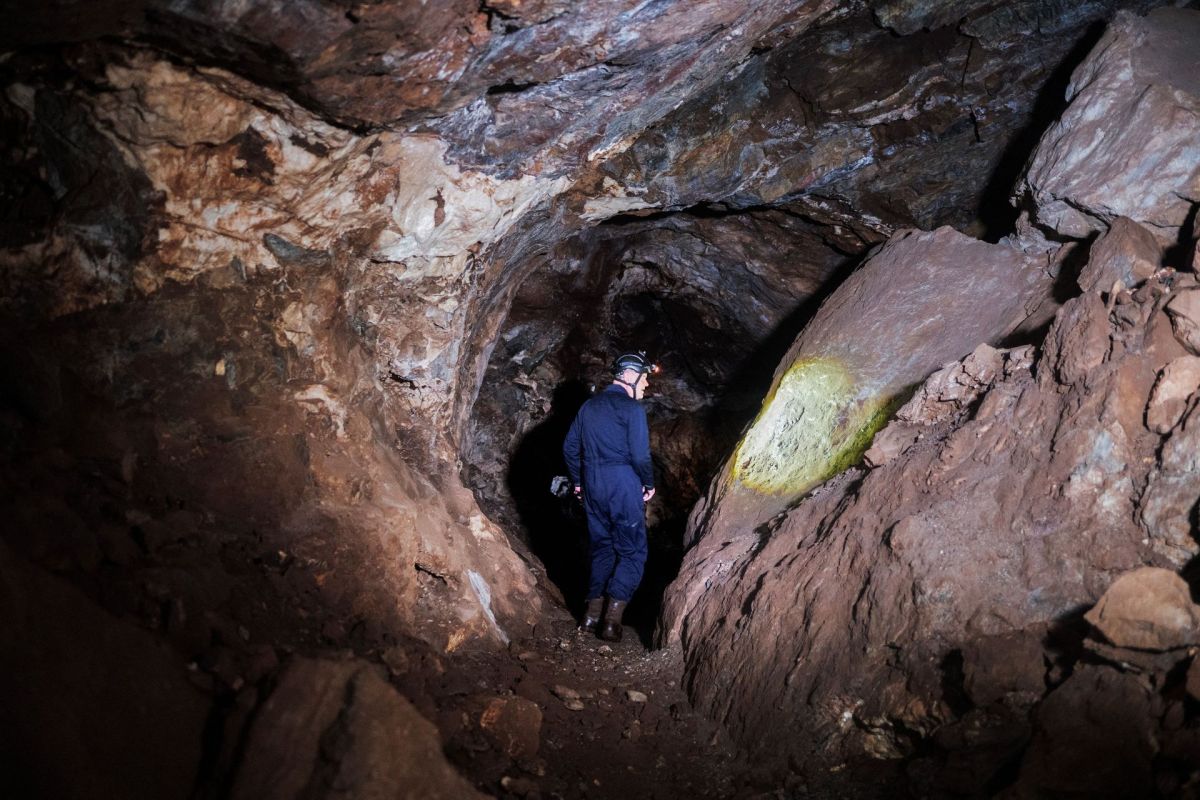
Testing of ancient humanlike fossils from a cave system in South Africa has produced an unexpected finding: Every usable specimen analyzed so far has been identified as female.
The discovery adds another layer of mystery to an already strange group of fossils.
What happened?
According to a CNN report, researchers have been closely studying Homo naledi since its fossils were discovered in the Rising Star cave system in South Africa in 2015.
Although, as the outlet reported, the species had a notably small brain, some scientists have argued that it may still have engaged in behaviors once regarded as distinctly human, such as intentional burial.
CNN reported that scientists used ancient proteins preserved in tooth enamel to estimate sex and found female signatures in all 20 individuals they could assess at the site.
Molecular scientist Palesa Madupe, from the Copenhagen Globe Institute, examined the samples, CNN reported. Of the 23 studied, two failed to yield usable results, and two were from the same individual, leaving 20 people in the final group.
TCD Picks » Quince Spotlight
💡These best-sellers from Quince deliver affordable, sustainable luxury for all




The team determined sex by checking for a specific gene only found in males. That marker was absent from every tested tooth.
Lee Berger, a paleoanthropologist and National Geographic's explorer-in-residence who leads excavations at Rising Star, told CNN, "When these results came out, there were a lot of quite nervous scientists. This was not what we expected."
Why does it matter?
The discovery could reshape how scientists think about Homo naledi's biology, social structure, and what happened inside the cave system.
Berger sees the all-female result as possible evidence that Homo naledi handled the dead differently by sex, telling CNN the species "buried its loved ones by rituals that separated them in death by sex and gender."
Researchers also pointed to another explanation: the gene marker that identifies males may have changed or been deleted, making males difficult to detect with this technique.
Enrico Cappellini, a senior author of the study and a paleoproteomics professor at Copenhagen's Globe Institute, told CNN that outcome would still be remarkable, calling either explanation "fascinating" and one with "deep implications" for understanding the species.
Michael Petraglia, a Griffith University professor and director of the ARC Centre of Excellence focused on Transforming Human Origins Research, was cautious about the findings, CNN reported.
While he told the outlet the researchers behind the study "do scientifically rigorous work," he added, "With respect to their interpretation that female sex bias supports their interpretation of burial - all I would say is not so fast."
"It is entirely possible that Homo naledi, being a small-brained hominin, and similar to non-human primates, had groups with high female to male sex ratios, foraging in particular places on the landscape," Petraglia told CNN.

Get TCD's free newsletters for easy tips, smart advice, and a chance to earn $5,000 toward home upgrades. To see more stories like this one, change your Google preferences here.







