


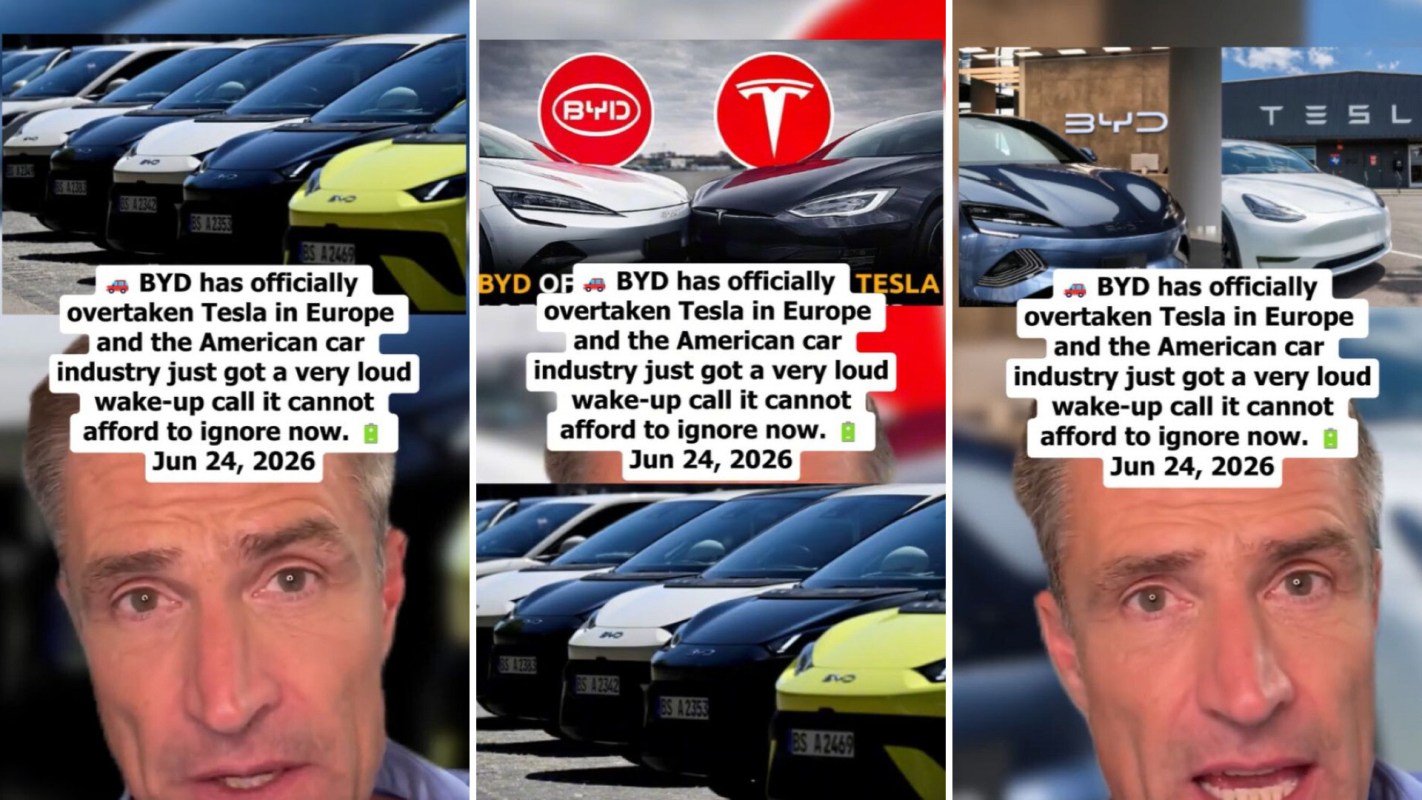
Tesla has lost a symbolic lead in one of the world's biggest electric vehicle markets.
A July sales crossover in the European Union put Chinese manufacturer BYD ahead of Tesla, prompting a creator on TikTok to call it "a very loud wake-up call" for Tesla and the broader American auto industry.
What happened?
BYD was the largest seller in the EU during that period, moving about 9,700 vehicles, more than 200% higher than a year earlier.
Tesla sold roughly 6,600 vehicles over the same span, a decline of more than 40%, and the video said similar patterns are also showing up in European markets outside the EU, including the United Kingdom.
According to the creator vonbilli (@von.billi), the change may be tied to both brand perception and product differences.
Some buyers may be reacting negatively to Tesla CEO Elon Musk's politics, while BYD has a larger lineup at lower prices and is making fast progress in battery and charging technology.
TCD Picks » Quince Spotlight
💡These best-sellers from Quince deliver affordable, sustainable luxury for all




As the creator put it, "BYD also has a wider range of cars, and they're a lot cheaper."
@von.billi 🚗 BYD has officially overtaken Tesla in Europe and the American car industry just got a very loud wake-up call it cannot afford to ignore now. 🔋 #byd #tesla #europe #cars #electricvehicles #usa ♬ original sound - vonbilli
Commenters echoed that view.
One person wrote: "BYD was originally a battery manufacturer before going into car production so they already had a head start on battery technology."
Another added: "I'm seeing these things everywhere at the moment."
Why does it matter?
Europe has been one of the most important growth markets for EVs, so changes in market share there can shape pricing, product strategy, and competition far beyond the region.
If BYD keeps gaining ground, Tesla could face additional pressure to cut prices, revise its lineup, or accelerate updates to older models. Stronger competition can lead to lower prices and more choices.
Frequent price cuts can weaken resale values, while a prolonged sales slowdown may raise concerns about service capacity, model support, and how quickly Tesla can roll out updates tailored to regional demand.
Brand perception may also be a factor.
One commenter wrote: "I wouldn't call myself a liberal, but I completely agree. I certainly wouldn't buy a Tesla to support Musk's wealth."
Consumer sentiment may be becoming part of the buying decision, adding to Tesla's challenge beyond vehicle hardware.
More competition can help bring better batteries, faster charging, and more affordable vehicles further into the mainstream.
What's being done?
BYD appears to be leaning on a simple formula: more models, competitive pricing, and its battery expertise.
That combination may appeal to drivers who want an EV but need choices across body styles and budgets, including hybrids in markets where buyers are not yet ready to go fully electric.
Tesla, for its part, still has notable strengths. Its brand remains globally recognizable, and its charging ecosystem has long been a major advantage.
"BYD has officially overtaken Tesla in Europe," the creator said.

Get TCD's free newsletters for easy tips, smart advice, and a chance to earn $5,000 toward home upgrades. To see more stories like this one, change your Google preferences here.






