


A U.K. research team says it has scaled up a solar-driven system aimed at two stubborn problems at once.
The latest reactor turns discarded plastic and water into clean hydrogen, and it does so at a much larger size than the earlier versions.
What happened?
What began as a small laboratory demonstration has now been expanded substantially.
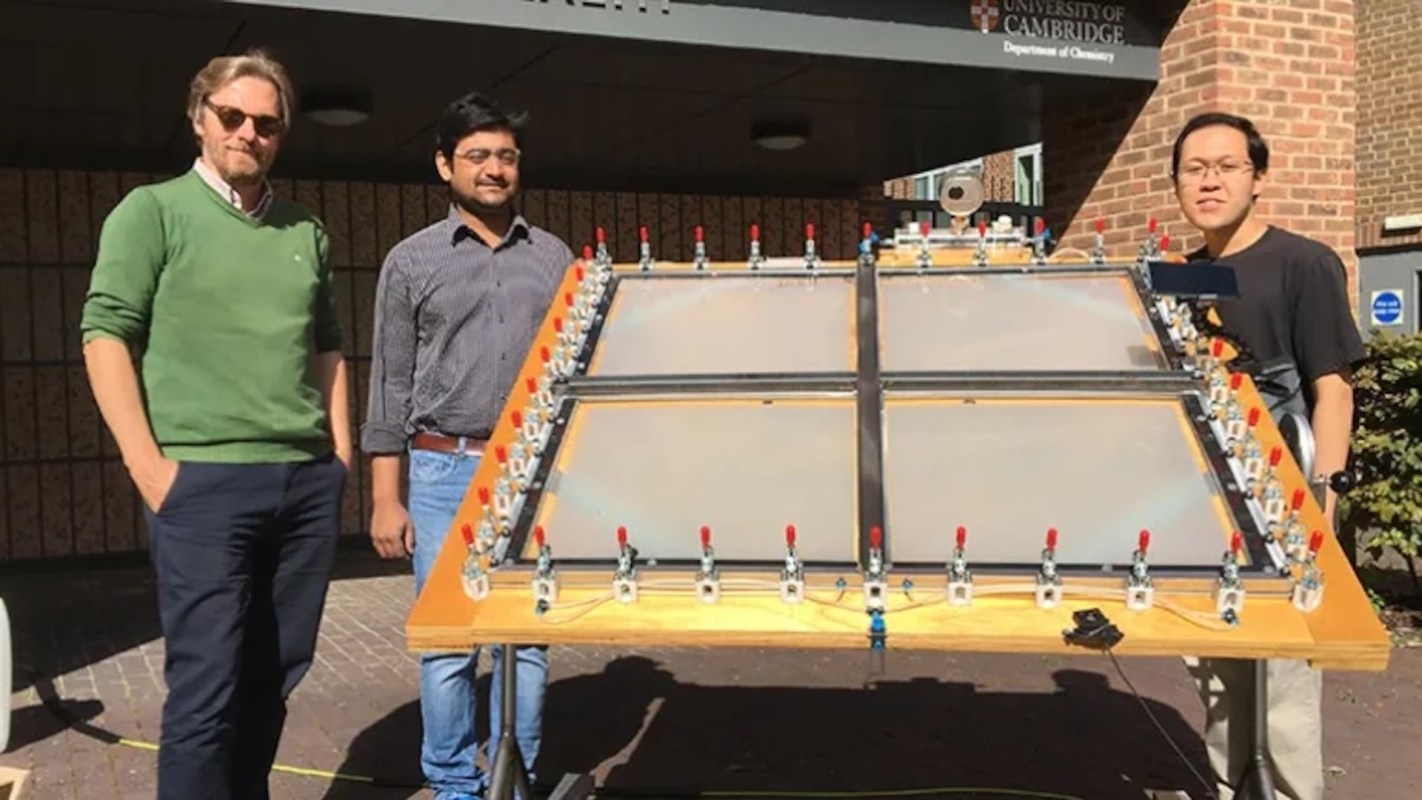
As the Institution of Mechanical Engineers reported, scientists at the University of Cambridge built a solar reactor about one square meter in size that produced hydrogen fuel and other useful chemicals from plastic waste in real outdoor conditions.
The earlier setup used a catalyst measuring only about 25 square centimeters.
During outdoor trials outside Cambridge's Chemistry Department, the reactor worked on feedstocks including cellulose and PET plastic bottles commonly used for soft drinks.
TCD Picks » Quince Spotlight
💡These best-sellers from Quince deliver affordable, sustainable luxury for all




Unlike a conventional solar panel that makes electricity, this device uses sunlight to power the chemical reaction itself.
The redesign also made the system easier to manufacture.
Co-first author Ariffin Bin Mohamad Annuar, from Cambridge's Yusuf Hamied Department of Chemistry, said earlier efforts to build larger versions quickly ran into practical production challenges.
The new panels are made at room temperature by spray-applying a light-absorbing layer to glass before adding molecules built around cobalt and zirconium.
Why does it matter?
This type of technology could help cities and companies manage plastic waste while producing a useful fuel.
Hydrogen is already widely used in industry and is being explored for transportation and energy storage, but much of today's supply is still produced using planet-warming fuels.
A reactor powered by sunlight and waste could help lower disposal costs while cutting pollution.
There could also be health benefits. Less plastic waste means less trash ending up in landfills, incinerators, and waterways, all of which can affect air and water quality.
Cleaner hydrogen production could also help reduce the harmful pollution associated with conventional fuel processing.
The researchers noted that more work is still needed on durability and efficiency before any commercial rollout.
They also completed a cost analysis to give a clearer picture of what scaling up the system might realistically involve.
What are people saying?
Professor Erwin Reisner, who led the research, framed the project's goal in practical terms: "If we're really going to change the way we deal with the twin problems of plastic pollution and clean energy generation, we've got to develop a very scalable way to make these photocatalyst materials and reactors – and show that they really work outdoors."
Mohamad Annuar also emphasized how straightforward the system became after optimization: "We just have this huge panel, we spray our catalyst on it, put it into our solution, put it under the sun, and it produces hydrogen and other valuable chemicals just from plastic waste."
He summed it up even more simply: "It's just simple and scalable."

Get TCD's free newsletters for easy tips, smart advice, and a chance to earn $5,000 toward home upgrades. To see more stories like this one, change your Google preferences here.






