


A newly spotted interstellar visitor just got an unusually close listen from California scientists — in a search for signs of technology. The verdict was less science fiction than some might have hoped: no alien beacon, just a great deal of radio noise from Earth.
Still, for researchers who study the rare objects that pass through our solar system from beyond it, that outcome is far from meaningless.
What happened?
When astronomers identified 3I/ATLAS in July 2025, it entered a very short list: along with 1I/'Oumuamua and 2I/Borisov, it is one of only three confirmed interstellar objects observed moving through our solar system. Scientists at the SETI Institute then carried out a focused search of the object.
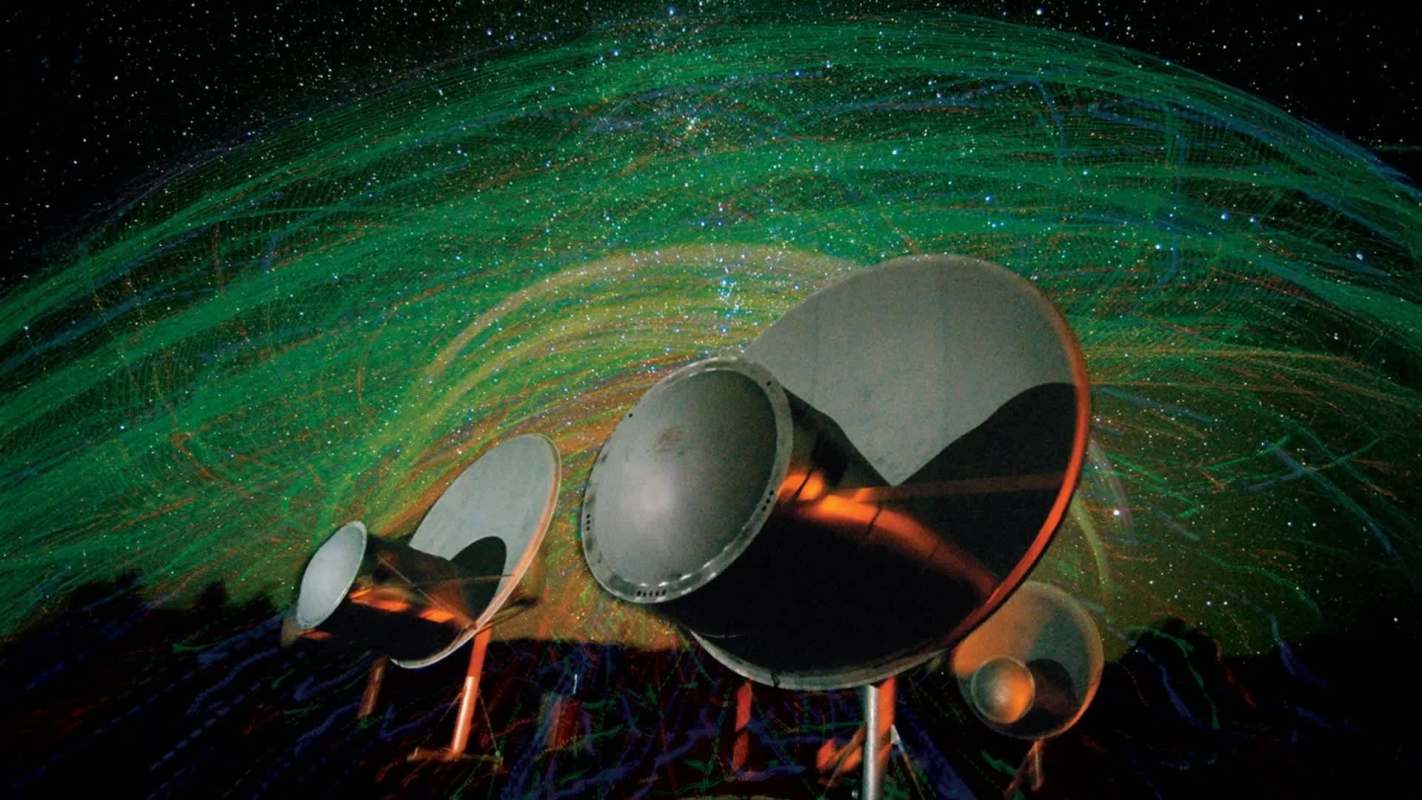
According to ScienceDaily, the team used the Allen Telescope Array at Northern California's Hat Creek Radio Observatory to monitor 3I/ATLAS for more than seven hours across frequencies from 1 to 9 gigahertz. They were specifically looking for narrowband radio emissions, which are not known to arise naturally and are therefore treated as possible technosignatures.
After filtering out obvious interference from Earth-based technology and isolating signals consistent with the object's motion, researchers were left with only about 200 candidates. Those did not survive further scrutiny either, as follow-up analysis showed they also originated from Earth or satellites. At the start of the process, the team had logged nearly 74 million narrowband signals.
Researchers wasted no time once the interstellar object was discovered, as the observations got underway less than 24 hours after 3I/ATLAS was announced.
TCD Picks » Quince Spotlight
💡These best-sellers from Quince deliver affordable, sustainable luxury for all




Why does it matter?
Even though the team found no evidence of extraterrestrial technology, the study helps answer a basic question: What does a typical interstellar object look like when scientists check it for possible artificial signals?
Rare visitors such as 3I/ATLAS give researchers a chance to examine material that formed around another star and learn more about how planets and solar systems develop. The observations also set new limits on any possible transmitter on or near the object, ruling out radio emissions above roughly 10 to 110 watts — about the power draw of a household appliance.
What are people saying?
Dr. Sofia Sheikh, lead author on the paper, said the null result still serves a larger purpose, per ScienceDaily: "Eventually, our own Voyager spacecraft will be extraterrestrial artifacts in other stellar systems. Given that, it is important that we understand the natural distribution of interstellar objects so that we will be able to identify any anomalies that could one day be signs of an artificial interstellar object."
Valeria Garcia Lopez, co-author, emphasized the practical value of the search: "The results from 3I/ATLAS show how realistic it is to detect a signal with the technology we have today. That is why it is important to keep searching for technosignatures, even from objects we might not expect to have signals."
TCD Picks » Quince Spotlight
💡These best-sellers from Quince deliver affordable, sustainable luxury for all

Get TCD's free newsletters for easy tips, smart advice, and a chance to earn $5,000 toward home upgrades. To see more stories like this one, change your Google preferences here.







