


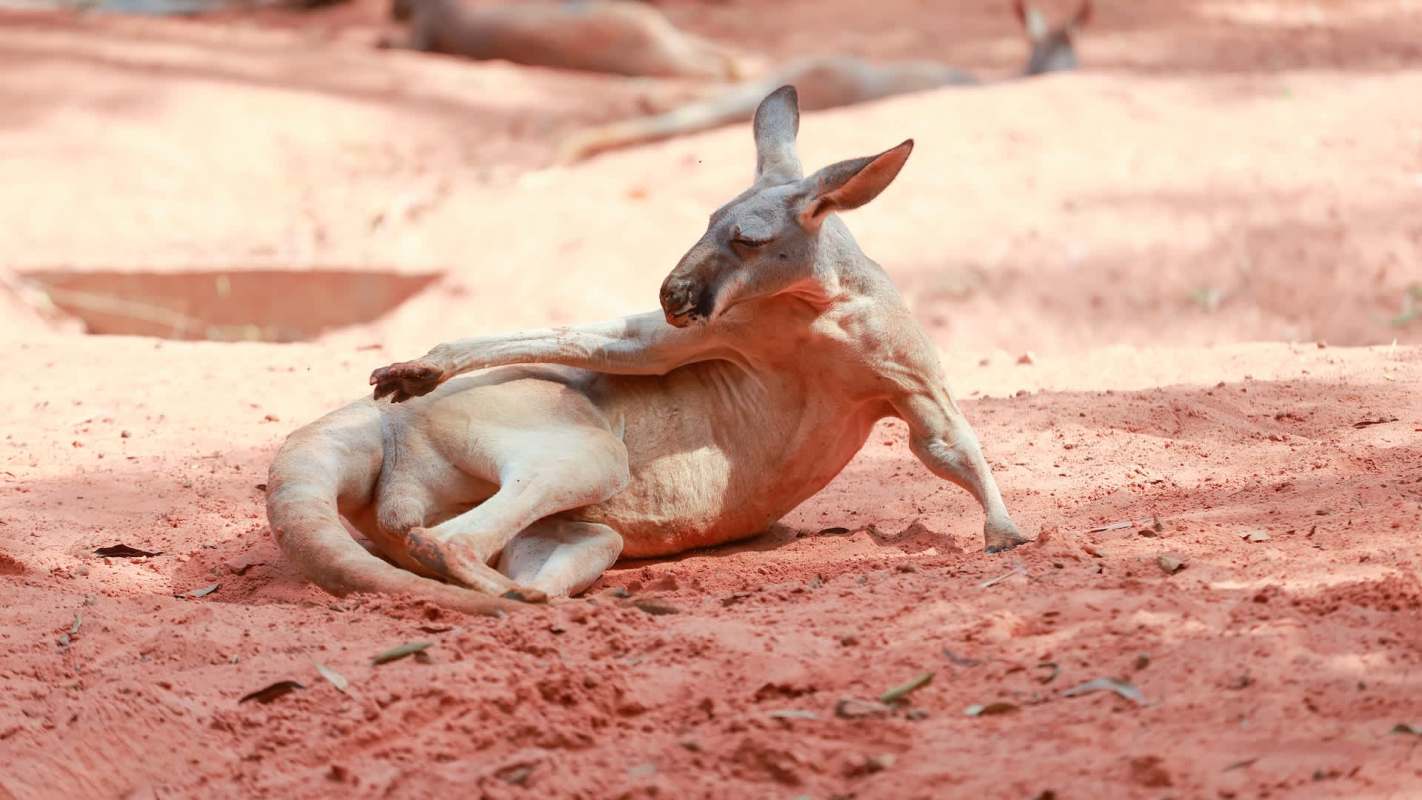
A BBC Earth video is giving viewers a close-up look at one of the most surprising heat-survival tactics in the animal world: red kangaroos licking their own forearms to cool down.
As extreme heat becomes a growing concern for wildlife and people alike, the clip has drawn attention beyond the usual audience of nature-documentary fans.
What happened?
A BBC Earth video follows red kangaroos through an Australian heat spell severe enough to become dangerous fast.
Sir David Attenborough establishes the danger early: "This sun, potentially, is a killer."
By midday, the animals are driven into shade because, as the video notes, "In the full sun, the temperature on the ground soars to [158 degrees Fahrenheit]."
As BBC Earth reported, Australia is "the world's most arid continent with blistering daytime temperatures."
TCD Picks » Quince Spotlight
💡These best-sellers from Quince deliver affordable, sustainable luxury for all




Attenborough explained that these animals "lick saliva onto their forearms, where there is a network of blood vessels close to the surface of the skin."
"As the saliva evaporates, their blood is cooled," he added.
Thermal imaging demonstrated the efficacy of this behavior.
Why does it matter?
The video shows that even animals adapted to harsh environments must work hard to cope with extreme heat. As Attenborough explained, "The sun's heat and the power to evaporate water has had a profound effect on the bodies and habits of everything that lives here."
However, the cooling method is costly. After saliva evaporates, the kangaroos have to replace those lost fluids.
Some other tactics include staying in the shade and digging into cooler soil beneath the surface.
As heat and drought intensify, animals will need more water, more shelter, and more energy simply to survive. That can strain already fragile ecosystems and ripple outward.
Survival is clearly tied to habitat. Shade and undisturbed ground are becoming even more important as temperatures rise.

Get TCD's free newsletters for easy tips, smart advice, and a chance to earn $5,000 toward home upgrades. To see more stories like this one, change your Google preferences here.







