


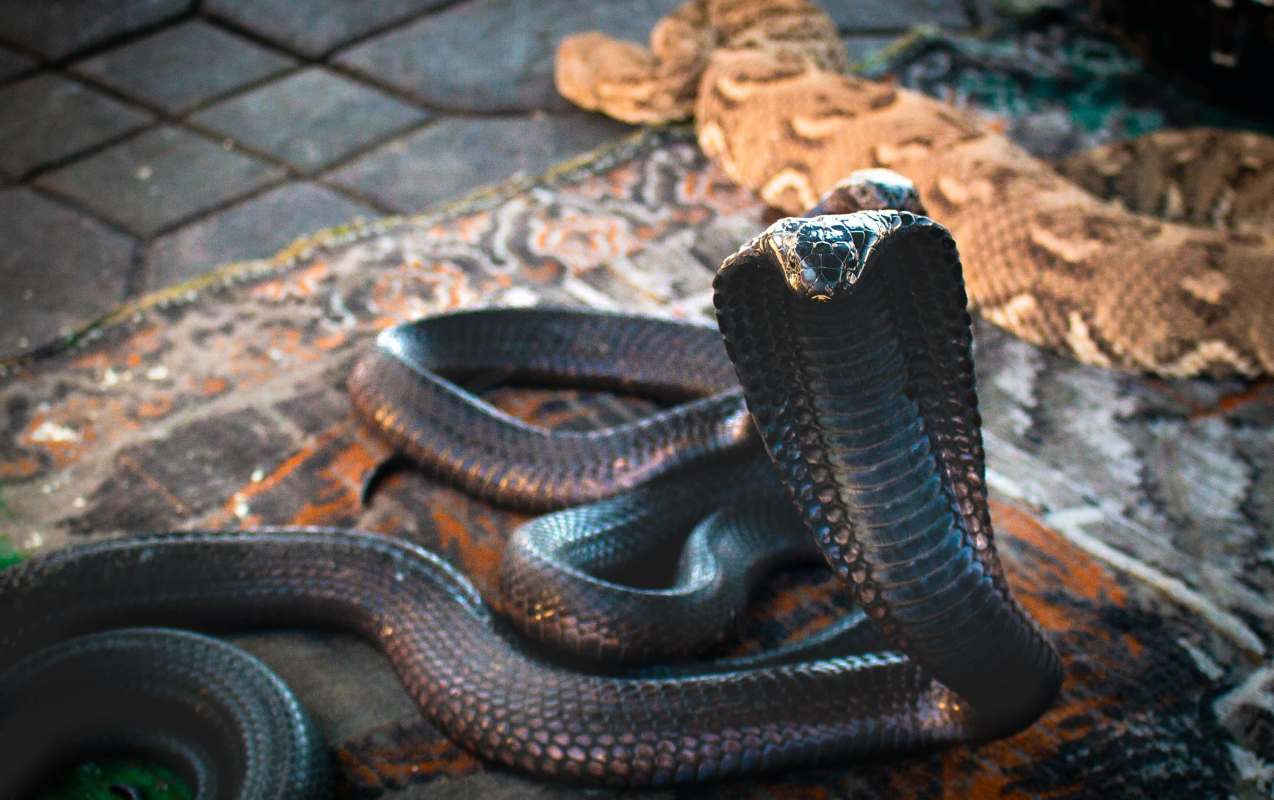
A 12-foot king cobra sighting near a bank in a crowded Odisha, India, neighborhood caused panic among residents, though the situation was eventually brought under control.
No injuries were reported, and the snake was captured and later released in a nearby forest.
What happened?
The scare began when a king cobra, estimated at around 12 feet long, appeared in the busy area near Union Bank in the Ganjam district, according to India TV News.
The cobra was ultimately taken to the nearby Kerandimal forest and released after a rescue operation in the locality. Before that, residents had contacted the Snake Helpline; two members arrived, informed the forest department, secured the snake, and placed it in a sack for transport.
Why does it matter?
A king cobra appearing in a crowded human setting is a serious situation. It is one of the world's longest venomous snakes, and panic in a busy neighborhood can quickly make an already dangerous encounter worse. In this case, the safe intervention helped prevent harm not only to the people nearby but also to the snake itself.
Wildlife encounters are often shaped, at least in part, by human expansion into natural habitats. As development, traffic, and dense settlement continue to reshape landscapes, animals can end up moving through spaces dominated by people. In many cases, snakes enter residential areas while traveling between habitats or searching for shelter and prey.
TCD Picks » Quince Spotlight
💡These best-sellers from Quince deliver affordable, sustainable luxury for all




Experts and officials frequently stress that people should not try to handle wild animals on their own. India TV News' report also noted two earlier snake rescues in Odisha's Kendrapara district, where a monocled cobra and a python were found in residential areas near Bhitarkanika National Park and later released safely into the mangrove forest.
These rescues highlight the role of rapid-response wildlife teams in places where human communities and reptile habitat increasingly overlap.
What are people saying?
Residents praised the Snake Helpline and the forest department for responding quickly and preventing any injuries. The report also noted that villagers in earlier Odisha rescues helped by calling authorities instead of trying to intervene themselves.
Forest officials emphasized that people should not assume every snake encounter will turn aggressive. As the report put it, these snakes "usually do not attack humans unless they feel threatened," and "most incidents occur when the animals act in self-defense."
In Ganjam, the encounter ended with everyone — including the cobra — making it out safely.

Get TCD's free newsletters for easy tips, smart advice, and a chance to earn $5,000 toward home upgrades. To see more stories like this one, change your Google preferences here.







