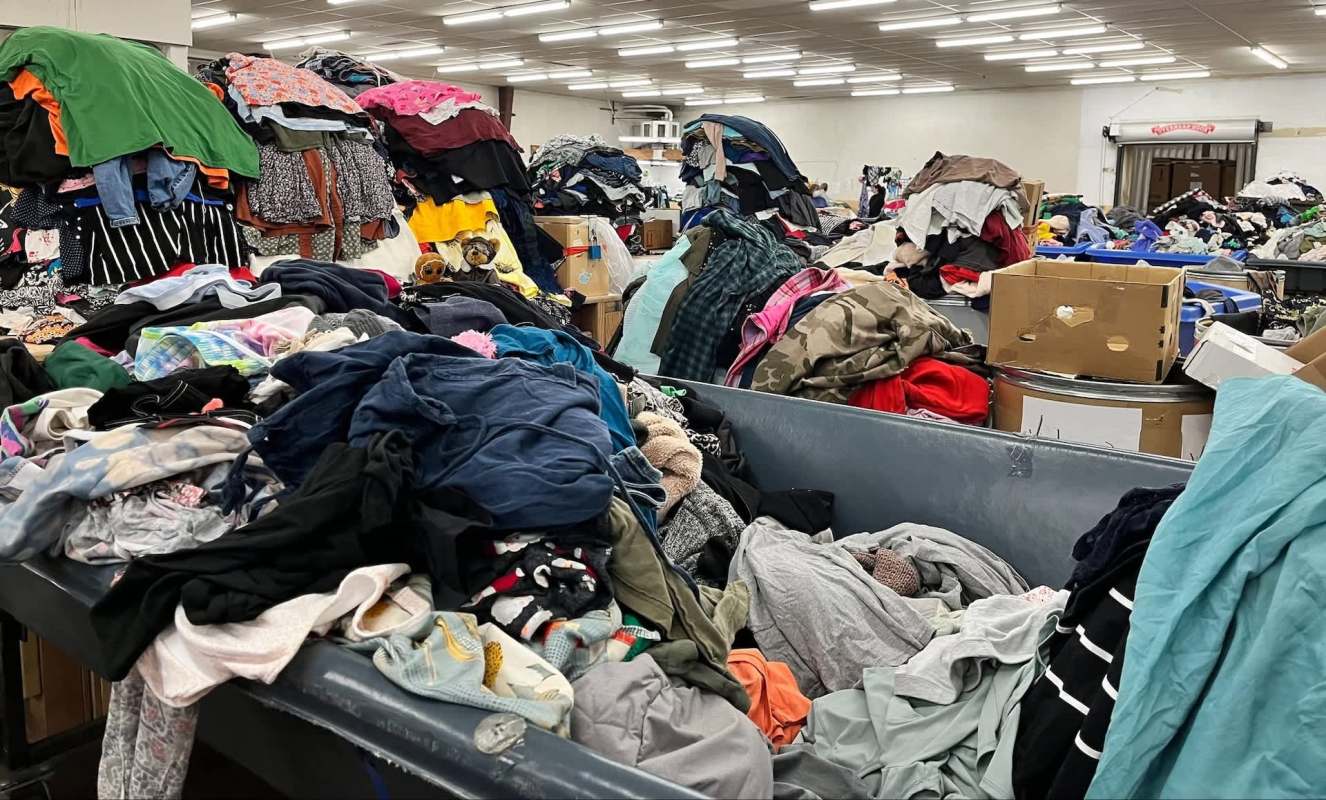
In Eugene, Oregon, castoff clothes are more than waste. They become merchandise, training work, and an avenue for second chances.
Instead of heading straight for the dump, donated garments at St. Vincent de Paul of Lane County move through a range of uses. The warehouse handles everything from stained tees and battered job clothes to flawed vintage finds, finding a path for them through resale, reuse, repurposing, or recycling.
What's happening?
In the Willamette Valley, St. Vincent de Paul runs a large-scale response to clothing waste, according to KLCC. The outlet said the nonprofit kept nearly 3 million pounds of textiles and clothing out of landfills last year, a volume that makes it one of Oregon's largest textile recyclers.
At its West Eugene warehouse, donations from around the state are separated by what can be done with them. Some pieces are good enough for thrift store racks, some damaged cotton shirts are reserved to become packaged shop rags, some standout items are pulled for online resale, and the hardest to sell leftovers are baled.
"We take it and we process it," clothing warehouse manager Brandi Carter said, per KLCC.
Some of the most unusual finds go to Upsmart, the nonprofit's upcycling and resale arm, where Julia Martin oversees e-commerce sales. Martin told KLCC wear and damage do not always limit demand, recalling one listing that surprised her: "I put a pair up that had a giant hole in the crotch for $70, and they sold right away to a customer in Japan."
TCD Picks » Quince Spotlight
💡These best-sellers from Quince deliver affordable, sustainable luxury for all




Why does it matter?
Cheap, trend-driven clothing carries a heavy environmental cost when it is made to be replaced after only a short time. That pattern increases textile waste and contributes to planet-warming gases, microplastic pollution, and added pressure on landfills and nearby communities.
Extending the life of clothing reduces the need for new production, while thrift resale can help families save money on essentials such as shirts, coats, and children's clothes.
It also creates jobs.
St. Vincent de Paul's model goes even further by tying textile recovery to social services. KLCC reported that, across the organization, close to 600 people work in homeless services, mattress recycling, thrift store operations, and the textile sorting warehouse. "What sets us apart at St. Vincent de Paul is that we are a second-chance employer," Chilisa Hernandez, who manages supported work experience in Lane County, said.
What's being done?
Rather than treating donations as a single waste stream, the nonprofit sends each type of item to its own next use. Clothing in good shape goes to stores, torn cotton T-shirts become "Bags 'o Rags" for paint shops and construction crews, and trendy or unusual pieces are steered to Upsmart to be resold or creatively reworked.
That approach keeps clothing in use longer while extracting value from items many people might dismiss. Martin said the team pays close attention to categories that resonate with shoppers, including Western and bohemian styles, Y2K pieces, and workwear.
One rough-looking vintage Levi's jacket sold online for $3,500.
"Young people today are really open to thrifting," Martin said. "They love that things are unique and interesting and not fast fashion."
And as her team continues keeping items in use, she added, "We're very successful, and we've managed to keep a lot of clothing items out of the baler."

Get TCD's free newsletters for easy tips, smart advice, and a chance to earn $5,000 toward home upgrades. To see more stories like this one, change your Google preferences here.