


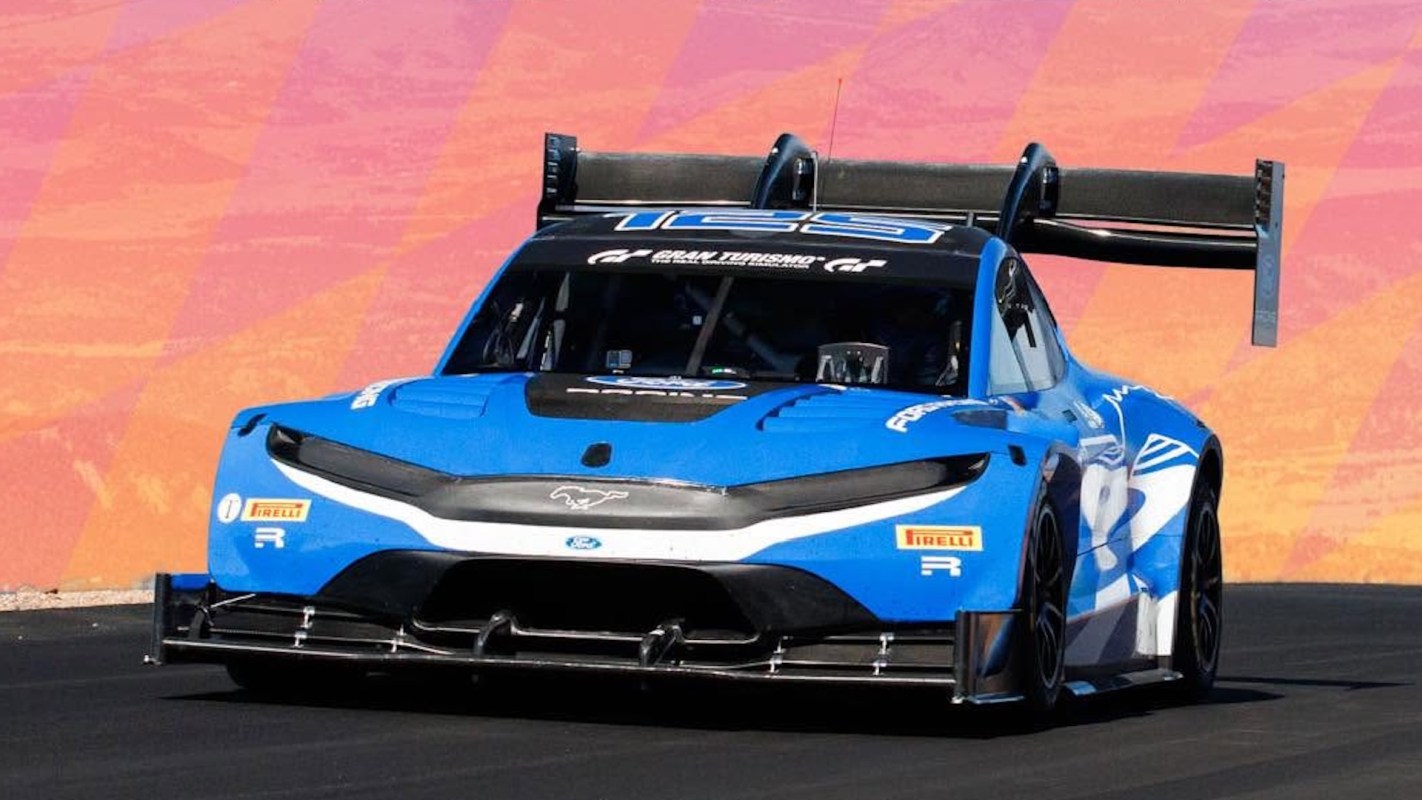
Ford's latest trip to Pikes Peak ended with the result it missed a year earlier.
In 2026, the company returned to the International Hill Climb with the Super Mustang Mach-E after a weather-shortened 2025 showing that ended in second overall, and this time it finished ahead of every gas vehicle on the mountain in Colorado.
What happened?
Electrek reported that driver Romain Dumas piloted Ford's extreme electric race car to a finish in 8 minutes, 18.202 seconds.
The time put him over 11 seconds ahead of Robin Shute's Sendycar V1, while 2025 winner Simone Faggioli finished third in his Nova Proto NP01.
Drivers cover 12.42 miles on the way from 9,390 feet to 14,110 feet at Pikes Peak. That steep climb in elevation is a big reason the event is regarded as one of motorsport's harshest tests since combustion engines typically lose power as the air gets thinner and oxygen becomes scarcer.
That high-altitude penalty does not hit EVs in the same way, which helps explain why battery-powered racers have become so formidable in the "Race to the Clouds."
TCD Picks » Quince Spotlight
💡These best-sellers from Quince deliver affordable, sustainable luxury for all




In Electrek's broadcast replay, Dumas' run begins just after the 2:38 mark, showing the low-slung Mustang Mach-E powering through paved switchbacks and carrying speed into the upper section of the course — the same part of the mountain that featured bad weather in 2025.
Why does it matter?
While the Mach-E was not a standard production EV, its result showed that electric vehicles can deliver serious performance without the fuel-burning drawbacks of gas vehicles.
They can also help owners save money through low fueling costs and reduced routine maintenance since they do not require oil changes and generally have fewer moving parts to service than gas vehicles.
The same technology that helps an EV stay strong at altitude can also translate into smooth acceleration, quiet driving, and less time at the pump or repair shop. And unlike gas vehicles, EVs don't produce tailpipe pollution.
Charging an EV at home is also significantly cheaper than relying on public chargers. Check out Qmerit for help getting started and instant installation estimates. Installing solar panels can boost those savings even more, as charging with your own energy is cheaper than using public charging stations or pulling power from the grid.
What are people saying?
As Electrek noted, Dumas said Ford likely would have had the advantage on the full course in 2025, but "the mountain decides."
Electrek described the result as Ford getting its "revenge" and said the win showed that "a real racecar does indeed perform better than a giant box" — a reference to the company's earlier electric SuperVan effort at the iconic climb.

Get TCD's free newsletters for easy tips, smart advice, and a chance to earn $5,000 toward home upgrades. To see more stories like this one, change your Google preferences here.






