


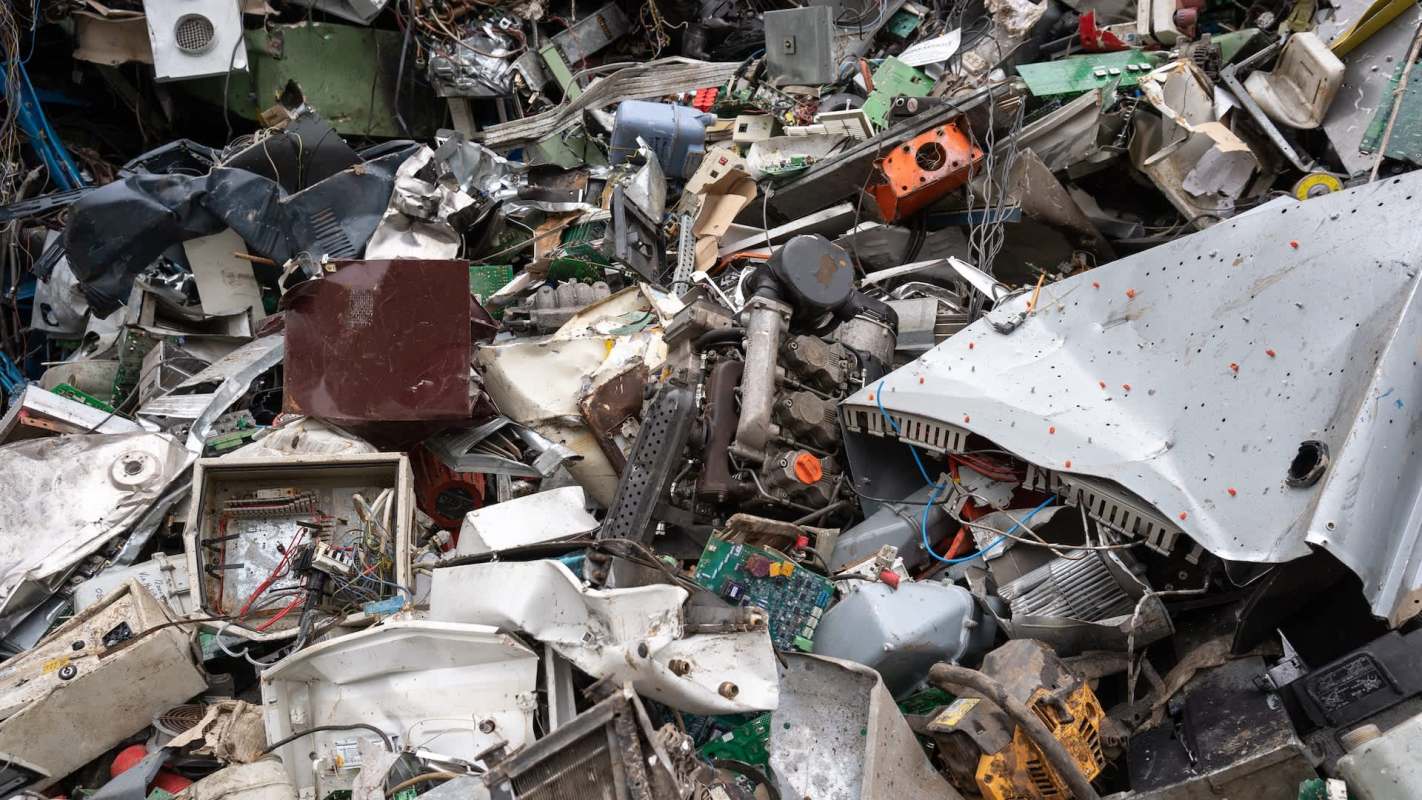
In India, some workers spend hours taking apart discarded electronics with no protection, breathing in toxic fumes and picking up burns and cuts for dollars a day.
The reality makes plain one of the human costs behind the many phones, laptops, and household appliances people throw away each year.
What's happening?
According to Al Jazeera, workers processing e-waste in Mustafabad take apart broken air coolers, cables, computers, and scrap metal in cramped workshops with little or no protective equipment.
"Sometimes the extraction is difficult, and I don't have any protective gear — no gloves, no mask. Often, I get burns on my hands as well," e-waste worker Mateen Malik told Al Jazeera. "The chemical residue is also there."
According to the outlet, workers may earn about $8 over a 12-hour shift, including roughly $1 for dismantling a mobile phone and about $2 for a TV.
Muhammad Faizan sometimes burns off the coating to reach the copper inside wires and says he regularly ends up inhaling the smoke. "It is hazardous work," he told Al Jazeera, which reported that informal recyclers may handle about 95% of India's discarded electronics.
TCD Picks » Quince Spotlight
💡These best-sellers from Quince deliver affordable, sustainable luxury for all




Only China and the United States generate more e-waste than India, which the outlet said produced more than 1.4 million metric tons of e-waste in 2025-2026.
Why is this concerning?
According to the World Health Organization, toxins released through informal recycling can include lead, mercury, cadmium, and dioxins. Exposure to these materials has been linked to neurological harm, reduced lung function, and respiratory illness, particularly in children.
Because dismantling often takes place in the same spaces where people live, the health risks can extend beyond workers to their families.
What are people saying?
Bharati Chaturvedi of Chintan, an environmental research and action group, said informal workers should be brought into safer, more formal systems.
"The way I look at it is that you have to formalize people. You can't keep them informal," Chaturvedi told Al Jazeera, pointing to the need for effective health and safety regulations.
Despite calls for more formal regulations, some informal recyclers say they rely on the hazardous work to survive.
"We have no other work; we are dependent on this," Shakila, a migrant worker from West Bengal, told Al Jazeera. "It gives us income and helps us survive in a city like New Delhi."

Get TCD's free newsletters for easy tips, smart advice, and a chance to earn $5,000 toward home upgrades. To see more stories like this one, change your Google preferences here.







