


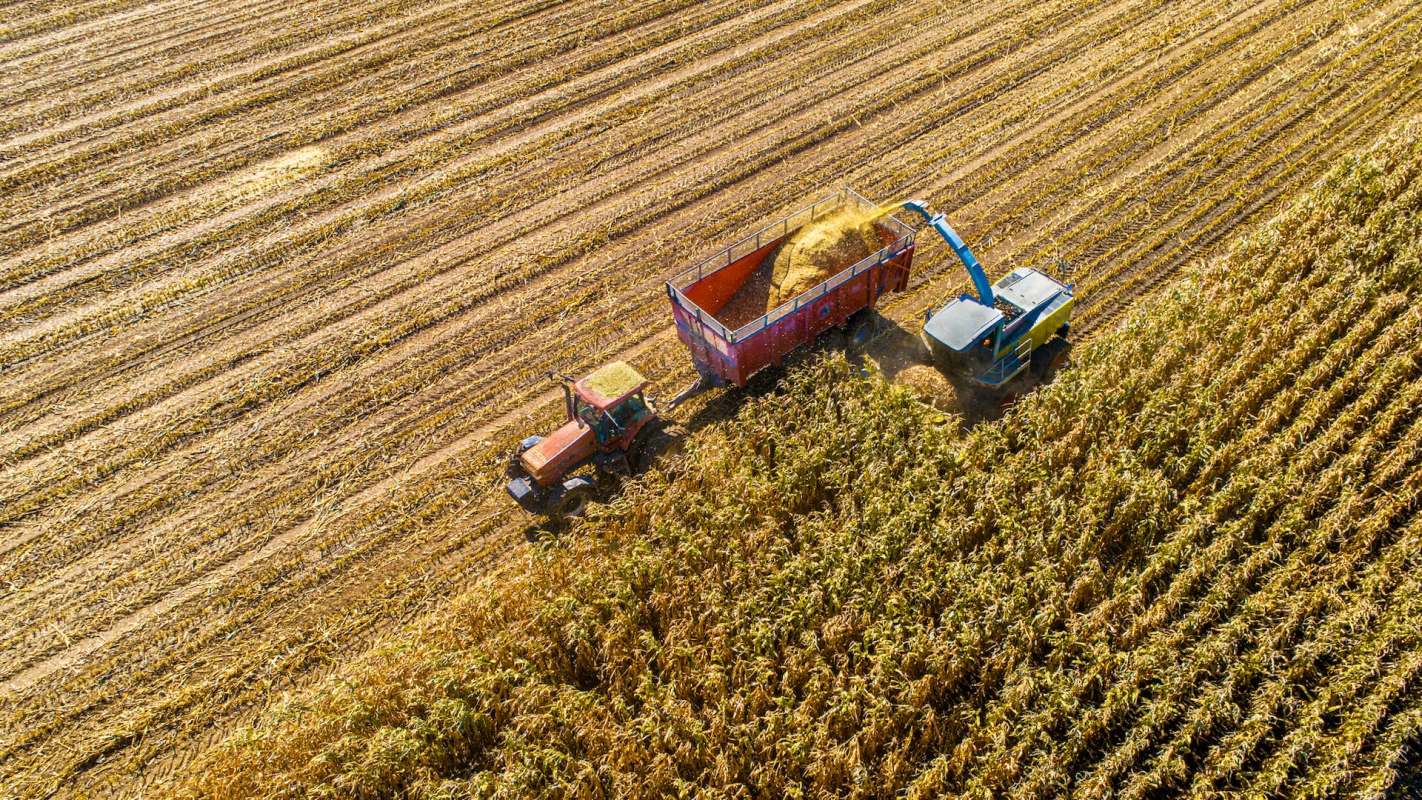
As corn ethanol continues to face criticism, a Reddit thread has questioned whether the fuel's environmental benefits justify its costs.
At the center of the debate is a long-standing U.S. policy that critics say uses large amounts of water, farmland, and public backing while replacing only a limited share of gasoline energy.
What's happening?
In a recent post on the r/Energy subreddit, a user pulled together data from the National Center for Energy Analytics to argue that corn ethanol is a poor long-term fuel option.
The discussion focused on three main issues: how much land ethanol production depends on, how much water it consumes, and how much energy it returns — especially when considering other potential uses for that same land, such as solar panels with agriculture underneath, which a 2022 study found is at least 12 times more effective.
The post highlighted several figures to make that case, including claims that corn ethanol's energy return is only "about 1.5:1" and that making a gallon of it takes "roughly 992 gallons of water," compared with "about 5.6 gallons" for gasoline.
It summed up the broader criticism with one line: "40% of the corn crop is now dedicated to producing corn ethanol, which displaces only 10.5% of the gallons (7% of the energy) in the nation's gasoline tanks."
TCD Picks » Quince Spotlight
💡These best-sellers from Quince deliver affordable, sustainable luxury for all




Why does this matter?
If those numbers hold up, the issue reaches well beyond what appears on a fuel pump label.
Sending such a large portion of the corn harvest into ethanol can increase pressure on cropland, fertilizer demand, food systems, and water resources, especially in areas already dealing with drought, aquifer depletion, and rising costs for farmers and households.
That is why critics in the thread described corn ethanol as a weak path toward cleaner energy — a fuel marketed as a greener choice could instead add to resource stress in rural areas in particular.
The discussion also raises a larger question about clean-energy policy: whether current mandates are steering support toward the most effective options.
If policy favors a fuel with limited returns, critics say, investment could be diverted from technologies that reduce pollution without imposing similarly large land, food system, and water costs.
The 2022 study found that corn ethanol is actually worse on carbon pollution than gasoline, and that solar panels produce about 12 times more energy and are 13 times more profitable than corn within the same acreage — though the panels would require an upfront investment that typically takes five to seven years to pay for itself before it's purely profitable.
Corn requires very little upfront investment, though it can never lead to the same heights in profit per acre, and it doesn't allow for the same dual-use potential as solar, which can be raised well above eye level and still have certain crops or livestock grazing underneath with spacing in between the rows of panels.
What are people saying?
In the comments, much of the conversation focused on why corn ethanol still holds such a strong place in U.S. fuel policy.
"Ethanol economics are tough, but ethanol from corn specifically is terrible. It's only there due to subsidies," one commenter wrote.
"It's a farm subsidy that is a net energy loss — a giant boondoggle," another added.
"The physics and economics of ethanol as fuel don't work," a third wrote.

Get TCD's free newsletters for easy tips, smart advice, and a chance to earn $5,000 toward home upgrades. To see more stories like this one, change your Google preferences here.






