


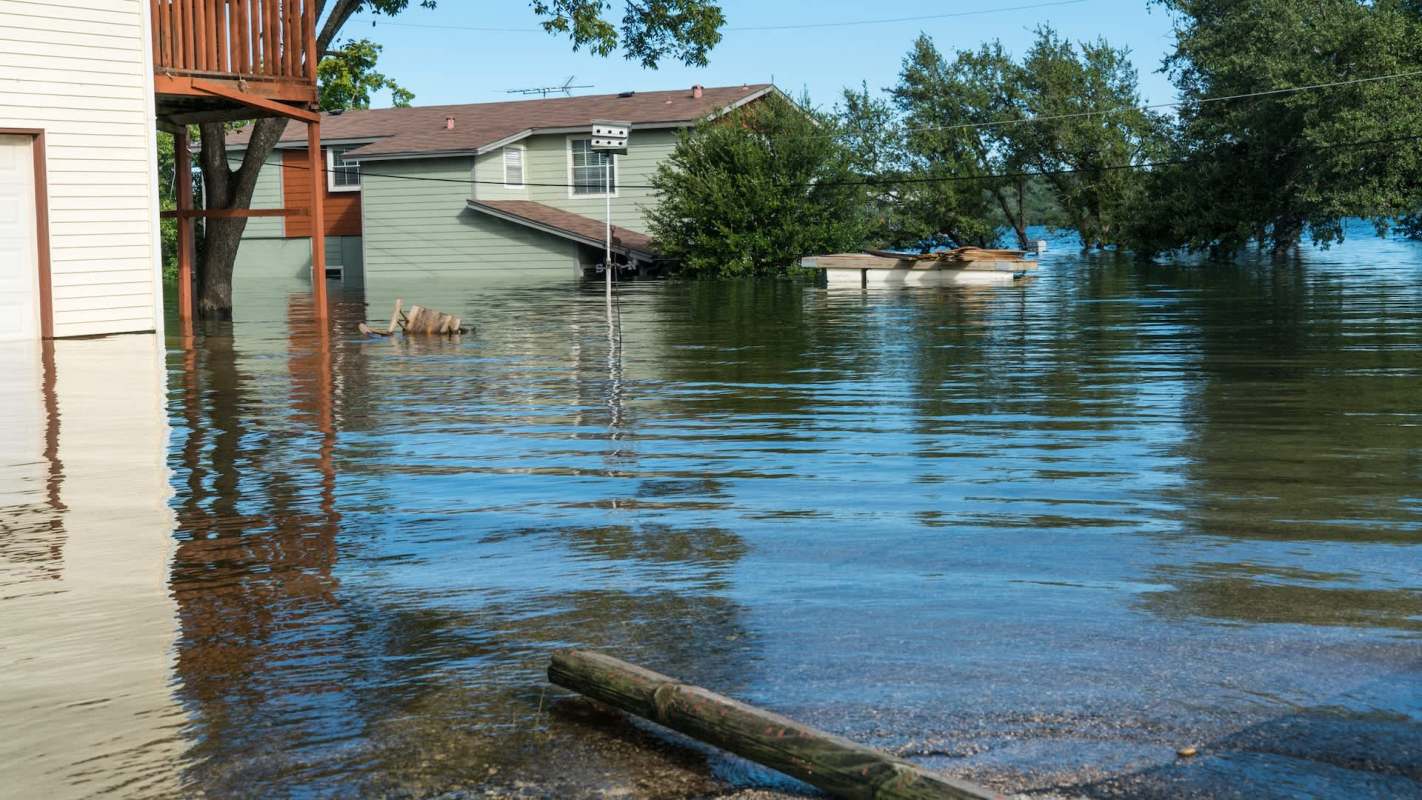
When Tom and Diane Peterman settled into their retirement home on Michigan's Black Lake, they were told flood insurance was not available, according to the Associated Press. John Solum received a similar message when his family purchased a nearby cabin.
Historic flooding later hit Northern Michigan after heavy spring rains, inundating houses, damaging roads, and leaving many residents with steep losses and no insurance for a disaster they had been led to believe was not a concern.
What happened?
According to the AP, the recent flooding exposed serious shortcomings in the way flood danger is identified and conveyed to homeowners. In several of the communities that suffered the most damage, residents either were outside FEMA's designated flood zones or lived in places the agency had never fully mapped.
The AP reported that Black Lake lies in two counties and that Cheboygan County has a FEMA flood map dating to 2012 while large sections of Presque Isle County have never been mapped. As the waters climbed, drifting ice destroyed decks and even broke through windows.
For Solum, the flooding went beyond anything people in the area had experienced. "We've never seen anything like that. Never," he said. Water rose to knee height inside his family's cabin, forcing them to tear out flooring and drywall and replace furniture and appliances.
Experts told the AP that Michigan is part of a much larger issue. FEMA's maps mainly indicate flooding from waterways that spill over their banks, but they often miss damage caused by heavy rain that overwhelms drainage systems or saturates rural ground.
TCD Picks » Quince Spotlight
💡These best-sellers from Quince deliver affordable, sustainable luxury for all




Why does it matter?
People who think official maps place them safely outside danger may decide against buying flood insurance only to discover after a disaster that the risk extends far beyond those lines. That exposure could increase as the warming climate allows storms to hold more moisture.
Richard Rood, a climate scientist at the University of Michigan, said this year's floods should not be treated as a freak occurrence. "We call these storms historic; that is only true compared to the past," Rood told the AP. "I think it is more appropriate to consider it typical of the climate of the future."
The AP reported that First Street, a private climate-risk company, found that the number of U.S. properties facing significant flood danger is more than twice as high when rainfall flooding and small waterways are included. In Michigan, the company identified four times as many at-risk properties as FEMA's maps show.
Diane Peterman said she kept asking about flood insurance and was repeatedly told no. "They said, 'You're not in a flood zone,' and I said, 'But I live on a lake,'" she told the AP.
What's being done?
The AP reported that the Federal Emergency Management Agency has been updating aging flood maps, but experts say the work has progressed slowly, particularly in rural areas. Chad Berginnis, executive director of the Association of State Floodplain Managers, said inadequate federal funding has left broad stretches of the country without maps, including areas around streams, rivers, and coastlines.
Christopher Currie, who audits FEMA for the General Accountability Office, said the agency was already strained before the Trump administration cut close to 20% of the department's workforce in 2025.
Communities are allowed to participate in the National Flood Insurance Program even if they do not have a local flood map, but many have not joined. The average cost in the state for $250,000 in flood coverage is about $1,000, though premiums differ widely, according to the AP and Michigan's National Flood Insurance Program coordinator Matthew Occhipinti.
"FEMA flood maps should always be the beginning of the journey and not the end," Berginnis said.

Get TCD's free newsletters for easy tips, smart advice, and a chance to earn $5,000 toward home upgrades. To see more stories like this one, change your Google preferences here.






