


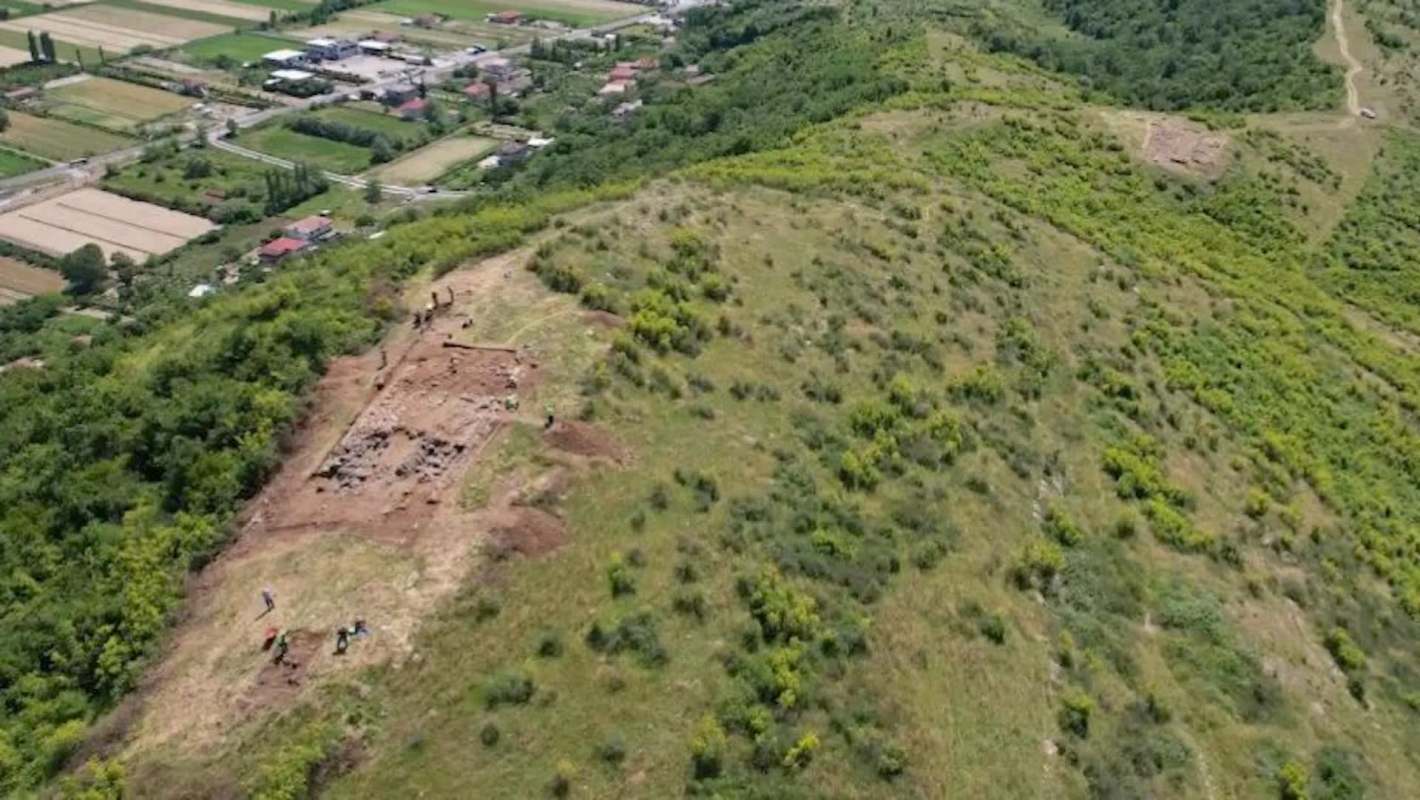
At a hilltop site in northern Albania, archaeologists have uncovered remains of what researchers believe is the region's first identified Illyrian temple, a find that may help resolve the mystery of the lost city of Bassania.
What happened?
According to Arkeonews, researchers from the University of Warsaw and the University of Tirana made the discovery at Bushat, roughly 10 kilometers south of Shkodra. There, on the acropolis of a settlement rediscovered in 2018, they exposed the full stone foundations of a large rectangular building at a site that may be the long-sought Bassania.
Measuring 13.6 meters by 9.6 meters, the building has proportions similar to those of classical Greek temples. Archaeologists also say its position at the very top of the site points to an important role in the city's life.
"Judging by the location of the building on the hilltop and its orientation toward the cardinal directions, we can consider these to be the remains of a temple that crowned the city's acropolis from the 4th to the 2nd century BCE," said Prof. Piotr Dyczek, director of the Center for Research on the Antiquity of Southeastern Europe at the University of Warsaw.
Dyczek added, "During the work, we also partially uncovered the defensive wall surrounding the hill, which at the same time formed the so-called temple temenos."
Why does it matter?
The discovery could reshape experts' understanding of Illyrian urban life in northern Albania. While archaeologists have long documented fortifications, burial grounds, and hilltop settlements in the region, evidence of formal cult buildings has been much harder to pin down.
TCD Picks » Quince Spotlight
💡These best-sellers from Quince deliver affordable, sustainable luxury for all




For scholars, the remains point to a blend of cultural influences: local Illyrian elites appear to have used Greek-inspired design while retaining their own regional identity. That offers a more nuanced picture of how communities interacted across the Hellenistic world.
The site also appears to tell a longer story about how landscapes were reused over time. Bushat was likely abandoned during the Hellenistic period, but in the 3rd century CE, Romans built a smaller structure beside the temple ruins, apparently using the hill as an observation point over routes leading toward Shkodra, ancient Lissos, and the Adriatic coast, as Arkeonews noted.
If future research confirms Bushat as Bassania, the find could give historians one of the clearest views yet into the final centuries of Illyrian city life before Roman domination.
What are people saying?
Researchers are treating the possible Bassania identification as compelling, but not yet final.
The University of Warsaw says no Illyrian temple had previously been identified in northern Albania.

Get TCD's free newsletters for easy tips, smart advice, and a chance to earn $5,000 toward home upgrades. To see more stories like this one, change your Google preferences here.







