


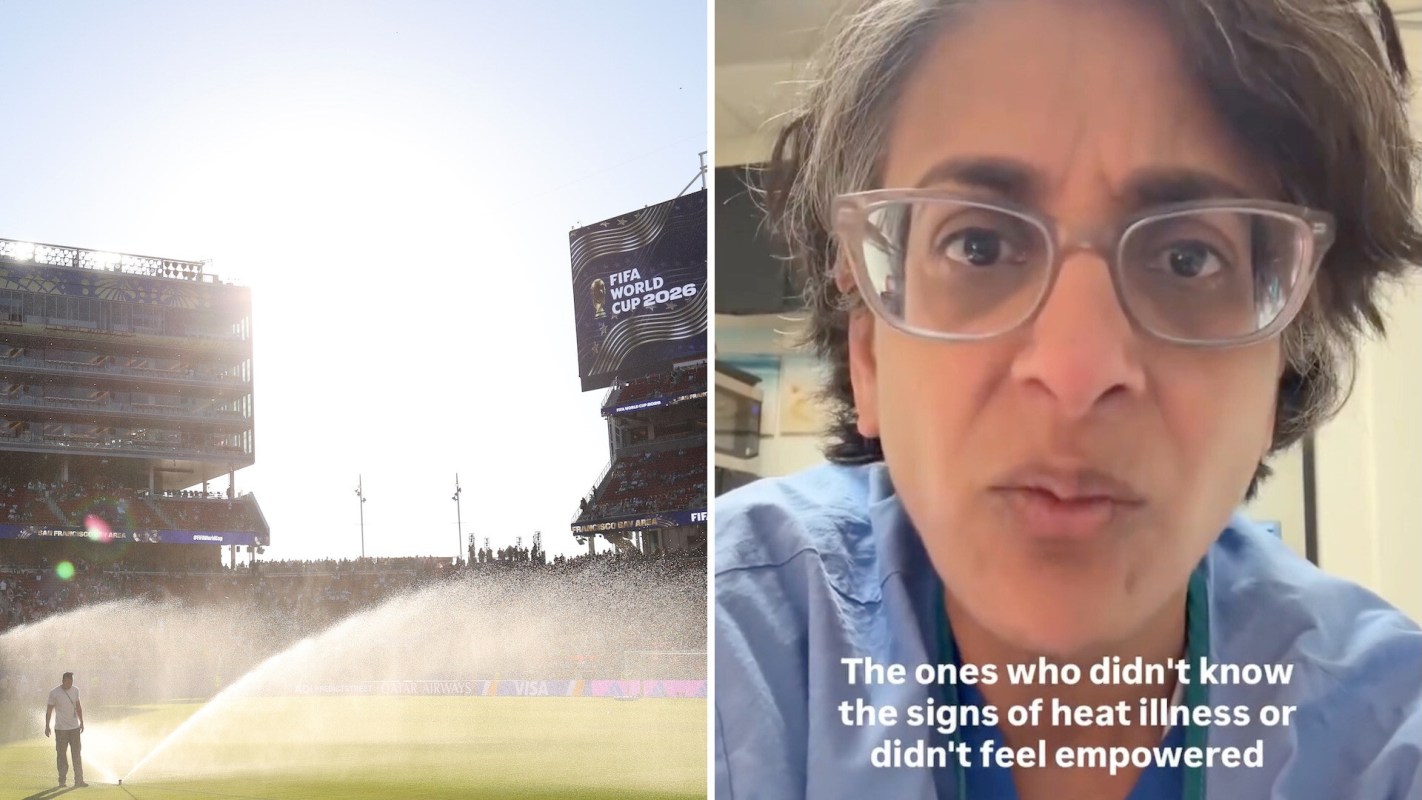
An Instagram video sparked debate after a doctor and mother said fans at a World Cup match in Santa Clara, California, were left waiting in long lines for water during a heat advisory.
What happened?
The video, which drew more than 83,000 likes and thousands of comments, centered on a call Dr. Lisa Patel made from her hospital job to her husband and son at the match. Patel said Santa Clara was under a heat advisory, and fans were permitted to bring in only one factory-sealed bottle of water.
She added that after that bottle was finished, people had to buy more inside the stadium. Her husband, she said, waited about 30 minutes to reach a vendor, only to find there was no water left. After being told Sprite was "only available as a mixer," he eventually found something else for their son to drink.
"I couldn't believe what I heard," Patel said. She described the situation as dangerous during extreme heat, especially for families with children.
The caption urges viewers to "take action" using this Oceana.org link that appears in her bio, saying FIFA's policy "benefits CocaCola company and is a public health hazard."
Others pushed back on the matter, though. One commenter wrote: "Accessible drinking fountains are located throughout Levi's Stadium. There are six water refill stations located at the drinking fountains near sections 101, 110, 120, 125, 127, and 322."
TCD Picks » Quince Spotlight
💡These best-sellers from Quince deliver affordable, sustainable luxury for all




"They allow the one water bottle so that you CAN refill at the water stations," added another.
The Oceana petition also advocates for prioritizing reusable options over single-use plastics at World Cup events.
Why does it matter?
Even with water fountains and refill stations reportedly available, not everyone seemed to be aware of where they could get more water.
Access to drinking water during periods of extreme heat is not a luxury. It is a basic health safeguard, especially for children, older adults, and anyone spending hours in a crowded outdoor venue.
"Heat illness escalates fast, especially in children, when you restrict access to water this way in dangerous heat," Dr. Patel said. "That is a public health failure."
Events like this can serve as a flashpoint for heat-related safety discussions, as global temperatures continue to rise. But it lies on corporations and the individuals who are a part of them to create safe conditions.
What can I do?
If attending an event in the heat, check the venue's hydration policy before leaving home. Bring the maximum amount of water allowed, and locate refill stations as soon as you enter.
It can also help to plan ahead for shade breaks, wear light clothing, and watch for warning signs of heat illness. Those symptoms can include dizziness, nausea, headache, heavy sweating, confusion, or a racing pulse.

Get TCD's free newsletters for easy tips, smart advice, and a chance to earn $5,000 toward home upgrades. To see more stories like this one, change your Google preferences here.






