


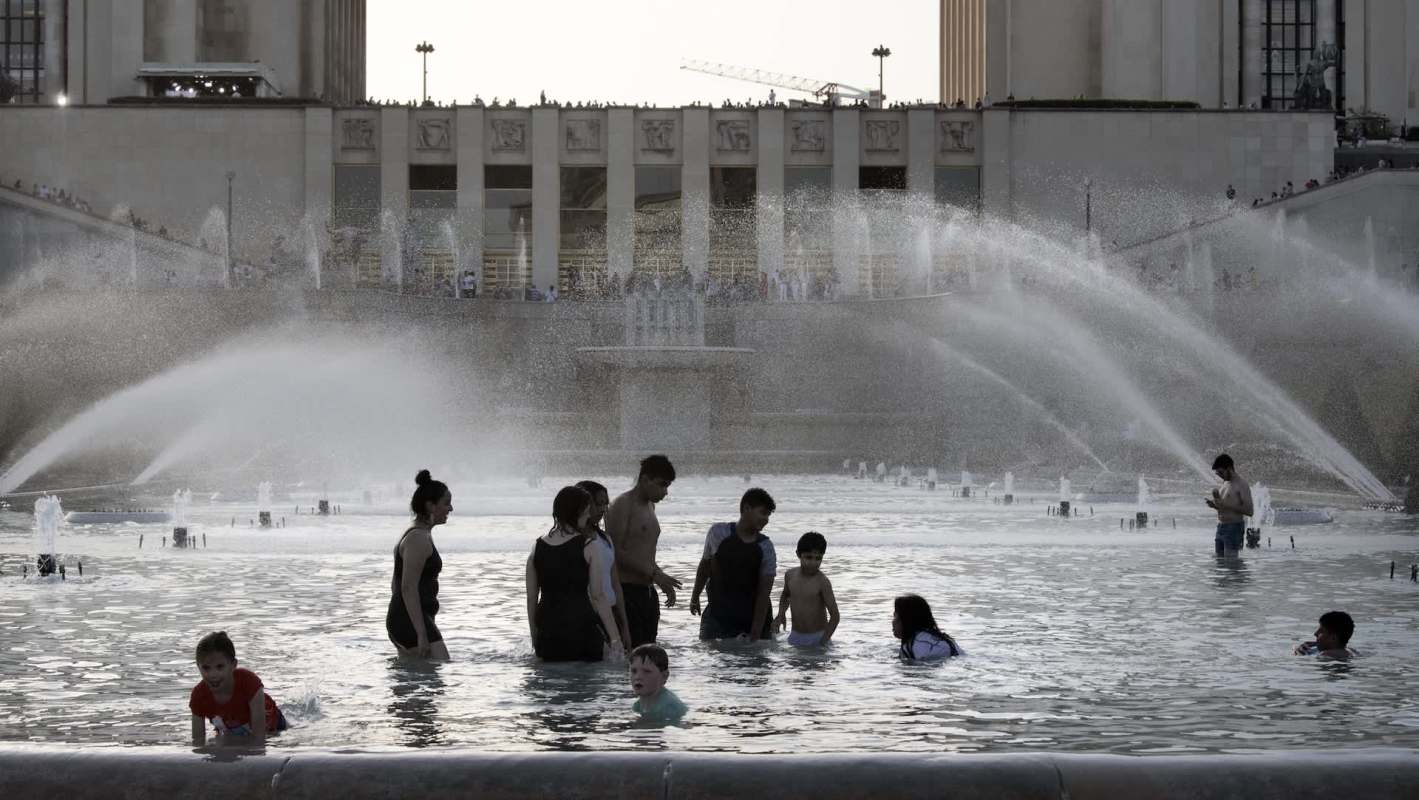
Rising temperatures are pushing Paris into a dangerous early-summer heat spell. The death toll has risen across the country as people are using dangerous rivers as impromptu places to cool off.
What's happening?
A severe heat event is taking hold across France. On June 22, temperatures at the Palace of Versailles had risen above 40 degrees Celsius, or 104 Fahrenheit, according to The Associated Press, with Paris breaking a June record at 99.9 Fahrenheit.
People have sought relief wherever they can, gathering in cooling sprays near the Eiffel Tower, walking along the Seine, and jumping into rivers in places including Lille and Samois-sur-Seine.
It's been reported that over 40 people have drowned in strong river currents since June 18 after trying to escape the intense heat.
Two children have also died. They were found in a locked car, and an investigation has been opened into involuntary manslaughter, according to the AP.
Authorities are cracking down on public alcohol consumption after medical specialists warned of the risks of dehydration.
TCD Picks » Quince Spotlight
💡These best-sellers from Quince deliver affordable, sustainable luxury for all




Why does it matter?
Heat like this is more than uncomfortable. It can quickly become a public health emergency, especially for older adults, children, outdoor workers, and people without access to air conditioning or cool indoor spaces.
To make matters worse, many older people in the region live without air conditioning in their homes.
When nighttime temperatures remain high, the body has less chance to recover, increasing the risk of heat exhaustion and heat stroke.
Escalating extreme weather disasters endanger lives and livelihoods by straining hospitals, disrupting travel and work, and increasing energy demand just as people need cooling the most.
They also threaten economic stability as tourism, agriculture, and local businesses are forced to adapt to hazardous conditions. In major cities such as Paris, heat can build up in concrete-heavy neighborhoods, making already vulnerable communities even less safe.
Climate change is increasing the frequency and severity of these extreme weather conditions, impacting daily life and exacerbating health issues.
What's being done?
Public cooling features, shaded public spaces, and access to water can all help reduce risk during severe heat, especially in crowded urban areas and tourist hubs.
Limit outdoor activity during the hottest parts of the day, drink water regularly, seek air-conditioned or shaded spaces, and check in on neighbors or relatives who may be more vulnerable. For those who must be outside, lightweight clothing, hats, and umbrellas can make a meaningful difference.
Cities are also facing growing pressure to adapt with more tree cover, cooler building materials, and public health planning designed for repeated heat events rather than one-off emergencies. Those kinds of changes can help keep neighborhoods safer as brutal summer temperatures become more common.
France's scorching scenes show how extreme heat can reshape daily life. When temperatures stay this high, staying cool becomes a matter of safety, not comfort.

Get TCD's free newsletters for easy tips, smart advice, and a chance to earn $5,000 toward home upgrades. To see more stories like this one, change your Google preferences here.






