


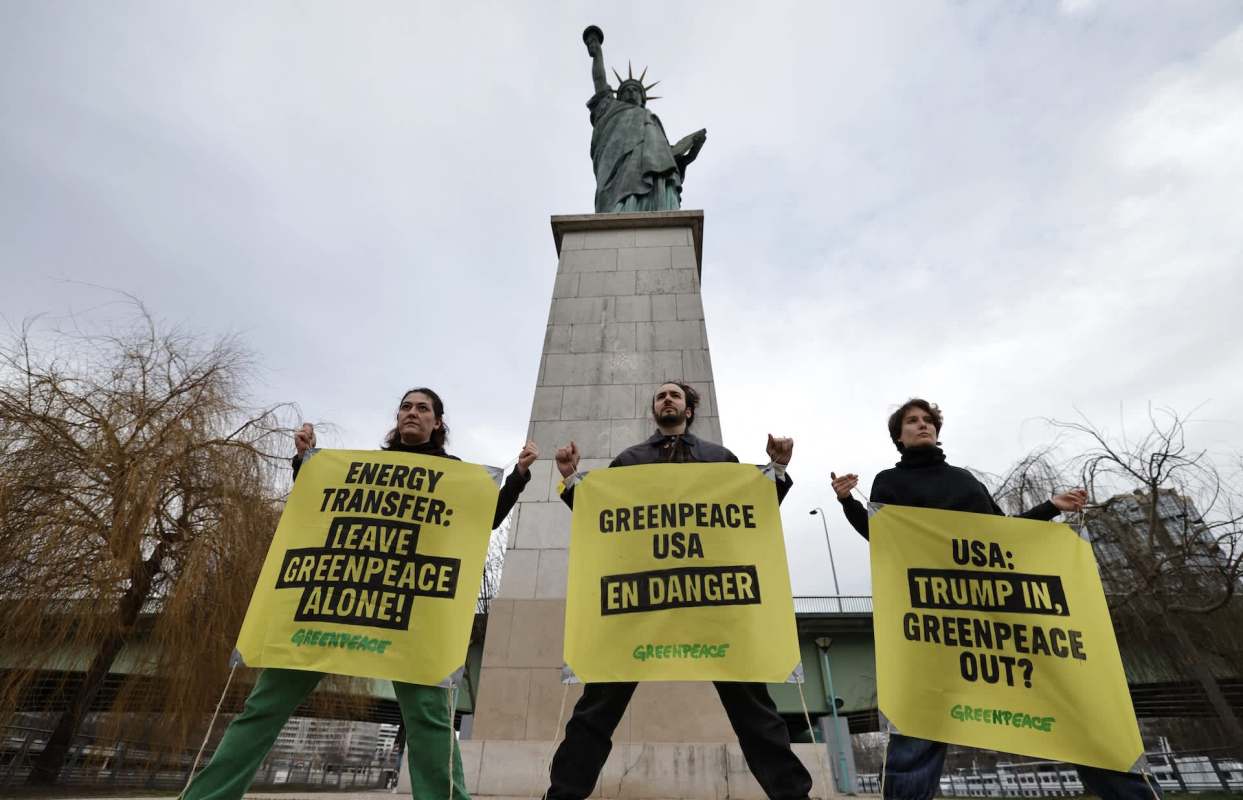
Greenpeace International will be able to keep its case against pipeline operator Energy Transfer alive after a Dutch court refused to dismiss the lawsuit tied to the Dakota Access Pipeline protests.
What happened?
According to Inside Climate News, the Amsterdam District Court rejected Energy Transfer's bid to end the case, leaving Greenpeace International free to press its claim that the company's U.S. suit was meant to deter and punish criticism about the crude oil pipeline.
That means related legal fights between the two sides are now playing out at the same time in Europe and the United States.
The conflict grew out of the 2016 and 2017 Indigenous-led demonstrations against the 1,172-mile Dakota Access Pipeline. The project was rerouted close to the Standing Rock Sioux reservation and beneath Lake Oahe, the tribe's primary source of drinking water.
Last year, Energy Transfer won a North Dakota jury verdict against Greenpeace entities, initially set at nearly $667 million before being reduced to $345 million.
Greenpeace International said Energy Transfer used unfounded allegations and public messaging to retaliate against opposition in the Dutch case. The Amsterdam court said the 2024 EU anti-SLAPP directive is not yet in force there, but it still found that the lawsuit may go ahead and be decided on the merits.
TCD Picks » Quince Spotlight
💡These best-sellers from Quince deliver affordable, sustainable luxury for all




Daniel Simons, senior legal counsel for strategic defense at Greenpeace International, said: "It still allowed our case to move forward, but it does so under the existing Dutch law rather than that together with the EU directive."
Why does it matter?
The case could shape how corporations use lawsuits against activists, nonprofits, and community groups.
At issue is whether the North Dakota litigation amounts to a SLAPP — a Strategic Lawsuit Against Public Participation — as Greenpeace has claimed. Energy Transfer, by contrast, said the Netherlands action is an improper bid to undercut its U.S. courtroom win.
Fossil fuel infrastructure projects can spark legal disputes and affect public health, safety, and household finances.
The fossil fuel industry worsens extreme weather disasters that destroy homes, jobs, and local economies. It also drives air and water pollution linked to asthma, heart disease, cancer, and premature death, while keeping household energy costs high even as corporate profits climb.
Industry lobbying has further slowed the transition to cleaner, cheaper energy solutions that could better protect families and communities.
If Greenpeace succeeds in the Netherlands, the case could become a model for holding powerful companies accountable when litigation is used to intimidate opposition to controversial oil and gas projects.
What are people saying?
Simons said, "For a third time, Energy Transfer has failed to halt our case," adding that the company "will have to face accountability for its conduct, including repeated abusive lawsuits and defamatory statements."
Energy Transfer characterized the outcome very differently, calling the ruling an "important victory" and a "step in the right direction."
The company said: "The court agreed with our position that the Directive does not apply."
Patrick Parenteau, emeritus professor of law at Vermont Law and Graduate School, told Inside Climate News: "There may be an outright conflict between the two courts in the two cases, or there may not. This is uncharted territory."

Get TCD's free newsletters for easy tips, smart advice, and a chance to earn $5,000 toward home upgrades. To see more stories like this one, change your Google preferences here.







