


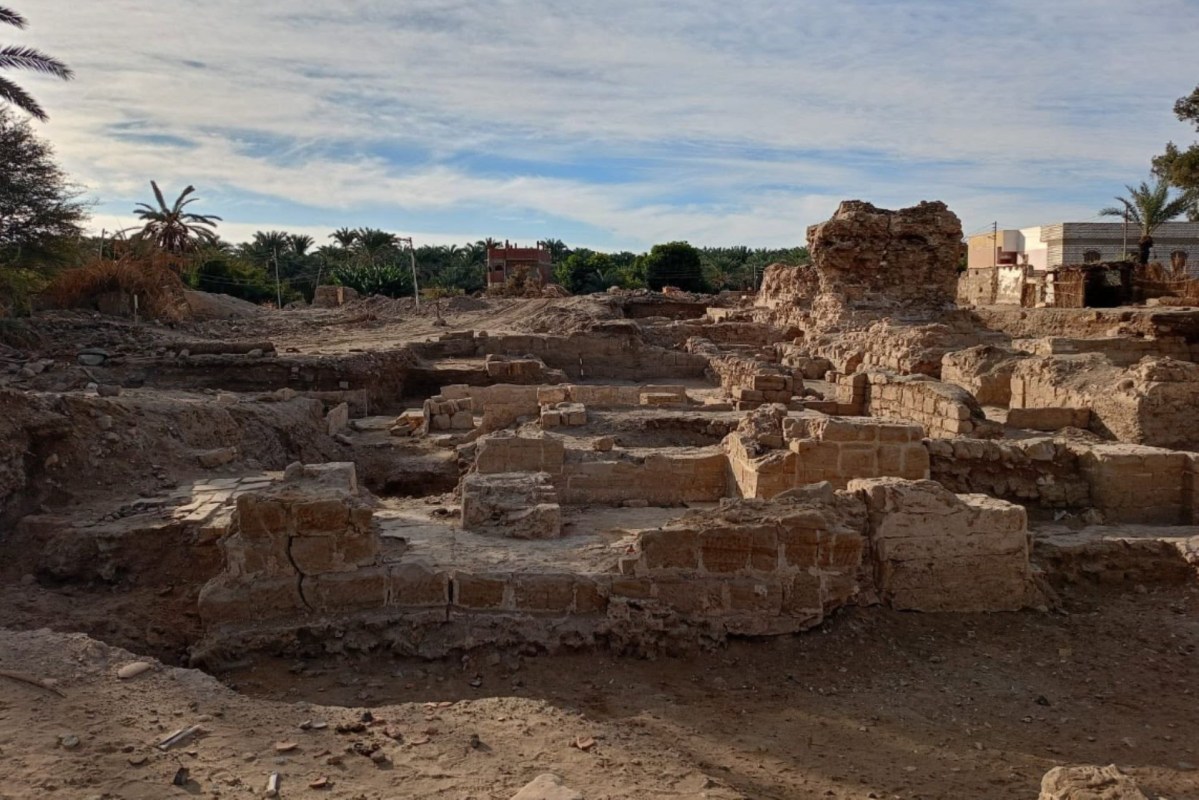
In Egypt's Bahariya Oasis, the discovery of a temple hall is sharpening archaeologists' understanding of the area's past role in both worship and government.
At the center of the find is a hypostyle hall built around 16 sandstone columns.
What happened?
The latest work at the Old Palace site in Al-Qasr village has brought to light additional temple remains from the 26th Dynasty, Heritage Daily reported.
The excavation is being carried out by Egyptian archaeologists from the Supreme Council of Antiquities, which has been investigating the site since 2014.
Reliefs and hieroglyphic inscriptions naming Amun, Mut, and Khonsu were found alongside a major columned hall with adjoining rooms and chambers.
The team also identified parts of a sandstone building and stone blocks bearing the names and royal titles of Psamtik I.
TCD Picks » Quince Spotlight
💡These best-sellers from Quince deliver affordable, sustainable luxury for all




Taken together, the remains indicate that the temple was started in the reign of Psamtik I and expanded under Apries and Amasis II, giving researchers a clearer sense of how it developed over time.
Why does it matter?
The discovery adds to growing evidence that the Bahariya Oasis was much more than an isolated desert outpost.
For centuries, the oasis appears to have combined religious and administrative roles, and these remains offer more evidence of its links to the wider Egyptian state.
The site's importance may reach back before the 26th Dynasty. Archaeologists found a stone stela from the reign of Amenhotep II and artifacts from the time of Ramesses II, pointing to religious and settlement activity that existed before the temple itself.
Occupation also continued long after pharaonic rule. Earlier and current excavations have uncovered Coptic and Latin inscriptions, industrial areas, storage facilities, and basins used to make wine and oils, showing the site remained in use through the Greek and Roman eras and into the later Christian period.
What are people saying?
Sherif Fathy, Egypt's Minister of Tourism and Antiquities, said the discoveries enhance understanding of ancient Egyptian civilization and reinforce Egypt's status as a leading destination for cultural tourism.
According to Dr. Hisham El-Leithy, Secretary-General of the Supreme Council of Antiquities, the finds are helping researchers reconstruct the temple's original layout and better understand its development through time.
He called the discovery further evidence of the Old Palace site's historical significance.

Get TCD's free newsletters for easy tips, smart advice, and a chance to earn $5,000 toward home upgrades. To see more stories like this one, change your Google preferences here.






