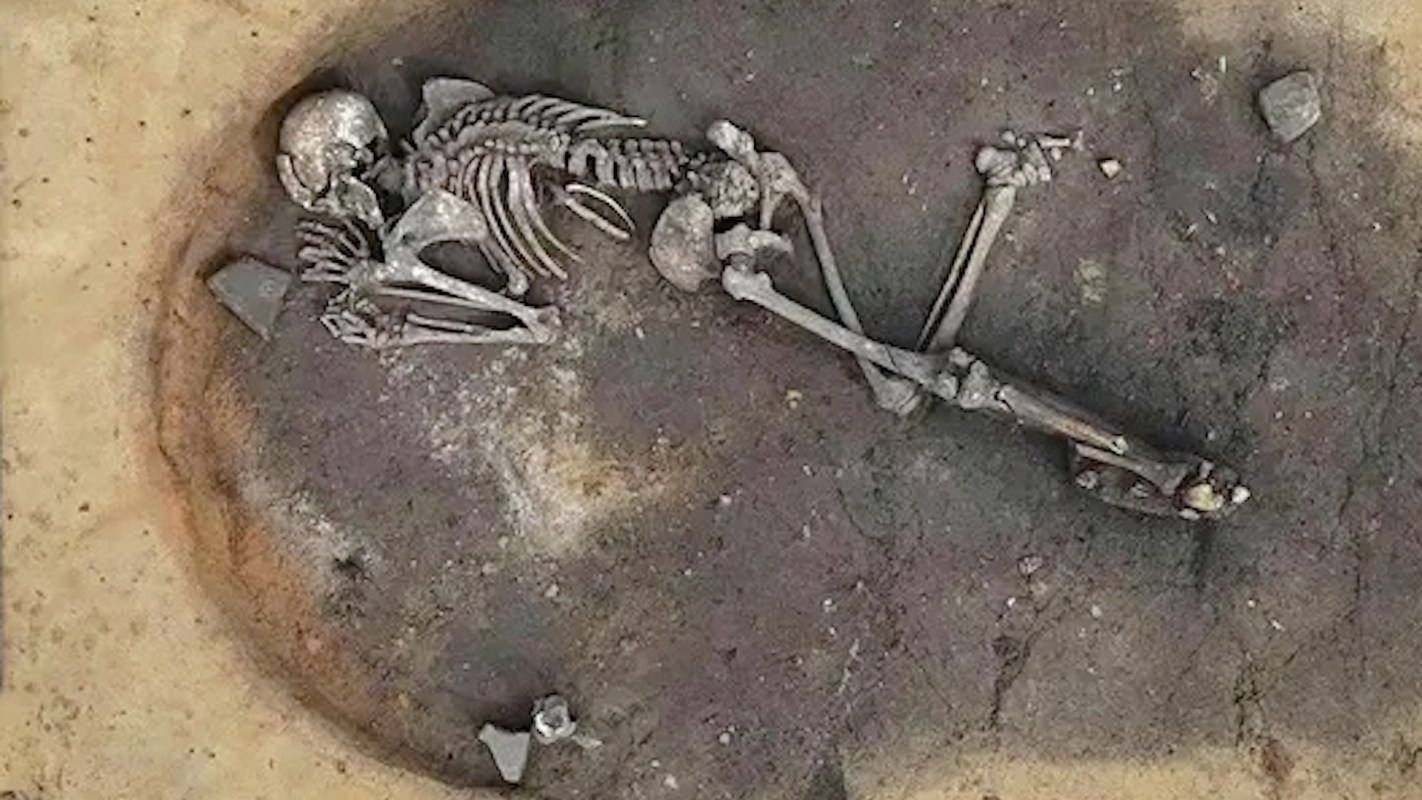
Work paving the way for a new power line in Germany has uncovered an unusual 5,000-year-old mystery.
Archaeologists helping to excavate the area where the new SuedOstLink power line will be placed uncovered an ancient burial scene, depicting what could be an example of human sacrifice, as reported by Archaeology Magazine.
The burial was uncovered by Saxony-Anhalt's State Office for Heritage Management and Archaeology during excavations along the proposed route of the future power line.
Its investigations have already revealed about 6,000 years of human activity on a nearby hill, including a large burial mound associated with the Baalberge culture that contained pits filled with human remains, animal bones, offerings, and other ancient artifacts.
The newly discovered skeleton at the center of this mystery belonged to the Corded Ware culture, which was present across much of northern and central Europe during the Copper Age.
Burials during this period, roughly between 2900 and 2050 BCE, generally followed strict burial customs. Men were almost always buried on their right side, women on their left, and both were usually placed facing south in a crouched posture.
TCD Picks » EDF Spotlight
💡EDF's Vital Signs newsletter delivers stories about game-changing solutions close to home and around the world



However, these remains did not exactly match customs from this time. While the man's remains were recovered with him on his right side, he was buried in an abandoned kiln pit, and his skull shows evidence of a traumatic head injury. Additionally, his upper body appeared displaced and in an unusual position.
Now, the case is prompting fresh questions about prehistoric burial practices. Researchers are considering whether the man may have been placed in his final resting place as a ritual offering, while emphasizing that they have not proved that conclusion.
Burial context can offer clues, but more analysis and laboratory testing are also needed. While the skull injury may point to interpersonal violence or conflict, it does not automatically confirm a case of human sacrifice.
The archaeologists are being careful not to overstate the mystery. Yet, they say the burial setting makes a sacrificial explanation hard to dismiss.
Further testing may help to determine whether the man was a sacrifice or just a consequence of a long-forgotten ritual.

Get TCD's free newsletters for easy tips, smart advice, and a chance to earn $5,000 toward home upgrades. To see more stories like this one, change your Google preferences here.
Cool Picks