


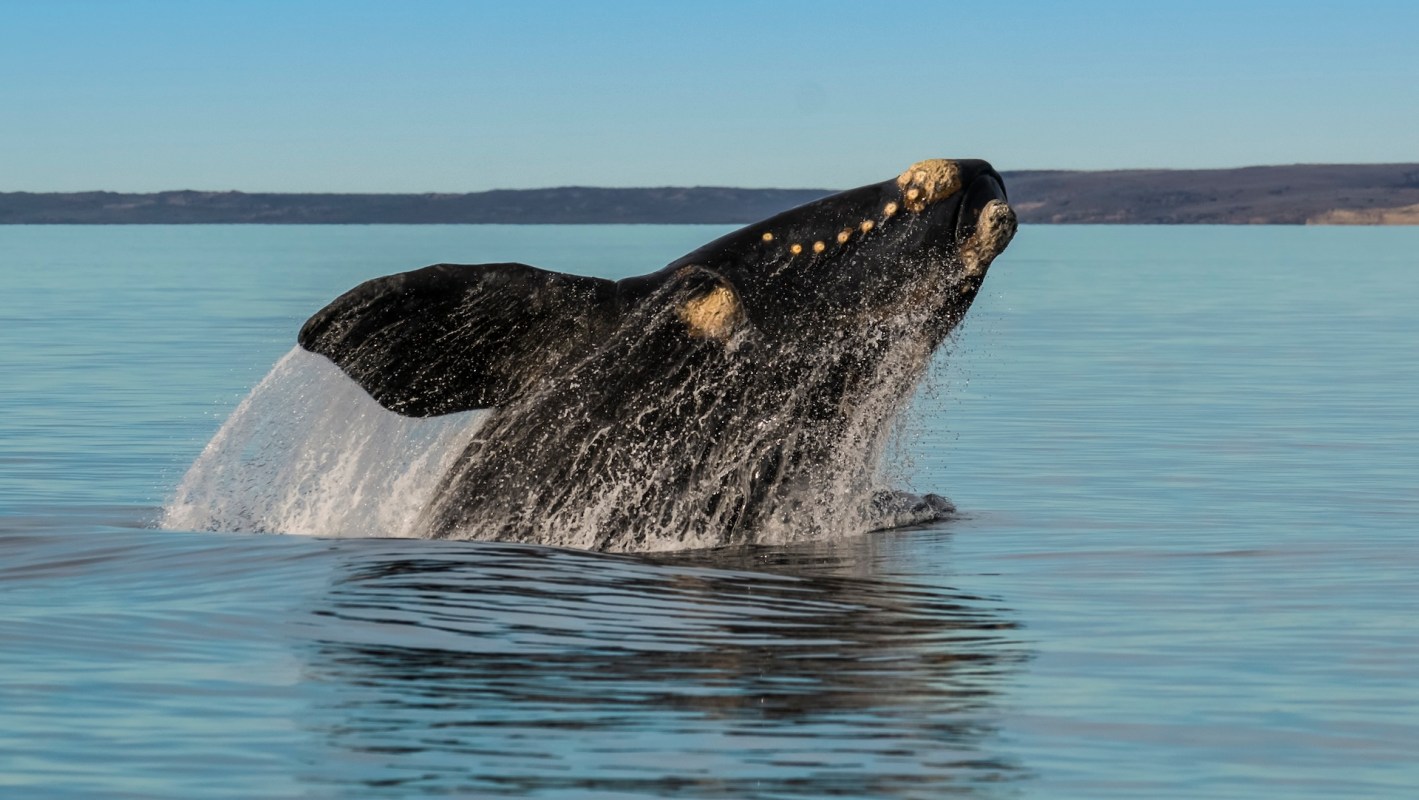
Experts believe the young North Pacific right whale spotted off the coast of Malcolm Island may be the first of its kind documented in British Columbia, Canada.
The sighting offers researchers hope for one of the most endangered whale populations on the planet.
What's happening?
CBC News reported that Troy Bright, who works with Bere Point Research, was on Malcolm Island when he saw a whale breaching repeatedly nearby. It soon became clear that this wasn't any ordinary whale sighting.
"It breached like a good six, maybe seven times just right in front of me," Bright told the outlet.
The whale's appearance quickly led Bright to realize he was not looking at a humpback.
"The pectoral fins are really short, and they're quite black — that's how I knew it wasn't a humpback whale," he said.
TCD Picks » Quince Spotlight
💡These best-sellers from Quince deliver affordable, sustainable luxury for all




Specialists later backed Bright's identification and said the animal appeared to be an endangered North Pacific right whale, a species seen only seven times in British Columbia, according to CBC News.
Jared Towers of the Department of Fisheries and Oceans told the outlet the whale was about eight meters long and appeared to be a juvenile.
"This is a juvenile right whale," Towers said. "It's quite likely the first time it's ever been documented."
Why does it matter?
The number of North Pacific right whales is critically low, making every documented encounter valuable to scientists.
This new sighting also points to something researchers have not observed in a very long time: recent reproduction.
"There hasn't been a North Pacific right whale calf seen in many, many years," Towers said. "So this is an encouraging thing that this animal was a calf recently."
Any sign of new life is especially important given the species' long history of decline.
North Pacific right whales were heavily hunted in the 1800s and early 1900s, and scientists say the effects are still being felt today.
"They are in the plight they are in, with this small population size and a highly endangered whale, because of humans," Kevin Campion, founder of Save the North Pacific Right Whales, told CBC. "Humans killed a lot of these whales."
Today, the whales continue to face threats tied to human activity, including ship strikes, entanglements, and shifting food availability.
Sightings like this can help researchers better understand where these whales feed and where they may need stronger protections.
What are people saying?
Researchers said the sighting was both startling and cautiously encouraging. Bright emphasized just how rare the species is, saying it is the most endangered whale species worldwide.
Towers said the whale was easy to overlook and might have gone unnoticed.
"It was very easy to miss. The only reason it was found is that it was rolling around at the surface with a piece of kelp," Towers said.
Campion said many conservationists have been waiting for a moment like this.
"We've kind of been holding our breath waiting for one to get reported," he said.

Get TCD's free newsletters for easy tips, smart advice, and a chance to earn $5,000 toward home upgrades. To see more stories like this one, change your Google preferences here.






