


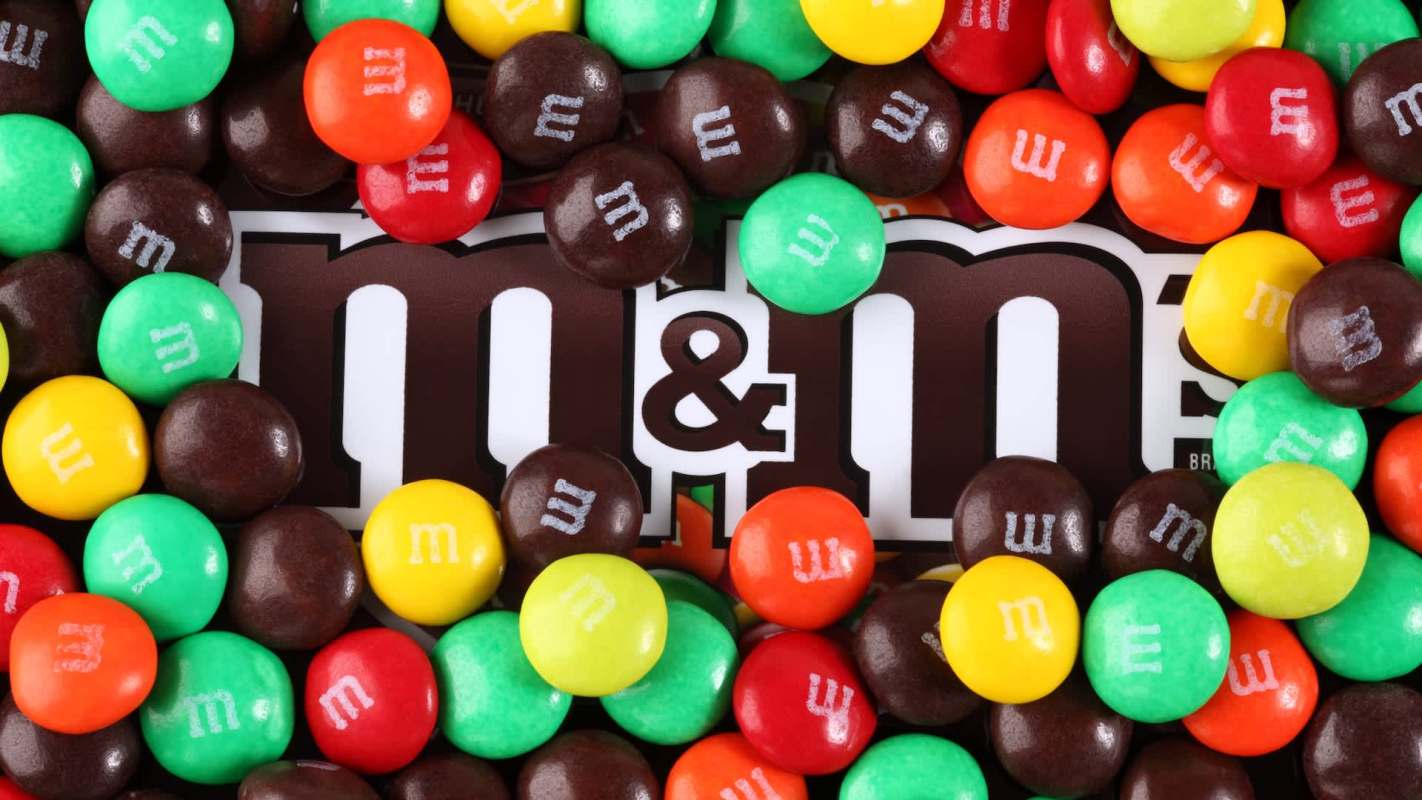
M&M's are going au naturel for their 85th anniversary.
As NewsNation details, the candy brand plans to introduce a dye-free version this summer. The initial rollout will come without blue and brown, the outlet notes, even though those are among its most notable colors.
What's happening?
In August, during the M&M's brand's 85th anniversary year, Mars says it will debut a food dye and coloring-free edition of the candy, NewsNation said.
Consumers will first see a mix of red, yellow, orange, and green M&M's, with blue and brown omitted at the start, and Amazon will soon carry the first version of the new assortment, the outlet added.
The move comes as food companies face growing pressure to remove artificial dyes from their products, including calls from Health and Human Services Secretary Robert F. Kennedy Jr. as part of the "Make America Healthy Again" movement.
Mars told The Wall Street Journal that producing natural versions of blue and brown would drive costs up too much.
TCD Picks » Quince Spotlight
💡These best-sellers from Quince deliver affordable, sustainable luxury for all




"It was a daunting situation," Anton Vincent, president of Mars Snacking, North America and Global Ice Cream, explained to the outlet. "You're messing with an 85-year-old icon."
Blue, a color added to M&M's in 1995, has been especially hard to duplicate naturally, NewsNation noted. It relies in part on costly spirulina, a pigment derived from algae, and much more of that ingredient is needed to reach the same visual intensity, per the publication.
Before settling on the current approach, Mars weighed using purple and pink instead of blue and brown, as well as reducing the assortment to three colors, NewsNation reported. The company said it wants to restore the full core color mix in a dye-free version by 2028.
Why does it matter?
Many shoppers increasingly want foods made with simpler ingredient lists or without synthetic additives, and dye-free M&M's give them another mainstream option without asking them to give up a familiar treat.
It also shows how even giant food brands are rethinking ingredients that once seemed untouchable. Mars had previously pledged in 2016 to remove artificial dyes before later stepping back after deciding customers were not especially concerned, NewsNation noted. This latest effort suggests that conversation has shifted.
When a household-name company tests a reformulated version of an 85-year-old product, it can influence what competing brands do next and how quickly cleaner-label products become easier to find and potentially more affordable.
There is also a larger push to innovate in this space, with companies developing natural color alternatives.
What's being done?
Mars has managed to recreate some M&M's colors with natural ingredients. The struggles to recreate blue and brown show that this kind of reformulation is often slow, expensive, and highly technical, especially when companies are trying to preserve a product's classic look.
The company's phased rollout may be the most practical path forward in launching a partial dye-free lineup now, gauge consumer response, and keep working toward a full version by 2028.
While Trader Joe's and other candy companies such as Unreal have been making dye-free M&M's-style coated candies for years, Mars is not mincing words about the challenges of going dye-free.
"It's the hardest thing I've had to do in my career," Mars executive Claire Hewitt told The Wall Street Journal, according to NewsNation.

Get TCD's free newsletters for easy tips, smart advice, and a chance to earn $5,000 toward home upgrades. To see more stories like this one, change your Google preferences here.







