


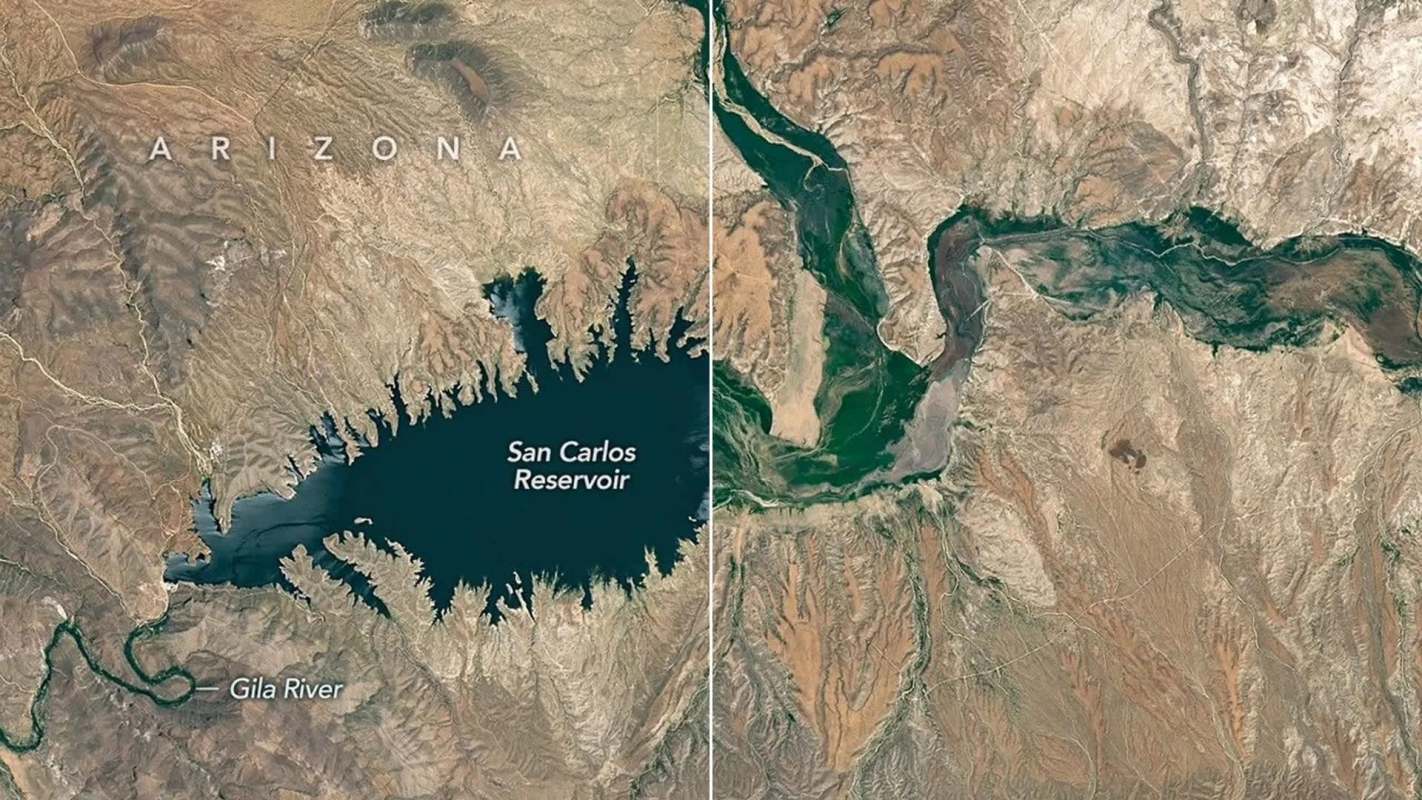
A before-and-after satellite comparison offers a stark look at how fast one of Arizona's major reservoirs has declined.
The San Carlos Reservoir is now less than 1% full, and virtually all the fish in it have died, NASA Earth Observatory reported Thursday.
What happened?
Images taken nearly three years apart show the scale of the drop: The reservoir was about 60% full in June 2023, but almost three years later, on May 22, it held just 389 acre-feet of water, putting it at less than 1% full.
The San Carlos Reservoir draws much of its water from the Gila River, one of the most vital waterways in the Southwest, which supplies nearby communities, farms, and wildlife.
Much of the Gila's spring runoff in wetter years comes from snow in New Mexico's Mogollon Mountains and Black Range, which helps replenish the reservoir. But this year, that snowpack all but disappeared.
By June, releases for downstream farming had further cut into already thin supplies. That came after snowfall in the watershed fell to just 2% of the 1991-2020 March median, and April streamflow was only 39% of normal, leaving fewer than 400 acre-feet in the reservoir.
TCD Picks » Quince Spotlight
💡These best-sellers from Quince deliver affordable, sustainable luxury for all




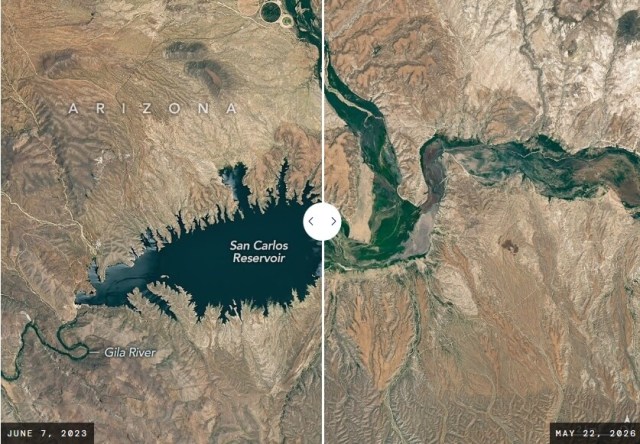
In the side-by-side views, what was once a broad blue lake appears mostly as an exposed basin. Tamarisk, willow, cottonwood, sedges, and grasses can be seen along the old shoreline and river channel.
Why does it matter?
When a reservoir of this size nearly disappears, the effects can range from irrigation and outdoor recreation to ecosystem health and local economies.
As the reservoir shrank, oxygen levels fell enough to create hypoxic conditions that killed nearly all of the fish. The species affected include largemouth bass, black crappie, bluegill, channel catfish, flathead catfish, and stocked brown and rainbow trout.
On June 5, officials closed the reservoir indefinitely and warned that decomposing fish could create health risks for people trying to fish or boat there.
San Carlos Reservoir has dried up entirely at least 20 times since it was first filled in 1930.
What are people saying?
According to ScienceDaily, the San Carlos Recreation and Wildlife Department said the closure would remain in effect indefinitely.
NOAA's May 2026 monsoon outlook put the chance of above-average summer rainfall at 33% to 50%, and strengthening El Niño conditions could improve the odds of heavy rain in the Southwest.
But after a fish kill this severe, recovery may take time — even if wetter weather arrives.

Get TCD's free newsletters for easy tips, smart advice, and a chance to earn $5,000 toward home upgrades. To see more stories like this one, change your Google preferences here.







