


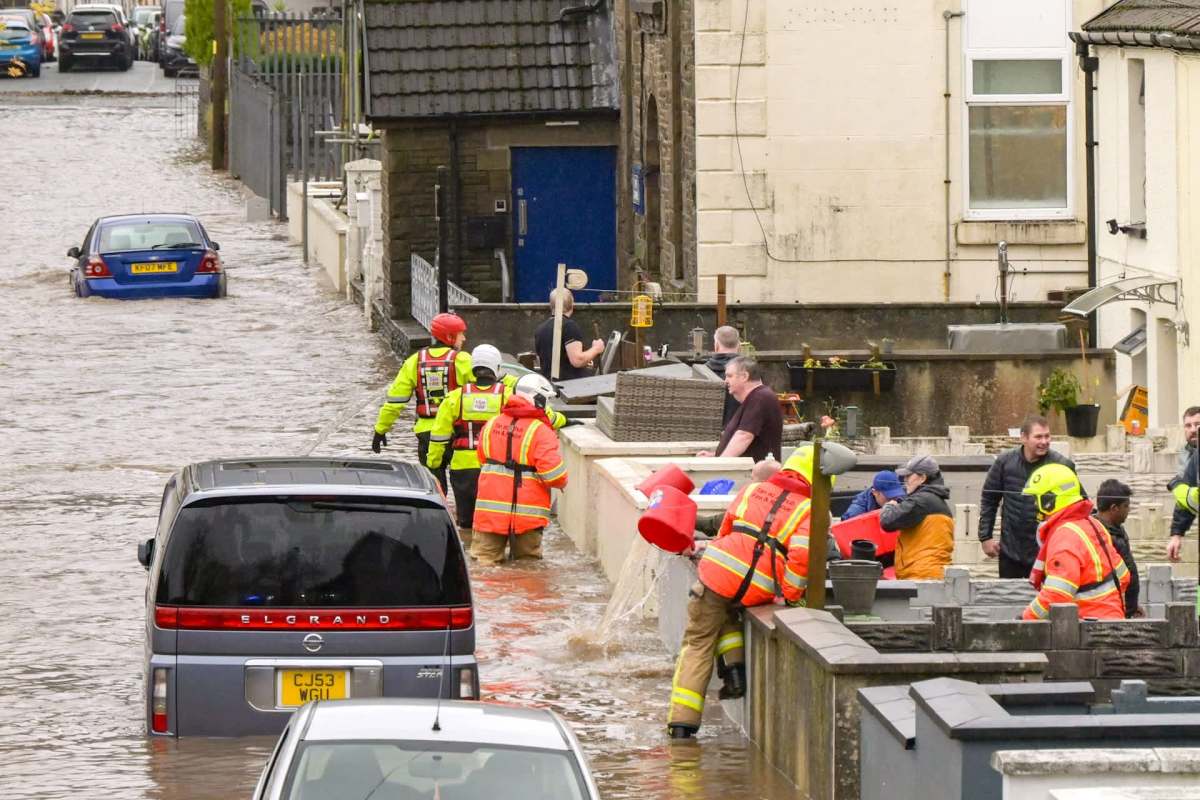
Climate change could cause rivers to experience "whiplash" between states of very high and very low flow, making flood planning much more difficult, according to a new study.
What happened?
Appearing in the peer-reviewed journal Earth's Future, the research assessed 698 river catchments across the U.K. under scenarios of different levels of global warming.
What the scientists found was that this "hydroclimatic whiplash" could make flash flooding more dangerous and difficult to manage.
When intense rainfall follows a long dry spell, the ground can harden and become less able to absorb water. That can lead to more runoff, a higher risk of flash flooding, and more polluted material being washed into rivers.
And when wet stretches turn into drought, the sudden shock could leave communities, farmers, and water managers unprepared.
One of the study's authors, Dr. Yi He, told The Guardian that "as warming increases, traditional approaches to flood and drought planning may no longer be enough... We need to plan for sequences of extremes, not just a single event."
TCD Picks » Quince Spotlight
💡These best-sellers from Quince deliver affordable, sustainable luxury for all




Dr. He of the University of East Anglia and her colleagues found that warming is expected to bring more whiplash events in both dry-to-wet and wet-to-dry patterns. And while the study centers on the U.K., Dr. He said the findings could serve as a warning for other temperate regions facing similar climate-related shifts.
Why does it matter?
The authors wrote, "these findings highlight the urgent need for regionally tailored, climate-resilient water management strategies to address the compounding risks of flooding, drought, and increased hydroclimatic volatility under future warming."
For everyday people, rivers experiencing whiplash could mean greater flood damage, added strain on drinking water sources, and growing pressure on local governments to respond to two different climate threats at once, sometimes back to back.

Get TCD's free newsletters for easy tips, smart advice, and a chance to earn $5,000 toward home upgrades. To see more stories like this one, change your Google preferences here.






