


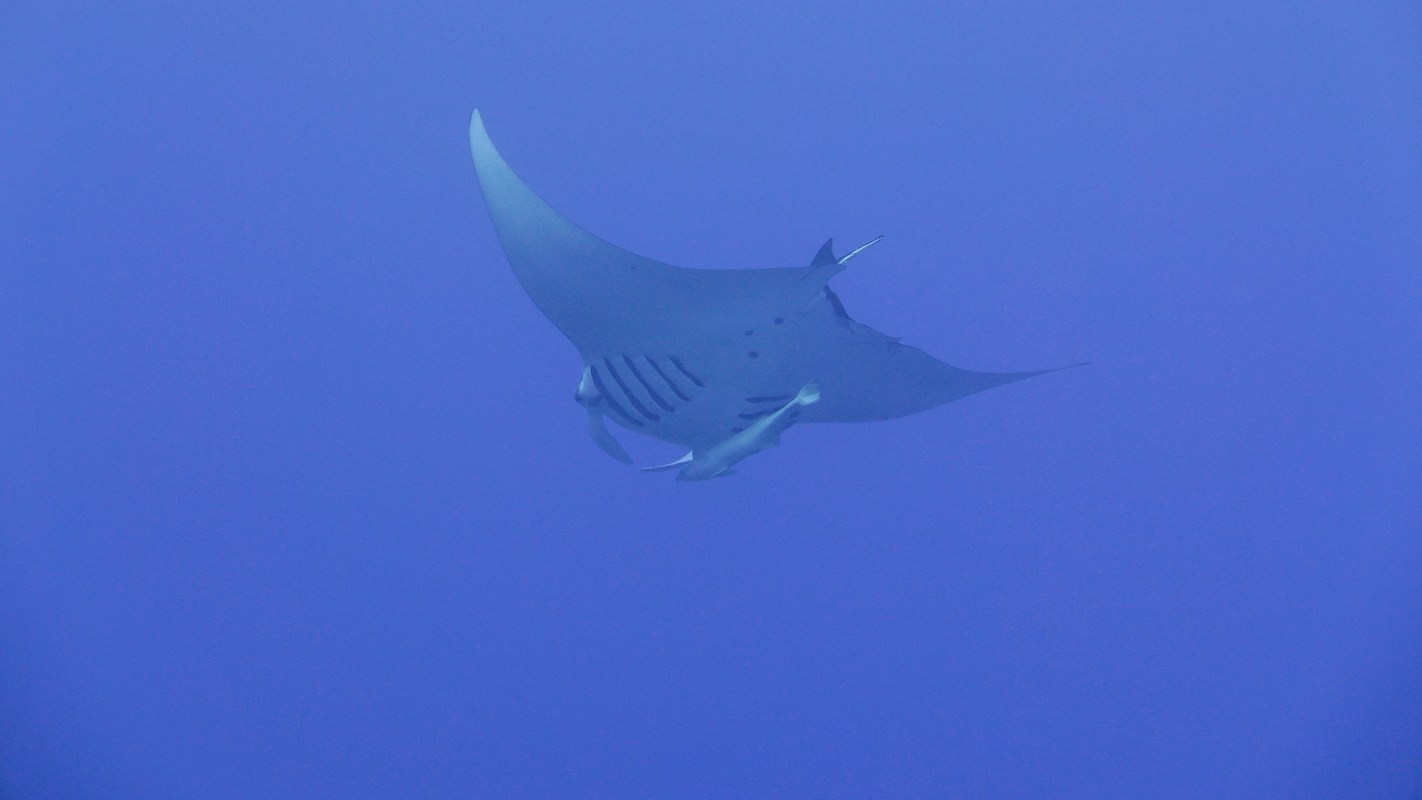
For years, researchers thought reef manta rays in Papua New Guinea avoided rough monsoon conditions by leaving for calmer waters.
New research from the University of the Sunshine Coast in Australia has found different results. Most manta rays remain near the same area and respond to changing ocean conditions by diving far deeper, with two recorded descents topping 1,300 feet.
What happened?
Research published in the journal PLOS One suggests these large rays do not react to seasonal monsoon shifts the way scientists had long assumed.
As A-Z Animals reported, scientists tagged 10 adult reef manta rays between 2016 and 2018 to measure both movement across the region and dive depth during the two monsoon seasons.
Most of the tagged rays stayed close to where they started rather than making long relocations. 75% remained within about six miles of their tagging site in Milne Bay, while the longest traveler went only a little over 50 miles, A-Z Animals reported.
The species is known to take much longer journeys in other parts of the world.
TCD Picks » Quince Spotlight
💡These best-sellers from Quince deliver affordable, sustainable luxury for all




Depth use changed with the seasons as well: average dives of roughly 207 feet during the northwest monsoon and about 161 feet in the southeast monsoon. Two rays went much farther, descending beyond 1,300 feet in December.
Why does it matter?
The findings help explain how a vulnerable species can survive in a rapidly changing ocean without expending energy on long migrations.
Because reef manta rays eat zooplankton, the change in diving behavior was likely tied to where that food was available, A-Z Animals reported. During the northwest monsoon, declining surface productivity may push prey deeper, while in the southeast monsoon, food remains closer to the surface, and the mantas do as well.
Location may also help. The Samarai Islands sit within a Coral Sea upwelling zone, where colder water rising upward helps maintain productive local waters.
That kind of concentrated year-round use gives conservationists a clearer idea of where protections may be most effective, especially in areas where bycatch from fisheries is still a risk.
Stronger habitat protections could help preserve local marine ecosystems while also supporting coastal communities that depend on healthy oceans for food security, livelihoods, and ecotourism.
What are people saying?
In a USC press release, lead author Anna Knochel said, "The data shows that the mantas expanded their vertical use of the water column rather than leaving the region to find prey."
Co-founder and CEO of The Manta Trust, Dr. Guy Stevens, said, "The fact that these animals remain closely associated with the Samarai Islands and surrounding waters highlights just how important this habitat is for the species. By identifying the areas that manta rays rely on most, we can better inform conservation measures and support the long-term protection of these vulnerable animals."

Get TCD's free newsletters for easy tips, smart advice, and a chance to earn $5,000 toward home upgrades. To see more stories like this one, change your Google preferences here.






