


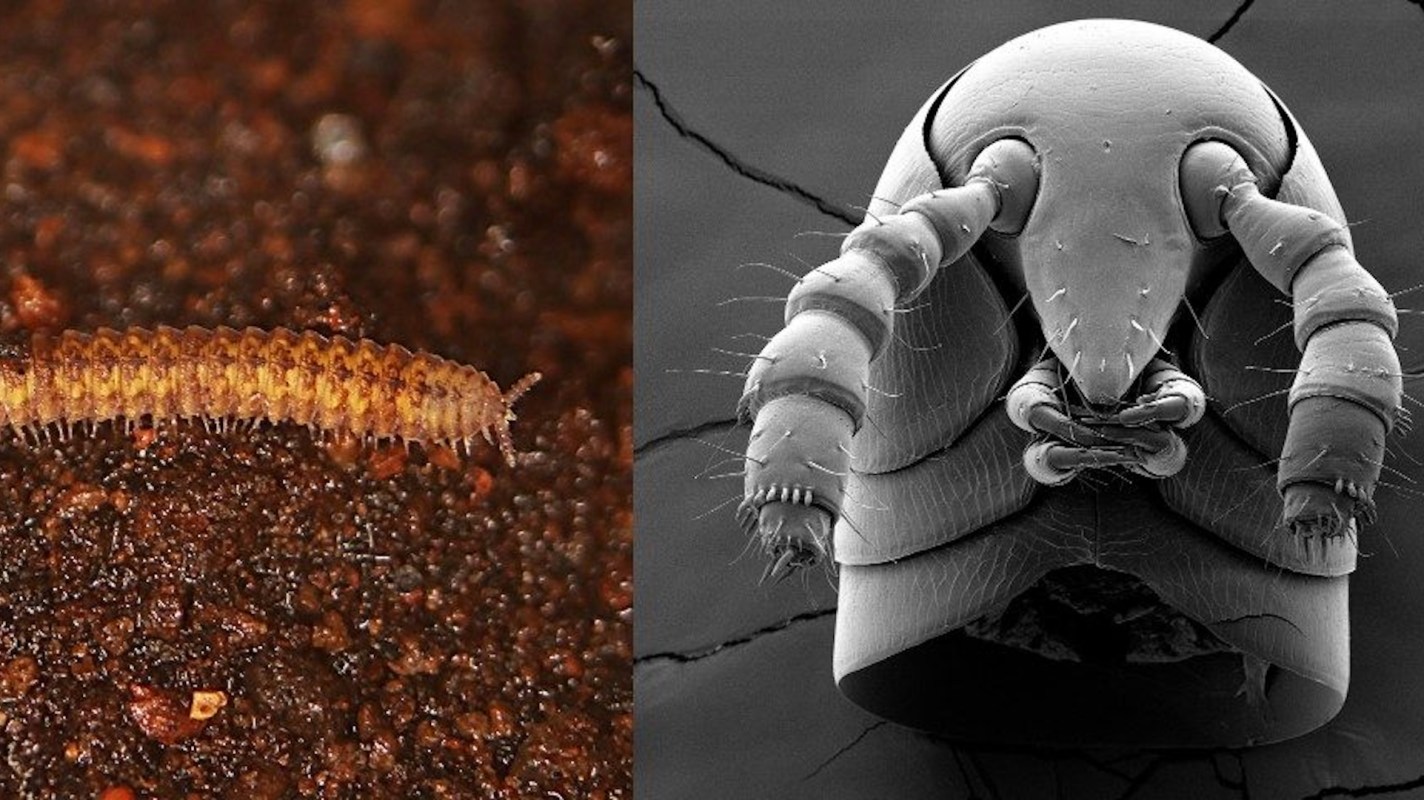
Scientists now think millipedes may have established themselves on land earlier than fossils currently show — and that they were there long before any vertebrate made the move ashore.
The conclusion comes from new research that fills in a lingering problem in the evolutionary record of these ancient arthropods.
What happened?
Working with collaborators in several countries, a Virginia Tech-led research group assembled what it described as the first complete evolutionary history spanning every living millipede order.
In the newly published study, researchers combined genetic data from modern species with anatomical evidence preserved in fossils and concluded that millipedes first emerged nearly 460 million years ago.
If that estimate is correct, millipedes were living on land more than 80 million years before vertebrates, Virginia Tech reported.
To achieve the complete history, a major challenge involved two difficult-to-place millipede groups that had remained unclassified for years. Scientists had not been able to analyze their genetics because fresh specimens were missing; one group is subterranean and reaches only about a centimeter in length, while the other exists in just a few locations.
TCD Picks » Quince Spotlight
💡These best-sellers from Quince deliver affordable, sustainable luxury for all




"These last two were kind of like our white whales," said Paul Marek, the study's lead investigator and an associate professor in Virginia Tech's Department of Entomology.
After trips to Mexico and Spain's Canary Islands, the researchers finally obtained the specimens they needed, which allowed them to place those missing lineages within the broader millipede family tree.
"It took 10 people over a week just to find this one tiny 10-millimeter adult," Luisa "Fernanda" Vasquez-Valverde, the paper's first author, told Virginia Tech.
Why does it matter?
Dating millipedes more precisely helps researchers better understand the earliest ecosystems on land. Long before forests, seeds, flowers, or vertebrates appeared there, millipedes were already breaking down dead organic material and cycling nutrients.
Marek told Virginia Tech that "millipedes beat vertebrates onto land by more than 80 million years. They really set the stage for later life on land, including humans and vertebrates."
That function continues today, with millipedes still serving as important decomposers that feed on decaying plant matter and return nutrients to the soil.
In practical terms, decomposers like millipedes help support the health of forests, gardens, and other landscapes that people depend on.

Get TCD's free newsletters for easy tips, smart advice, and a chance to earn $5,000 toward home upgrades. To see more stories like this one, change your Google preferences here.






