


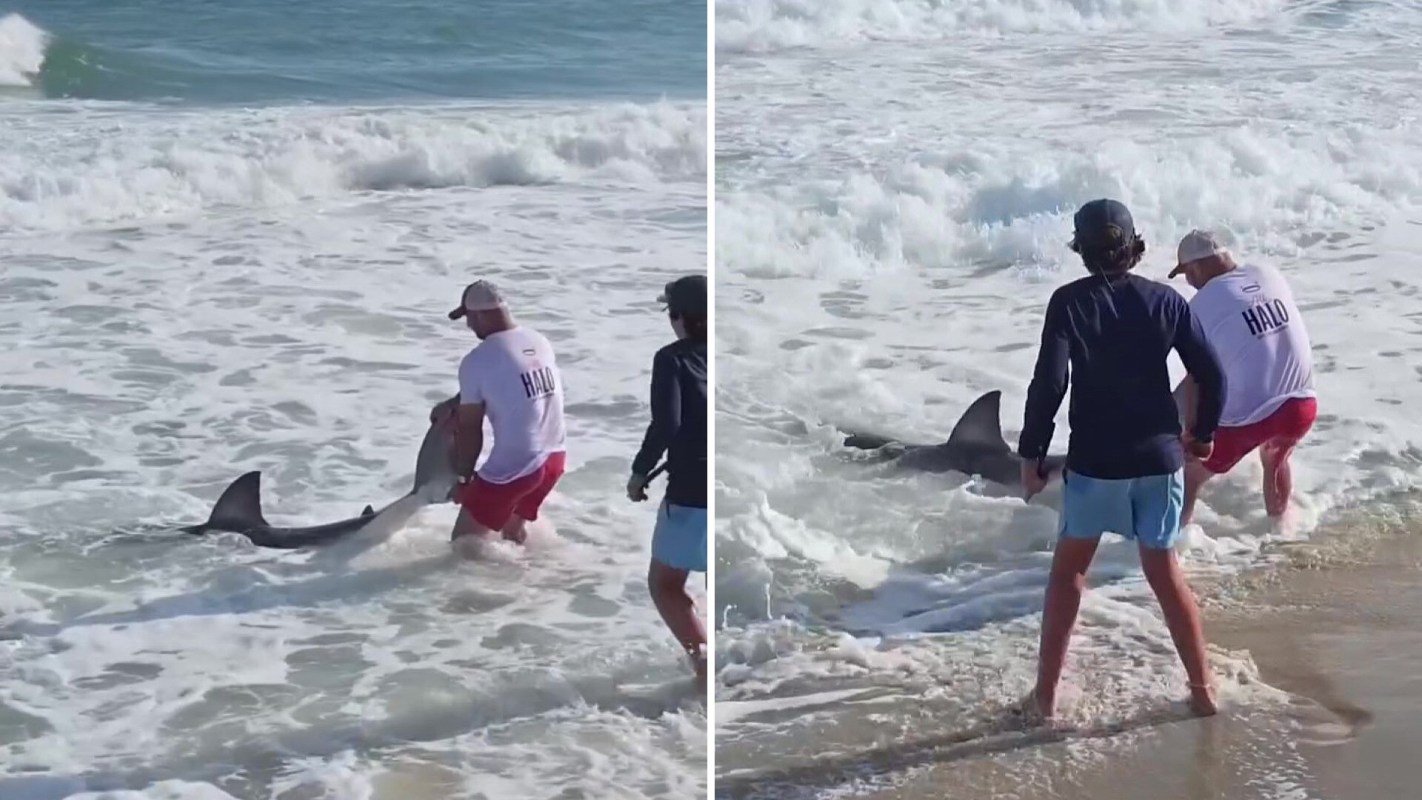
A young great white shark named Quint has been detected near the southern end of Cape Cod Bay in Massachusetts, marking a milestone for OCEARCH researchers who tag and track sharks to better understand their migration patterns and inform future conservation efforts.
What happened?
As Fox Weather reported, Quint — a subadult male great white — was detected off the coast of Massachusetts in June. Researchers initially tagged Quint in Mahone Bay, Nova Scotia, during a July 2025 expedition, when he measured 9 feet, 8 inches, and weighed an estimated 587 pounds.
Less than a year later, OCEARCH said the new ping, at Cape Cod Bay on June 12, places him near "one of the most important seasonal habitats for white sharks in the western North Atlantic."
His identification also marks a milestone for researchers: Quint was the 100th great white shark OCEARCH tagged, sampled, and released in the western North Atlantic, Fox Weather reported. OCEARCH has an app that allows users to track sharks live.
Why does it matter?
Tracking sharks like Quint gives researchers a clearer picture of migration routes, feeding patterns, and the habitats these animals rely on to survive. That information can help shape ocean conservation strategies at a time when marine ecosystems are under pressure from warming waters, pollution, and shifting food webs.
For coastal communities such as those around Cape Cod, more comprehensive shark data can help scientists and officials understand when sharks are likely to be nearby and inform decisions that protect both people and wildlife.
TCD Picks » Quince Spotlight
💡These best-sellers from Quince deliver affordable, sustainable luxury for all




White sharks are at the top of the food chain, which means they play an important role in maintaining balance in marine environments. Learning where they travel and when they return can help protect broader ecosystems, including species and habitats that support fisheries, tourism, and local economies.
Fox Weather noted that Quint and other marine animals can be tracked online via the free OCEARCH Global Shark Tracker app.
The more researchers learn about where sharks go and why, the better equipped communities will be to protect coastlines, marine biodiversity, and the natural systems people depend on.

Get TCD's free newsletters for easy tips, smart advice, and a chance to earn $5,000 toward home upgrades. To see more stories like this one, change your Google preferences here.






