


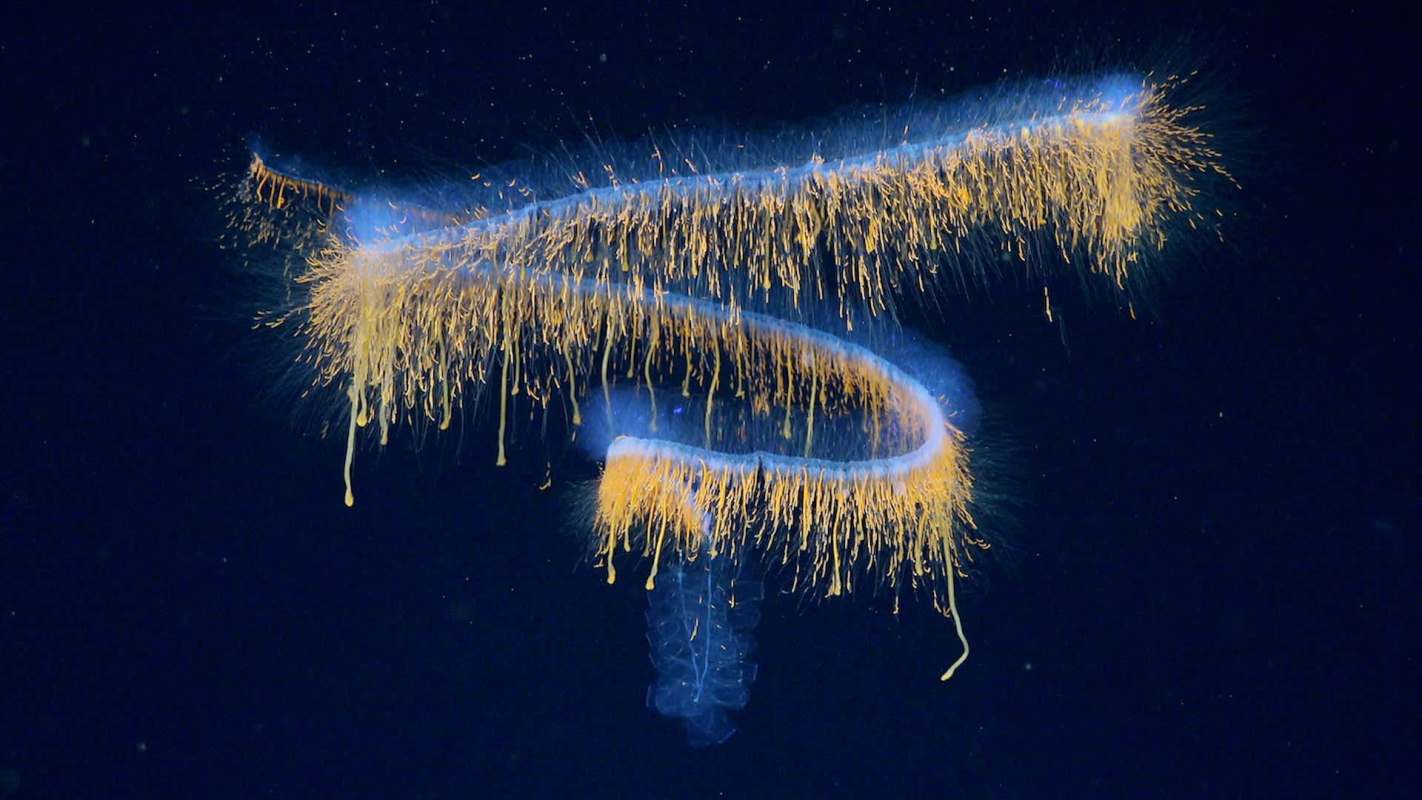
A dim, hard-to-reach stretch of ocean off Brazil's coast has given scientists a remarkable glimpse into life that few humans ever get to see.
In the vast midwater zone, a recent expedition documented 31 previously unknown species and achieved a first at sea: a 3D look at the living cellular structure of a microbe.
What happened?
Working from the Schmidt Ocean Institute's research vessel Falkor (too), an international team studied the tropical South Atlantic midwater ecosystem with genome sequencing and a range of advanced imaging tools.
Though it sits between the sunlit surface and the deep sea, the midwater is regarded as the largest habitat on Earth and remains one of the least understood.
The newly described creatures included comb jellies, ghostly worms, giant rhizarians that are single cells visible to the naked eye, and larvaceans that make balloon-like mucus "houses" to trap drifting food.
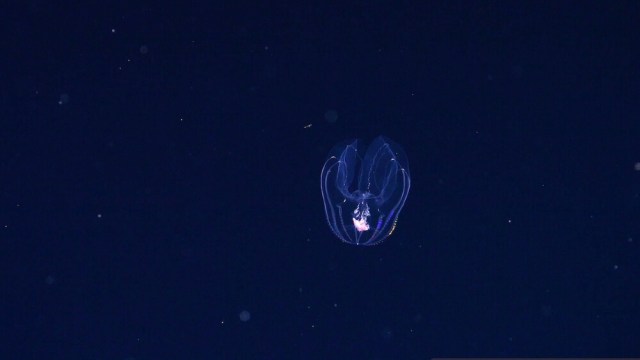
"The largest habitat on Earth, the midwater, is filled with incredible animals we are only just starting to understand," said Karen Osborn, a research zoologist at the Smithsonian National Museum of Natural History and the expedition's chief scientist.
TCD Picks » Quince Spotlight
💡These best-sellers from Quince deliver affordable, sustainable luxury for all




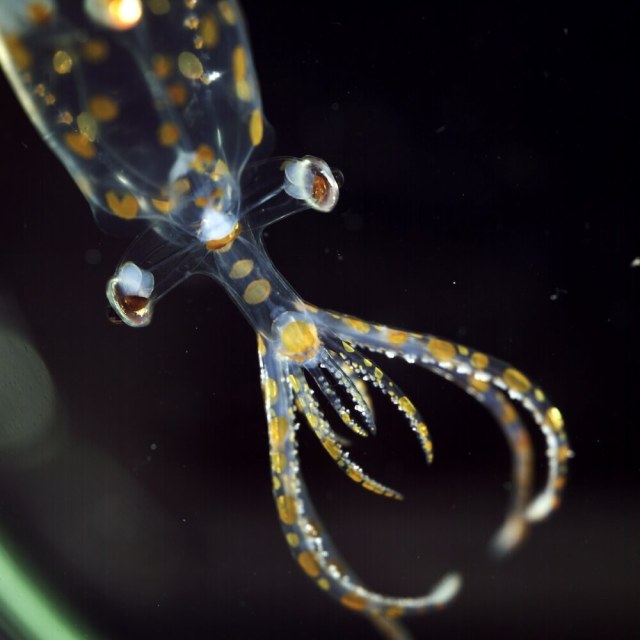
While at sea, the team also created a 3D image of a living protist that revealed its internal structure and glassy skeleton.
Why does it matter?
The ocean regulates the climate while supporting food systems and coastal communities.
Learning how midwater creatures live and interact can help scientists better understand one of the planet's largest ecosystems.
Much biodiversity remains undocumented. Some of these animals are so delicate that older collection methods can deform or damage them before scientists can study them properly.
Entire forms of life may have been misunderstood or overlooked for years.
"I continue to be fascinated by the fantastic variety of solutions they have evolved to survive in this formidable environment, and that drives me to keep asking questions about our ocean," Osborn said.
A better understanding of the ocean can shape conservation efforts and improve how researchers monitor ecosystems that affect weather, fisheries, and planetary health.
What's being done?
Instead of relying mostly on physical collection, the team used noninvasive equipment mounted on the remotely operated vehicle SuBastian.
Among those tools were two Monterey Bay Aquarium Research Institute-developed laser systems, deep particle image velocimetry and eye remote imaging system, which generated 3D images of animals, as well as a shadowgraph camera from the Japan Agency for Marine-Earth Science and Technology that captured high-contrast silhouettes and finer details.
Researchers also used Stanford University's simplifying quantitative imaging platform development and deployment (SQUID) microscope to examine living cellular structures at sea. A virtual reality application from the University of Western Australia and a Stanford hydrodynamic "treadmill" allowed them to observe behavior without disrupting the animals' natural movement.
Used together, these technologies could shorten the path to identifying undescribed species and help move marine science toward studying fragile ocean life without causing harm.
"It's an incredible honor to not only view and experience this rare and inspiring midwater life but also to be able to work toward describing and sharing that life broadly through the use of novel, non-invasive technologies," said Kakani Katija, a bioengineer at MBARI.
Schmidt Ocean Institute Executive Director Jyotika Virmani said, "We look forward to a future in which scientists study marine life as elegantly as this team did — and in virtual reality."

Get TCD's free newsletters for easy tips, smart advice, and a chance to earn $5,000 toward home upgrades. To see more stories like this one, change your Google preferences here.






