


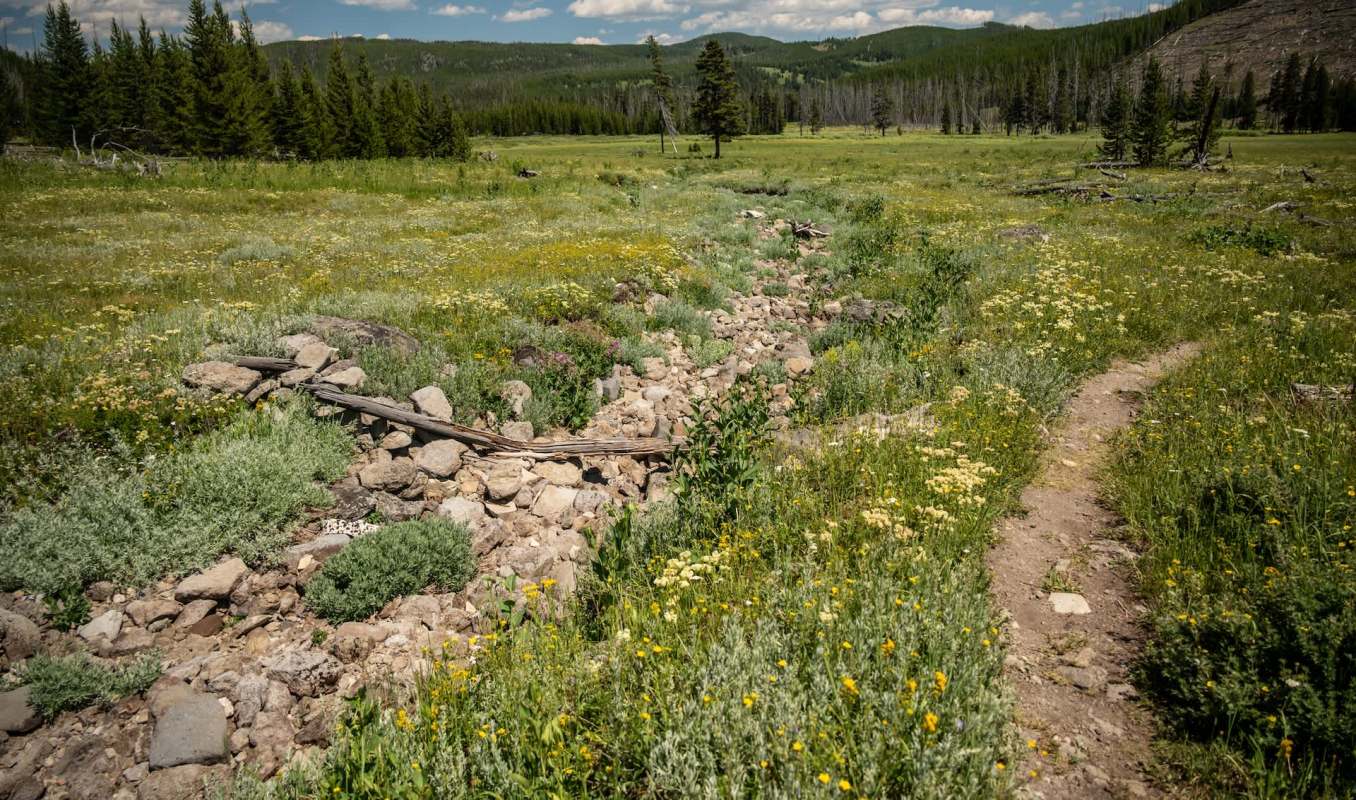
One place in central Montana drew Indigenous bison hunters back again and again for hundreds of years, then fell out of use. A new study says the break was not caused by a regional disappearance of bison.
What happened?
Published in Frontiers in Conservation Science, the study focused on a long-running question: why a central Montana hunting location that saw intermittent use for roughly 700 years was ultimately abandoned even though bison were still plentiful in the area.
Rather than start with the animals, the team tested the landscape itself, digging nine pits, radiocarbon-dating charcoal, extracting sediment cores, and studying pollen, charcoal, and climate records, ScienceDaily reported. Taken together, the evidence indicates that hunters did not leave because the ecosystem gave out or because they merely shifted to wherever the bison had gone.
"We found that bison hunters ceased using a kill site in central Montana around 1,100 years ago," said study author Dr. John Wendt. "It appears that hunters stopped using it because severe, recurring droughts reduced the water available for processing animals at a small nearby creek. Site abandonment was a response to environmental stressors and changing social and economic pressures."
The site was also changing in relation to wider hunting patterns. According to ScienceDaily, large coordinated hunts also became more common than smaller mobile ones, and those bigger operations required dependable water, fuel, forage, and terrain that could help hold bison in place.
Why does it matter?
These results suggest that climate strain can alter established human practices before a key resource disappears. Here, bison still occupied the region, but a less dependable water source made this particular hunting spot harder to use as hunting strategies demanded more supporting resources.
TCD Picks » Quince Spotlight
💡These best-sellers from Quince deliver affordable, sustainable luxury for all




Because present-day wildlife and land management also depend heavily on dependable water, the researchers say bison programs may cope better with environmental change if managers can shift both locations and methods.
The study points to adaptation rather than collapse. People adjusted their strategies, reorganized, and relied on knowledge built over generations as climate conditions changed.
What are people saying?
Wendt pushed back on a simpler explanation, saying: "Abandonment wasn't because the site became ecologically unsuitable in any absolute sense. Bison were still around, vegetation hadn't changed, and there was no substantive shift in fire activities."
He also said adaptation was central: "While people have been adapting to the climate for much longer, Bergstrom's abandonment shows that people reorganized in response to recurring droughts in the last 2,000 years."

Get TCD's free newsletters for easy tips, smart advice, and a chance to earn $5,000 toward home upgrades. To see more stories like this one, change your Google preferences here.






