


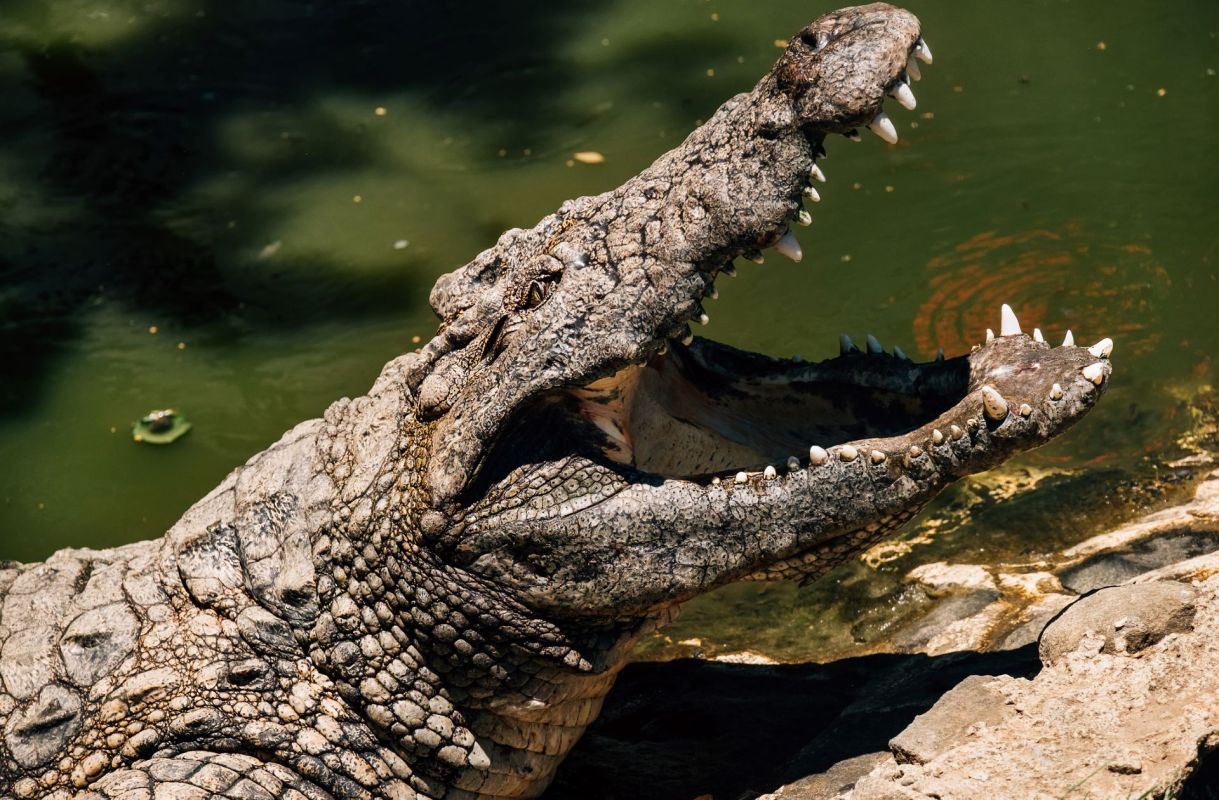
Among the likely hazards in early human Lucy's East African habitat was a newly identified crocodile species, scientists say, adding a new detail to the world of one of the most recognizable symbols of human evolution.
What happened?
According to ScienceDaily, a new study found that an unknown crocodile species lived in what is now Ethiopia from about 3.4 million to 3 million years ago, when Lucy and her species, Australopithecus afarensis, were in the same region.
They named the animal Crocodylus lucivenator, or "Lucy's hunter."
A University of Iowa-led research team estimated it was about 12 to 15 feet long and weighed roughly 600 to 1,300 pounds. It is the only crocodile identified from the Hadar region, an area of wetlands, rivers, shrublands, and tree-lined waterways. The findings were published in the Journal of Systematic Paleontology.
As part of their analysis, researchers used 121 fossil remains from dozens of animals, including skulls, teeth, and jaw fragments. Among the most notable traits of Lucy's hunter was a pronounced hump partway down the snout.
According to study author Christopher Brochu, the reptile occupied the top predator role in that environment.
TCD Picks » Quince Spotlight
💡These best-sellers from Quince deliver affordable, sustainable luxury for all




"It was the largest predator in that ecosystem, more so than lions and hyenas, and the biggest threat to our ancestors who lived there during that time," he said.
Why does it matter?
Lucy is best known for helping researchers understand that walking upright evolved before larger brains, but the new finding suggests that survival in her world also meant facing serious threats from predators at the water's edge.
Lucy's species would have needed to drink near rivers and lakes, putting them directly in the path of an ambush predator.
The fossil record also helps explain how ancient ecosystems worked and how species persisted across changing landscapes, including the environmental changes that continue to reshape where animals and humans meet today.
What are people saying?
Brochu said the fossils stood out right away.
"I was just blown away because it had this really weird combination of character states," he said. "It's a near certainty this crocodile would have hunted Lucy's species."
Another researcher, Stephanie Drumheller, pointed to battle scars on one fossil as evidence of ancient behavior.
"We can't know which combatant came out on top of that fight, but the healing tells us that, winner or loser, this animal survived the encounter," she said.

Get TCD's free newsletters for easy tips, smart advice, and a chance to earn $5,000 toward home upgrades. To see more stories like this one, change your Google preferences here.






