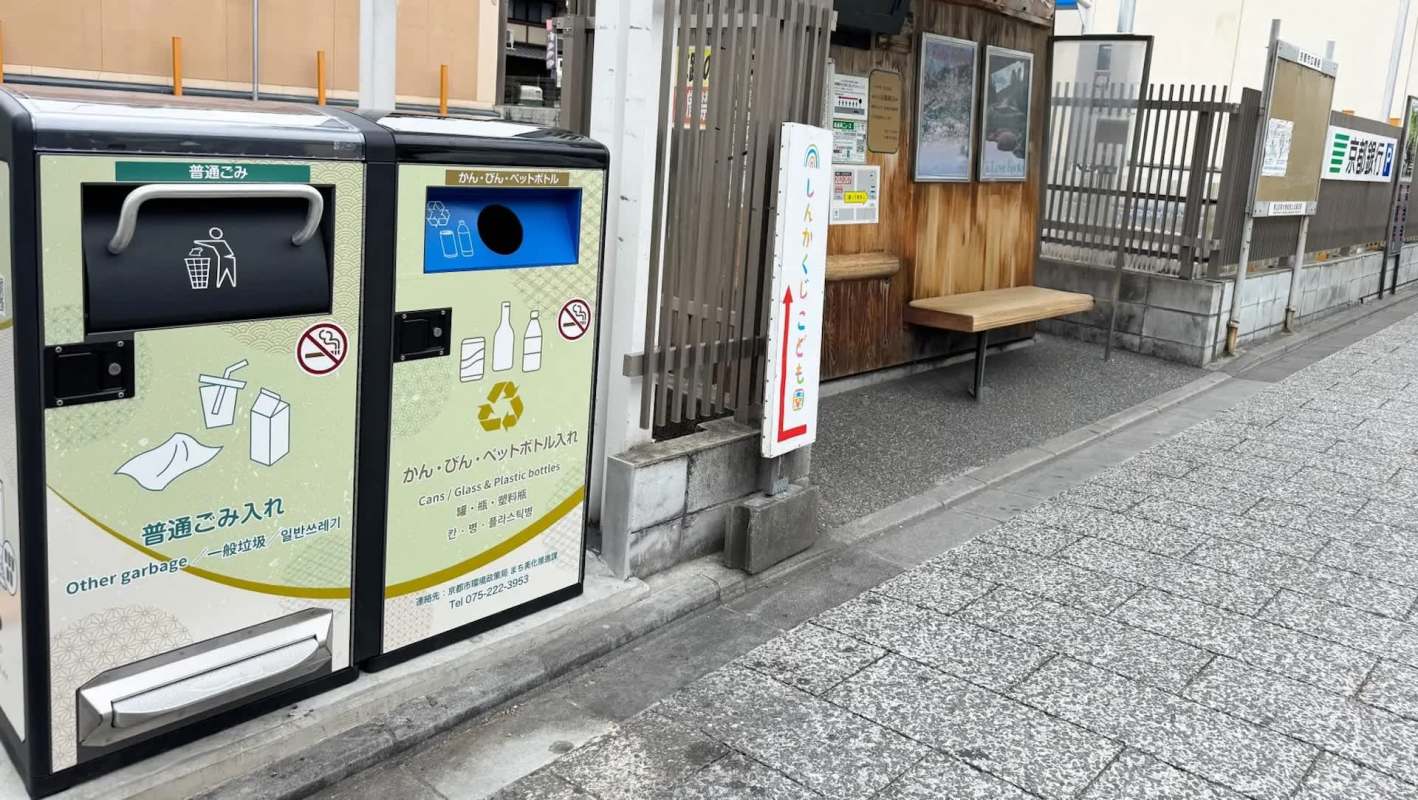
Public trash cans can be surprisingly difficult to find in Japan, even in popular tourist destinations like Kyoto.
To help manage growing amounts of litter in crowded areas, the city is turning to solar-powered smart bins that can compact waste and alert crews when they need to be emptied.
What happened?
Kyoto added two smart trash cans on May 27 at the southbound Kiyomizu-michi bus stop, a busy transport hub used by visitors heading to nearby temples and shopping streets.
According to SoraNews24, the bins are part of the SmaGO system developed by Forcetec and operate entirely on solar power.
Unlike conventional trash cans, the SmaGO bins automatically compress garbage to roughly one-fifth of its original volume, allowing them to hold more waste before requiring collection.
The bins are also connected to the internet and provide real-time updates on how full they are. This allows sanitation crews to monitor capacity remotely and schedule pickups before trash begins overflowing.
TCD Picks » Quince Spotlight
💡These best-sellers from Quince deliver affordable, sustainable luxury for all




With the latest installation, Kyoto now has a total of 34 SmaGO bins, according to SoraNews24. The two newest units were donated by Kiyomizu temple and nearby Rokuharamitsuji temple, while the Bank of Kyoto provided the installation site.
Why does it matter?
Japan has relatively few public trash cans compared with many other countries. Residents are often expected to carry small items such as snack wrappers, tissues, and empty drink bottles with them until they can dispose of them at home.
While that approach generally works, it can become more challenging in areas that attract large numbers of tourists.
Popular destinations often see spikes in foot traffic that can overwhelm the limited waste-disposal infrastructure available.
Smart bins could help address that problem by increasing waste capacity without requiring additional space. Their ability to compact trash and notify collection crews when they are nearing capacity may help prevent litter buildup and overflowing bins.
Keeping public spaces cleaner can improve the experience for residents and visitors alike. Cleaner sidewalks, bus stops, and tourist areas can make walking, commuting, and sightseeing more enjoyable while helping cities manage growing tourism in a more efficient way.

Get TCD's free newsletters for easy tips, smart advice, and a chance to earn $5,000 toward home upgrades. To see more stories like this one, change your Google preferences here.