


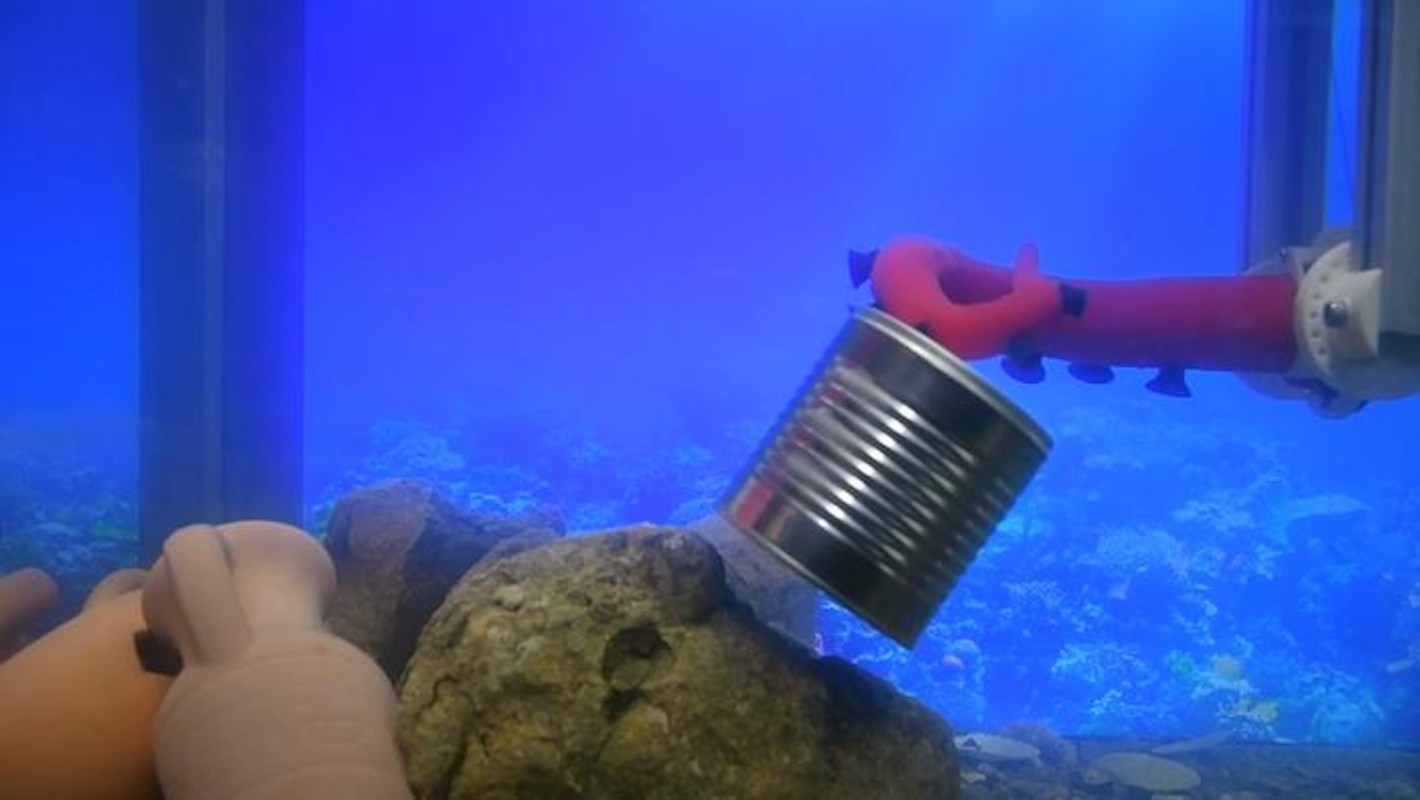
An octopus does not need its central brain to control every grab, twist, or squeeze. Now, robots may not need to either.
Engineers have published research highlighting a robot arm modeled after an octopus's, which can register a touch and begin holding an object without waiting for instructions from a central computer, according to Earth.com.
What happened?
Researchers in Italy have developed a soft underwater robotic arm that mimics the limb of an octopus, leading to some fascinating findings. An octopus was chosen for inspiration since its tentacles don't always require instructions from its central brain.
The project was led by Barbara Mazzolai at the Genoa-based Italian Institute of Technology, and the study was published in the peer-reviewed journal Nature Machine Intelligence.
Instead of serving only as attachment points, the robot arm's 10 rubbery suckers also contain its sensing system, each with lights and sensors, per Earth.com. Spread across the 16-inch limb, each sucker used a small ring of detectors to track how the material deformed on contact.
During testing, the robot arm began reacting almost immediately after brushing against an object as it moved through the water, without needing the central controller to provide instructions.
TCD Picks » Quince Spotlight
💡These best-sellers from Quince deliver affordable, sustainable luxury for all




In underwater trials, the device grabbed various items upon initial contact, like a fake sea star, a narrow rod, and a glass bottle. It also picked up a small water-filled container and estimated its weight at nearly two and a half ounces, compared with an actual weight of three ounces.
Why does it matter?
The study's authors succinctly summarized why their research matters, writing in their abstract that "this work advances sensor-integrated soft robotics, demonstrating the potential of biologically inspired designs for adaptive grasping in unstructured environments."
Many underwater grippers currently are stiff or rely on bulky electronics and continuous oversight from a centralized controller.
The approach highlighted in this research could prove useful for underwater work that demands flexibility and a light touch. Examples include collecting fragile marine organisms, inspecting underwater equipment, and reaching into tight, hazardous areas where rigid machines might struggle.
For now, the arm can handle simple, lightweight objects and, as Earth.com noted, lift just over a pound, offering an early look at how nature-inspired robotics could move closer to real-world use in messy, hard-to-reach environments.

Get TCD's free newsletters for easy tips, smart advice, and a chance to earn $5,000 toward home upgrades. To see more stories like this one, change your Google preferences here.






