


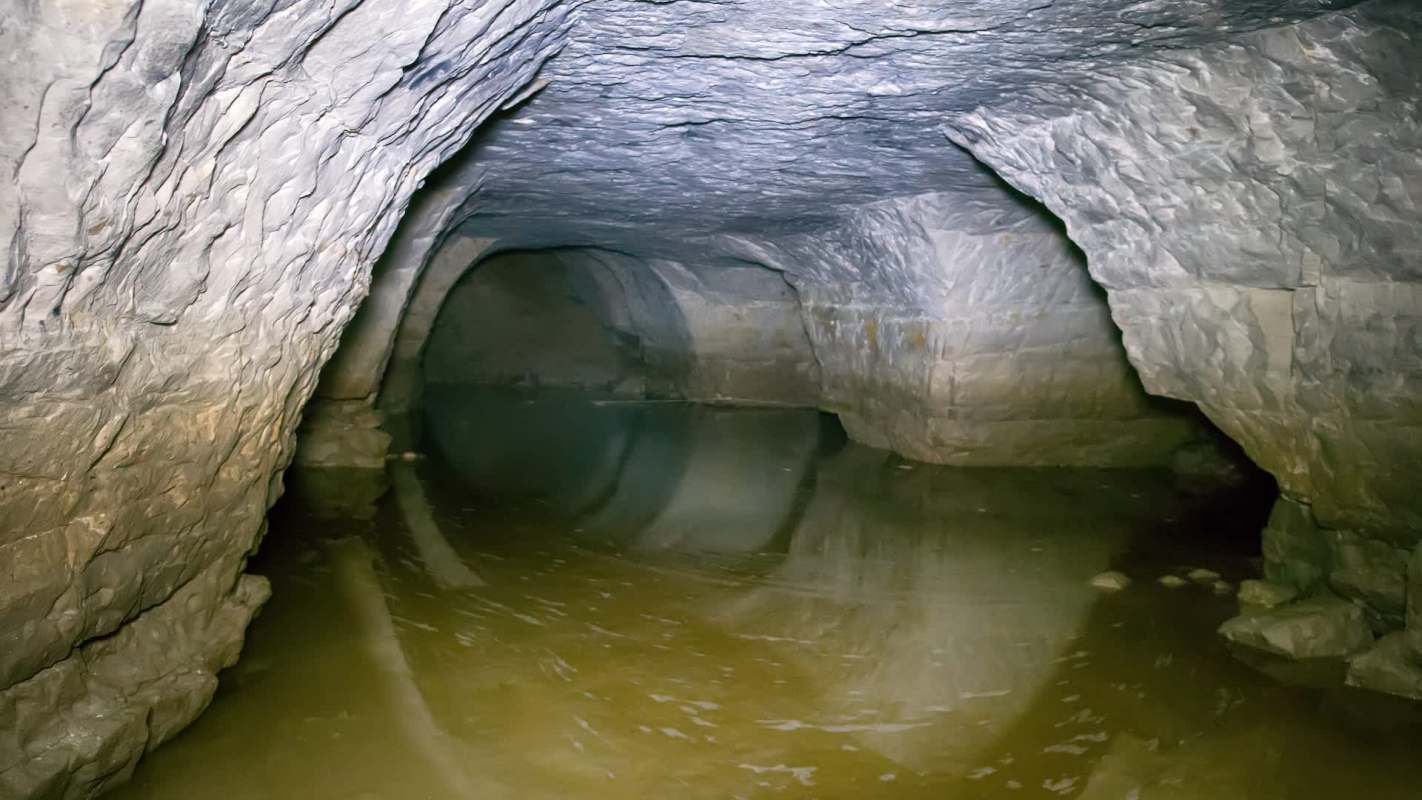
At a former gold mine in South Dakota, researchers found tiny microbial ecosystems living deep underground — and arranged in ways that show life can stay organized even in conditions that seem almost unlivable.
As Earth.com reported, the discovery suggests that even nearly a mile below Earth's surface, microbes are doing more than just surviving. They are forming specialized communities that could shape how scientists think about energy systems, underground infrastructure, and even the search for life beyond our planet.
What happened?
Northwestern University geobiologist Magdalena Osburn and her team analyzed fluids moving through rock fractures at six locations within South Dakota's former Homestake Mine, now known as the Sanford Underground Research Facility.
Some sampling points were about 820 feet below the surface, while the deepest were nearly 4,920 feet below the surface. After four years of work, the researchers found that each location hosted its own microbial community, despite initially expecting the mine's microbes to be broadly alike from site to site.
"Within the goldmine, we sampled six spots, ranging from 250 meters deep to 1,500 meters deep," Osburn said. "We thought we might see some subtle variation with depth but assumed the microbial communities should be broadly similar. That's not what we found at all."
Instead, she said: "We found that each site is its own little microcosm, and they looked very little like other sites — even nearby sites."
TCD Picks » Quince Spotlight
💡These best-sellers from Quince deliver affordable, sustainable luxury for all




Why does it matter?
These microbes appear to divide up the key roles that allow life to persist in extreme environments. Rather than acting as one uniform population, the microbes seem to split the labor: One contingent recycles carbon and helps keep the chemistry stable while using little energy, and another appears ready to react when fresh nutrients arrive.
"The core community has a low and slow metabolism," Osburn said. "Then this other community of organisms is poised to respond to pulses of nutrients when they become available."
Growth in underground carbon storage and geothermal projects could stir dormant microbes and affect pipes, wells, and other infrastructure. "If we give microbes chemicals that they can metabolize, they will wake up," Osburn said, warning that some could begin "corroding our metals in infrastructure and wells."
Learning more about these hidden ecosystems could help scientists better predict what happens belowground.
What are people saying?
Osburn said that although the mix of species changes from one site to another, the essential functions needed for the community to survive still show up each time.
"I have a friend who says, 'Every town needs a plumber,'" Osburn said. "These sites reflect that idea. Each one is filled with different types of microbes, but all have a 'plumber.'" She also said the team did not expect to find that "there is not a core microbiome anywhere in this mine."
Even in one of Earth's harshest and most hidden environments, life remains organized.

Get TCD's free newsletters for easy tips, smart advice, and a chance to earn $5,000 toward home upgrades. To see more stories like this one, change your Google preferences here.






