


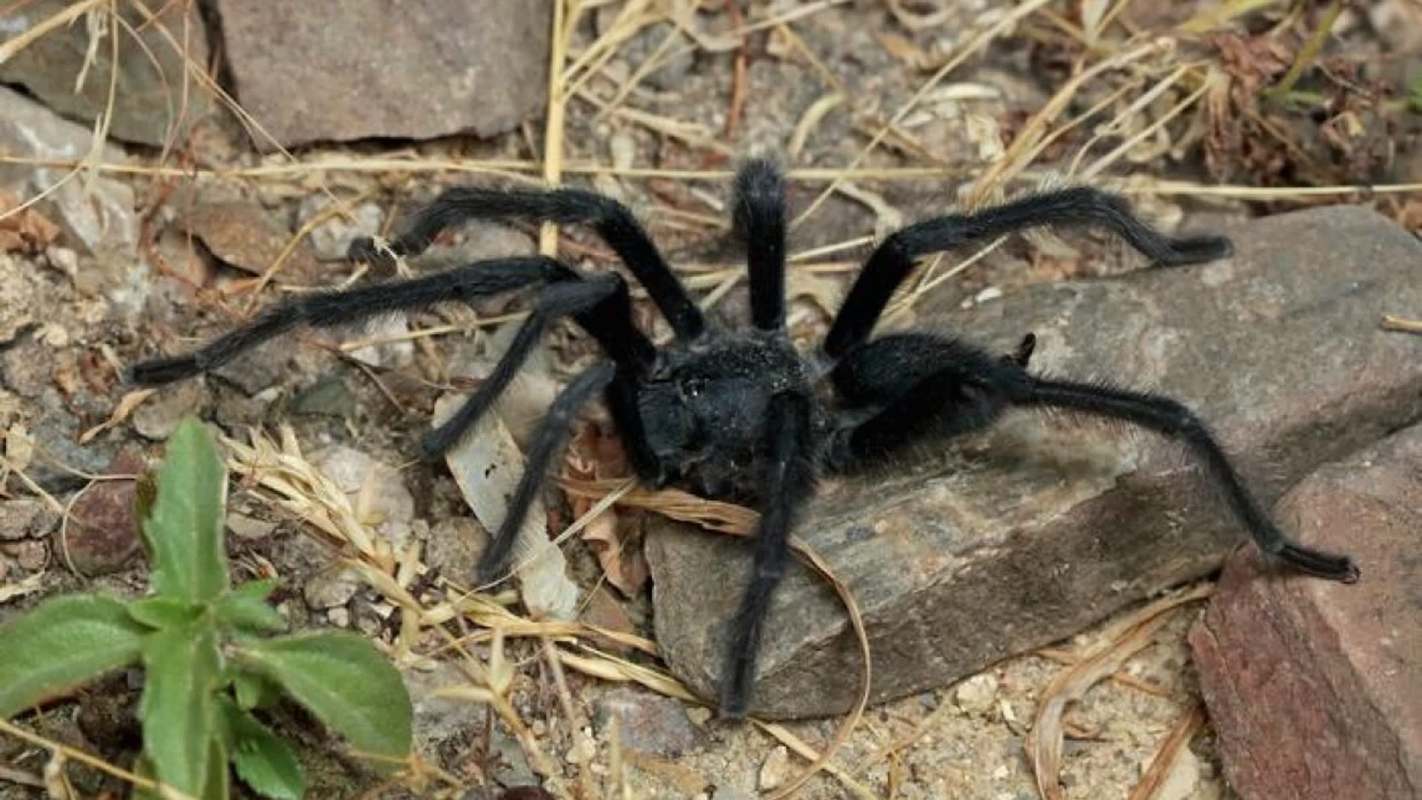
Scientists have discovered four new tarantula species whose males have exceptionally long palps — a trait that may make mating slightly less dangerous.
Palps are appendages that the spiders use for reproduction. The research team, from the University of Turku in Finland, says these new species have the longest palps recorded in any tarantula, and the added reach could help reduce the risk of males being attacked and eaten during or after mating.
Researchers described the four new tarantula species in a study published in the peer-reviewed journal ZooKeys. The article, titled "Size matters," also adds to science a fully new genus, Satyrex, to classify the tarantulas. The name refers to satyrs from Greek mythology.
The research paper focuses on the spiders' most striking feature: their exceptionally long palps, the arm-like structures male spiders use to transfer sperm to females, per ScienceAlert.
In one of the new species, the palps measure about 2 inches in length, which is nearly as long as the spider's legs. That equals 3.85 times the length of its carapace — its protective shell. In most tarantulas, palps are closer to twice the carapace length. This means the palps are close to double the normal length.
The largest of the newly described species is Satyrex ferox, which was named for its aggressive behavior. The others are Satyrex arabicus, Satyrex somalicus, and Satyrex speciosus. Their names reflect where they are found or, in the case of speciosus, its colors.
TCD Picks » Quince Spotlight
💡These best-sellers from Quince deliver affordable, sustainable luxury for all




There is still much to learn about even large, well-known animals such as tarantulas. Researchers say the unusual palps could shed light on how anatomy changes in response to the pressures of reproduction and survival.
Because mating can be especially perilous for male spiders when females are larger and highly aggressive, the longer palps may allow a bit more separation at a crucial time.
Each newly identified species helps fill in the ecological picture. Understanding how animals evolve, reproduce, and survive can inform conservation efforts and help researchers better track changes in habitats under pressure from development, climate shifts, and other threats.

Get TCD's free newsletters for easy tips, smart advice, and a chance to earn $5,000 toward home upgrades. To see more stories like this one, change your Google preferences here.






