


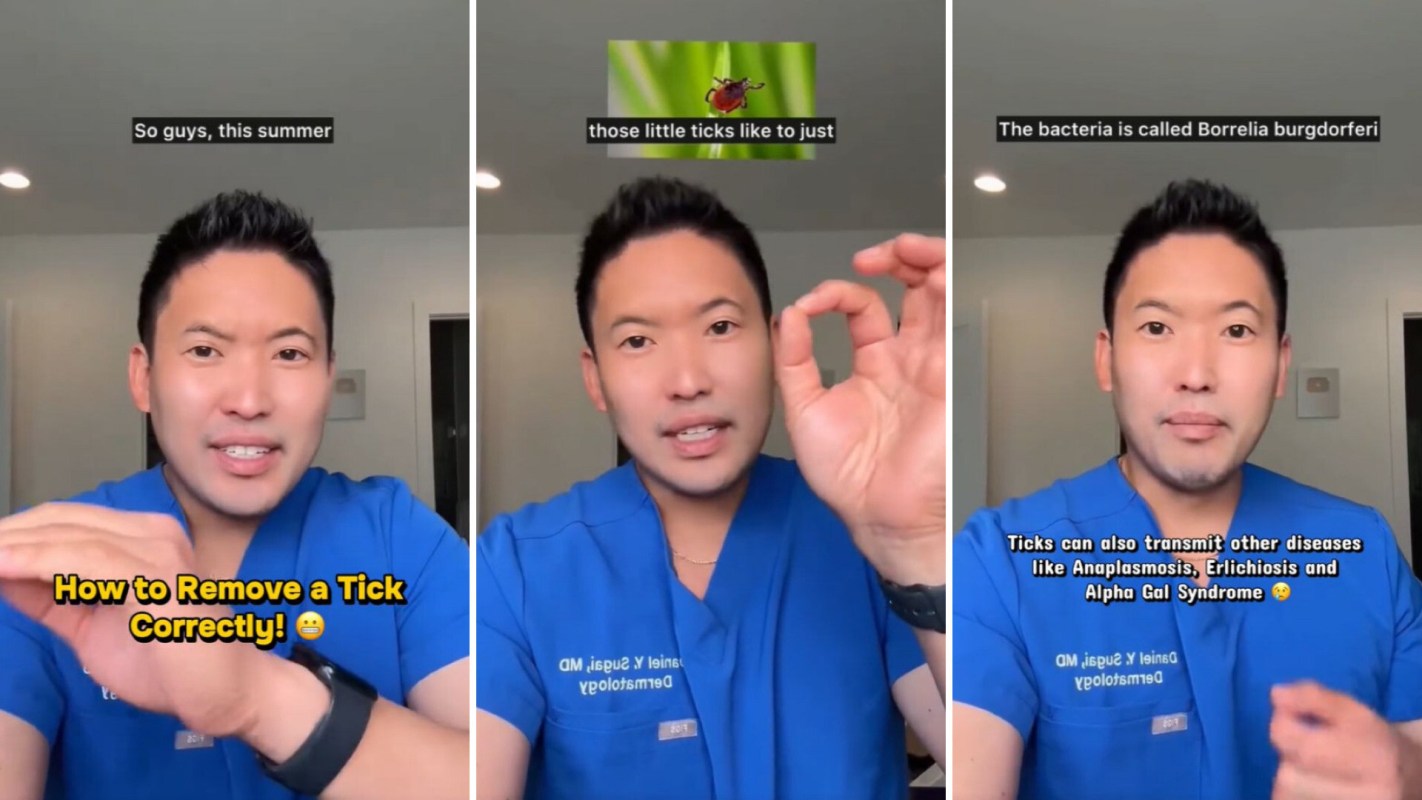
As summer hikes, backyard play, and long walks through tall grass pick up, one TikTok health warning is pushing back against outdated advice about tick bites.
The core message is simple: some common DIY tick-removal tricks can actually raise the risk of infection.
In his June 4 video, dermatologist and skin health educator, Dr. Daniel Sugai, or "Dr. SPF," warned viewers not to rely on old home remedies when they find a tick attached to their skin.
@drspf Summer tick season is here — and please, do NOT use a lit match to remove a tick. 🔥🛑 This tick may not be an Ixodes tick/deer tick, but the message is the same: ✋ Don't burn it ✋ Don't smother it with Vaseline ✋ Don't squeeze or crush the tick's belly while it's attached Why? Irritating or squeezing the tick may increase the chance of it releasing infectious material into the skin. ✅ Use fine-tipped tweezers ✅ Grab the tick as close to the skin as possible ✅ Pull upward with steady, even pressure ✅ Clean the area afterward ✅ Save or photograph the tick if possible ✅ Contact your doctor to discuss whether prophylaxis or treatment is needed Prevention matters: wear protective clothing, stay on trails, do tick checks after being outdoors, and use EPA-registered repellents like DEET or picaridin. #lymedisease #tickremoval #alphagalsyndrome #lymediseaseawareness #drsugaiskincare ♬ original sound - Dr. Daniel Sugai
As Dr. SPF stressed on TikTok, "Summer tick season is here — and please, do NOT use a lit match to remove a tick." The PSA singled out New England as an area where people should stay especially alert.
In the video's caption, Dr. SPF summarized what not to do, saying, "Don't burn it, don't smother it with vaseline, don't squeeze or crush the tick's belly while it's attached. Why? Irritating or squeezing the tick may increase the chance of it releasing infectious material into the skin."
Instead, as he explained in the video, "the methods of removing a tick does not change" no matter what part of your body it latched to… what you want to do is get some nice fine-tip tweezers, grab near the mouth, and pull straight off."
TCD Picks » Quince Spotlight
💡These best-sellers from Quince deliver affordable, sustainable luxury for all




Afterward, it's best to clean the area and take a close-up photograph of the tick before showing the image to your doctor.
Lyme disease was the main example of danger highlighted in the warning. Dr. SPF said, "this deer tick is what's responsible for Lyme disease and transmits a bacterial infection… Now you don't want that going back into your skin and contracting Lyme disease."
Those who contract Lyme disease will notice a target-shaped rash on their skin.
Luckily, there are several strong methods for avoiding exposure to potentially disease-ridden ticks. Make sure you wear protective clothing that covers your skin, stay on trails, and after you're done recreating, perform tick checks.

Get TCD's free newsletters for easy tips, smart advice, and a chance to earn $5,000 toward home upgrades. To see more stories like this one, change your Google preferences here.







