


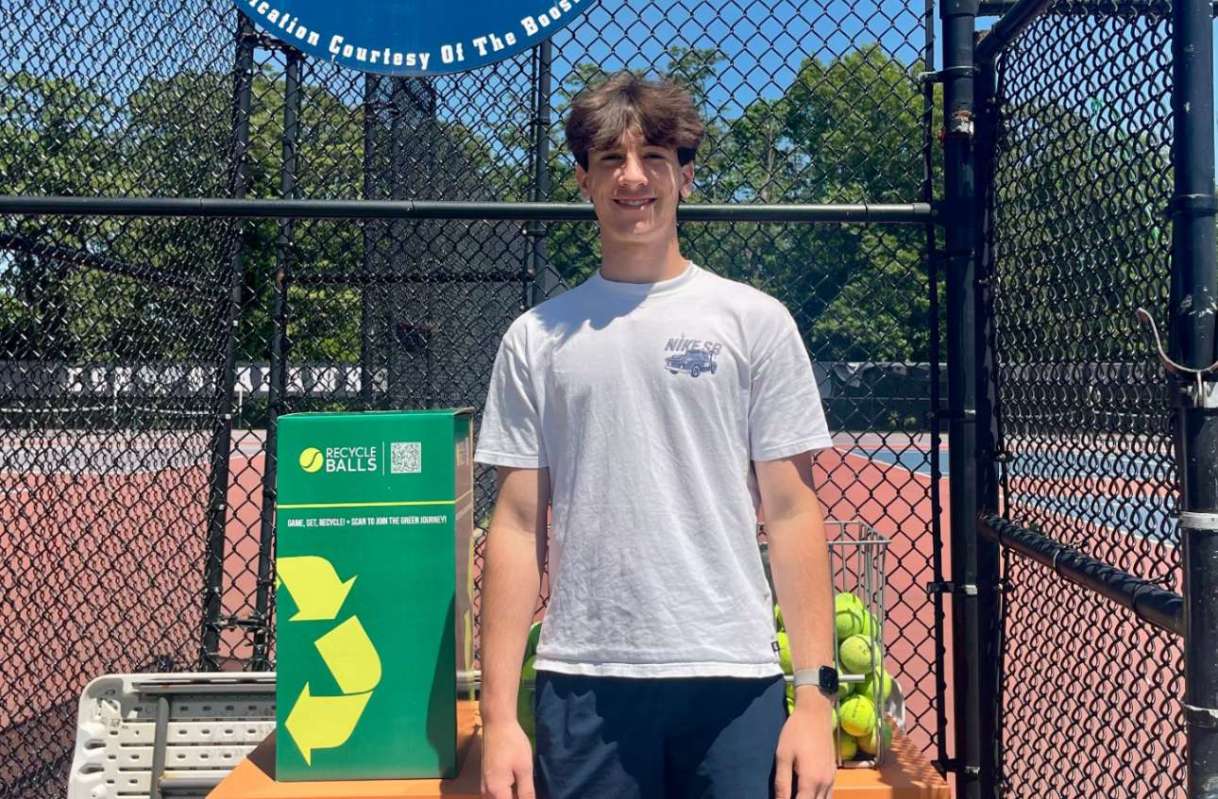
A young athlete is showing that local climate action does not have to be complicated to make a meaningful difference.
By rethinking what happens to used tennis balls, Sebastian Mayer has turned a common source of sports waste into a sustainability effort that also makes financial sense for clubs.
What happened?
Waste in the racquet sports world became clear to the 16-year-old through his own experience as a varsity and platform tennis player.
To make a difference in his community, Mayer founded Green Gold Coast Environmental Consulting. By studying local tax codes, he created a proprietary $.40 tax-deduction model for racquet facilities, with the goal of making sustainability a practical business choice.
According to Green Gold Coast Environmental Consulting, the initiative has diverted nearly 2.5 tons of tennis balls from landfill since the summer of 2025.
The program estimates it has kept tennis balls from occupying landfill space for a combined 6 million years. And the effort is estimated to prevent 4.5 tons of greenhouse gas emissions, while creating more than $6,000 in potential tax deductions for participating facilities.
TCD Picks » Quince Spotlight
💡These best-sellers from Quince deliver affordable, sustainable luxury for all




Why does it matter?
Tennis balls may seem insignificant on their own, but across clubs, schools, and recreational facilities, the waste adds up quickly.
When those balls are tossed in the trash, they can sit in landfills for long periods, adding to avoidable waste.
The project addresses a problem common in many communities: Useful or recyclable materials are often discarded simply because there is no easy, appealing system for dealing with them.
Mayer's model also targets one of the biggest barriers that can slow environmental efforts — cost.
Schools, sports leagues, and community organizations often have to balance good intentions against tight budgets. Programs are generally more likely to last when decision-makers can point to both environmental benefits and financial logic.
What's being done?
Through Green Gold Coast, Mayer is giving racquet facilities a more structured way to participate.
He combines impact reporting with a tax-deduction framework so facilities can bring the program to boards and members as something more than another charitable expense.
"Everyone in the racquets community wants to see less waste, but club managers and tennis directors are busy and have boards to answer to," Mayer told The Cool Down. "The tax model and impact reporting gives them a legitimate business case to present to their boards and members. It bridges environmental concern with fiscal reality, making it seamless for these clubs to lead the way in sustainability."

Get TCD's free newsletters for easy tips, smart advice, and a chance to earn $5,000 toward home upgrades. To see more stories like this one, change your Google preferences here.







