


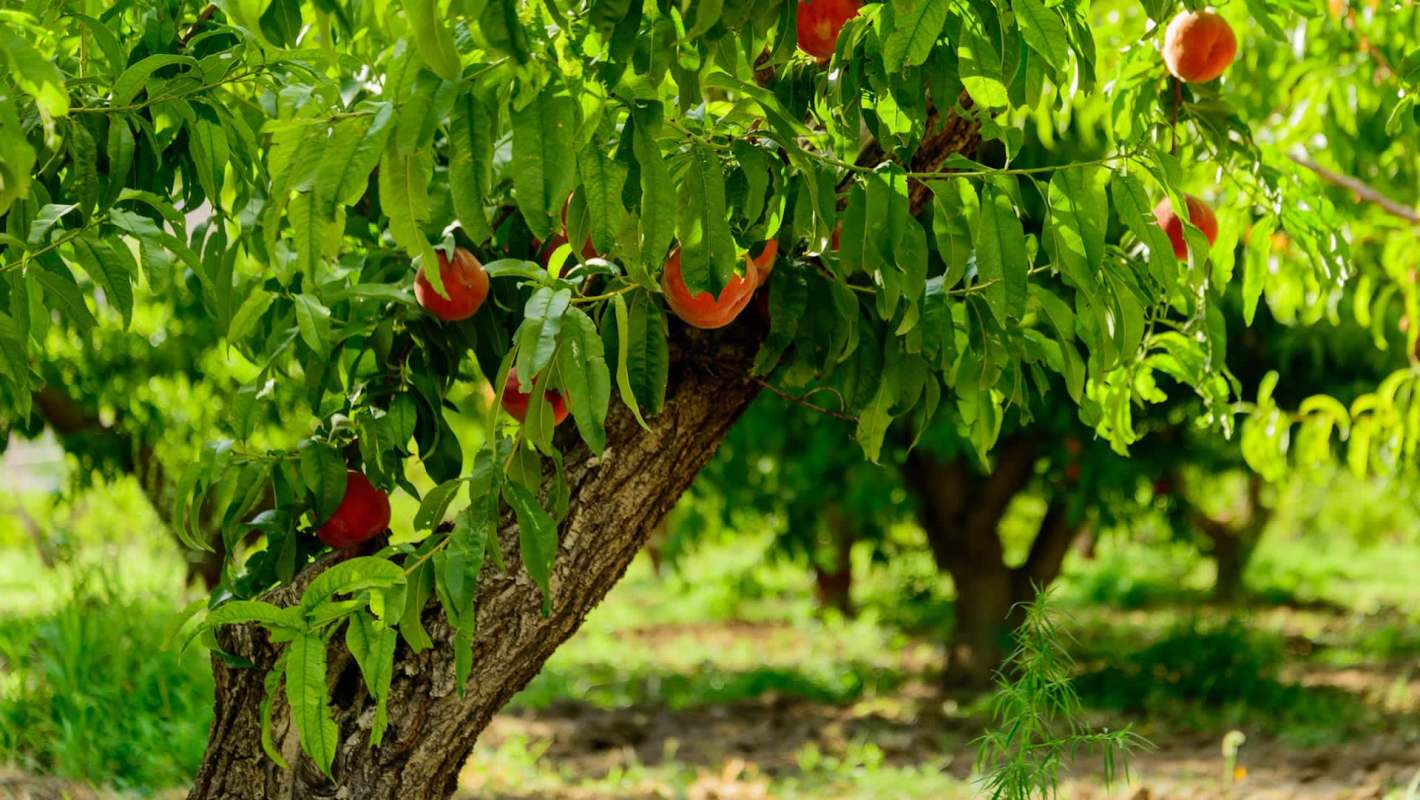
After a mild winter delivered too few of the cold-weather hours that peach trees rely on for ample harvests, orchards in Fredericksburg, Texas, are dealing with a smaller crop for the third year in a row and a less predictable supply.
What's happening?
Peaches are still showing up at Fredericksburg stands, but KUT reported that another gentle winter left growers with a harvest smaller than usual.
For longtime peach shopper Marlene Russell, that means stocking up may be harder than in years past. "If it's a big crop, sometimes I make three or four trips down here," Russell told KUT, who drove 100 miles from her home in Fort McKavett.
Dianne Eckhardt of Eckhardt Orchards, a multigenerational family farm in Fredericksburg, said the shortfall came down to one thing: not enough winter chill.
Growers begin counting "chill hours" after the first frost, tracking time when temperatures are generally between 32 and 45 degrees. Depending on the variety, peach trees may need anywhere from 200 to 1,000 hours in that range, and Eckhardt told KUT her fruit usually gets between 650 and 800 during the winter months.
"The piece that we were lacking this year to have a full crop was the cold hours, the chill hours. We were marginal on them," she said.
TCD Picks » Quince Spotlight
💡These best-sellers from Quince deliver affordable, sustainable luxury for all




Larry Stein, a professor and horticulturalist who's been studying Texas peaches for 40 years, told KUT that growers have been dealing with this pattern for years. "That's been the big struggle the past three years is: We just haven't had the cold weather," Stein said.
Why does it matter?
Fredericksburg built its reputation as a peach destination because the Hill Country has historically offered the right mix of soil, rainfall, and winter weather.
When that balance shifts, growers can quickly see the effects in both harvest size and fruit quality.
Stein said too few chill hours can lead to smaller spring yields, but the fruit itself can also suffer. "Low chill peaches are elongated, and they don't necessarily develop full quality like a typical peach would," he said.
For shoppers, that can mean fewer peaches available, uneven timing from one variety to the next, and higher prices. KUT reported that last week, an eighth of a bushel — roughly 6 pounds — of Crimson Lady peaches was selling for $29.
Worsening extreme weather and unusual seasonal temperatures can threaten both lives and livelihoods by damaging harvests, cutting farm income, and reducing work for the workers and small businesses tied to agriculture.
Those disruptions can raise food costs, strain local economies, and place additional stress on communities already facing heat, drought, and other public health and safety risks.
What's being done?
Growers are trying to adjust wherever they can.
Eckhardt is also adding other crops to help make up for the lighter peach harvest, saying she plans to plant pumpkins, okra, and blackberries for the fall, KUT noted.
A thin harvest can be especially hard on family farms as growing conditions become more difficult.
Even so, Eckhardt said she still feels fortunate to farm land capable of producing so much. "For my generation, I was gifted with it; I didn't have to buy this land. And it's a gift that it grows wonderful things, so that you can't ignore that," she told KUT. "You kinda feel like you gotta do what the land does best, you know?"

Get TCD's free newsletters for easy tips, smart advice, and a chance to earn $5,000 toward home upgrades. To see more stories like this one, change your Google preferences here.







