


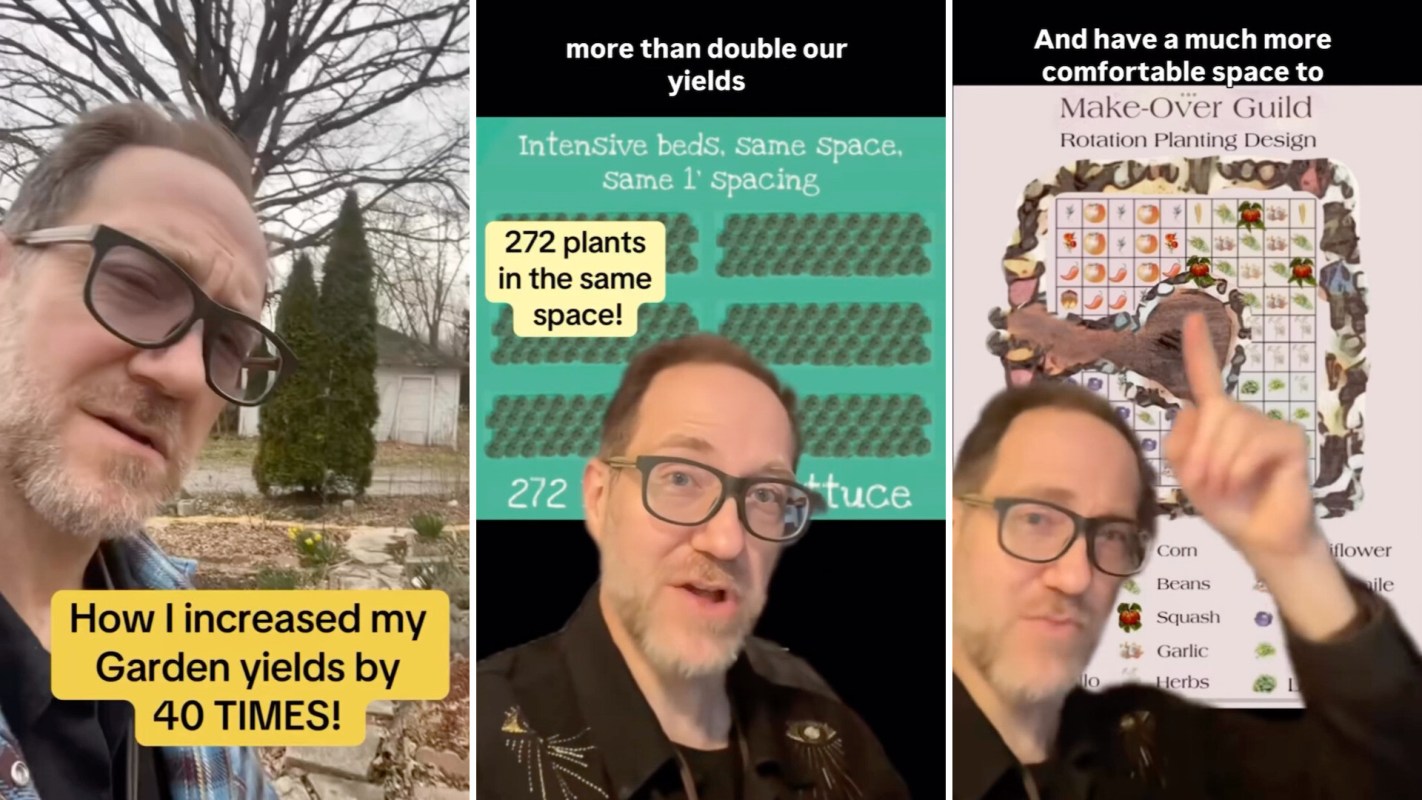
A home gardener's tightly packed planting layout is drawing attention online after the creator argued that traditional row spacing leaves much of a space's food-growing potential unused.
What's happening?
In a June 8 Instagram reel, creator Michael Hoag (@transformativeadventures) argued that intensive planting can produce far more food in a limited area, saying geometry plays a major role in the setup.
"I never used that crap they taught me in school. They should teach gardening in school instead. Well, here's how I use geometry to increase my garden yields by more than 40 times," the creator said.
Using lettuce as an example, the creator said a 20-by-20-foot plot arranged in beds rather than rows could yield more than twice as much.
The creator added that a keyhole-style garden could push output even higher, to "five times the yields."
The video also promoted intercropping rather than dedicating each bed to a single crop.
TCD Picks » Quince Spotlight
💡These best-sellers from Quince deliver affordable, sustainable luxury for all




In the reel, the creator said that mixing crops improves plant health and claimed that a 25-by-20-foot garden could be condensed into a 10-by-10 bed, creating a more comfortable space to work in.
Responses were mixed.
One commenter wrote: "The spacing is generally for harvesting with industrial tools. If you're not working with a tractor this method is way better."
Another Instagram user pushed back: "The soil needs rest. It's not a factory, it's an ecosystem."
Why does it matter?
Growing more food in less space can translate to lower grocery bills, especially when produce prices rise.
A compact, productive bed can also make fresh greens and herbs more accessible for people with small yards or limited time.
Homegrown food is often fresher and more flavorful, and gardening can support both mental and physical health by getting people outside, moving, and engaged in a calming routine.
The post also claimed that closer planting can leave less room for weeds by covering more ground and can use water more efficiently.
Packing plants more closely may increase yields in some setups, but crowding can also create problems with airflow, nutrients, and soil health if gardeners do not adjust their care methods.
What can I do?
If you want to try this approach, start small. Test closer spacing in one bed rather than overhauling your entire garden, and compare how the plants perform with a more traditional layout.
Mixing compatible crops can also help maximize space without overdoing it. Pairing fast-growing greens with slower crops, for example, may allow you to harvest more from the same area while keeping the bed productive longer.
Commenters raised tradeoffs. Watch for signs of stressed roots, nutrient depletion, or pest pressure, and make sure plants still have enough room for light and airflow. If wildlife is your bigger problem, thoughtful spacing alone may not solve deer or rabbit damage.

Get TCD's free newsletters for easy tips, smart advice, and a chance to earn $5,000 toward home upgrades. To see more stories like this one, change your Google preferences here.






