



A vintage National Geographic photo is sparking renewed debate among snake enthusiasts after a Reddit user argued that the pale Burmese python in the image may be the animal that helped launch the reptile world's lucrative morph craze.
What happened?
According to the original poster in a thread on r/snakes, the image may depict what they called "the first known photo of an albino Burmese python."
The user wrote that Tom Crutchfield and Bob Clark separately came across the National Geographic picture in 1981, and alleged that the snake was later stolen from the man shown, brought to the United States by Wong Keng Liang, and sold to Crutchfield for about $30,000.
The thread includes the magazine image itself: a man stands beside a corded telephone while holding an unusually pale Burmese python.
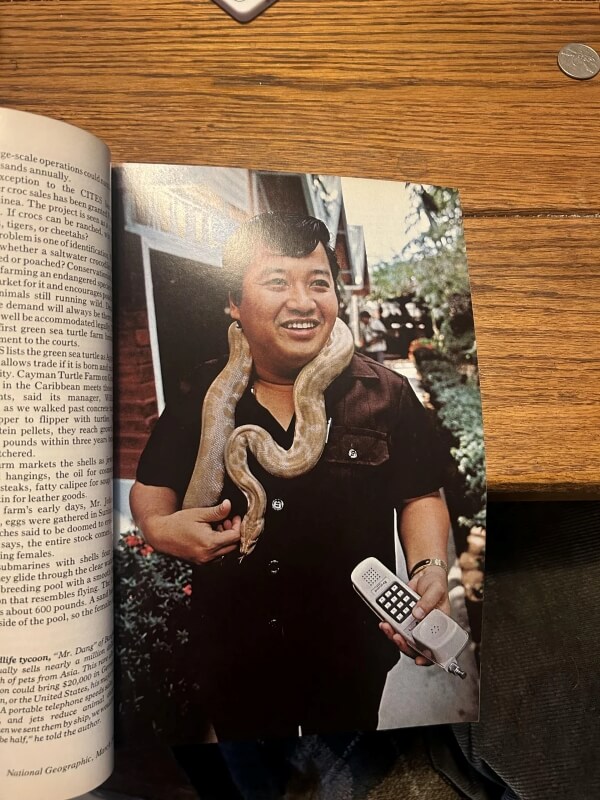
Not everyone in the comments accepted the account at face value. Some readers argued the snake may only look light because of shadows or the photo's quality, while others said key parts of the story are hard to verify independently.
Why does it matter?
That kind of demand can fuel poaching and smuggling while reinforcing the idea that wildlife exists mainly as a collectible product.
TCD Picks » Quince Spotlight
💡These best-sellers from Quince deliver affordable, sustainable luxury for all




The effects can also reach far beyond the first sale.
One commenter described a long discussion of mass culling of surplus snakes, with breeders freezers full of normals sold as feeders for king cobras and kingsnakes, pointing to animal welfare concerns that can come with breeding for unusual appearances.
Illegal wildlife trade and irresponsible breeding can strain enforcement resources, damage biodiversity, and slow efforts to build a safer, more responsible relationship with animals.
What are people saying?
The post's comment section mixes fascination and discomfort.
One user wrote, "I remembered being offered a albino Burmese python for £13000 in 1995."
Other commenters were more skeptical, pointing out that "Tom Crutchfield was a smuggler" and saying that history makes some details of the story harder to trust.
The conversation did not stay limited to the photo.
Along with arguments over whether the snake was actually albino, commenters raised broader concerns about overbreeding, surplus animals, and the long shadow of a market driven by rare looks.

Get TCD's free newsletters for easy tips, smart advice, and a chance to earn $5,000 toward home upgrades. To see more stories like this one, change your Google preferences here.






