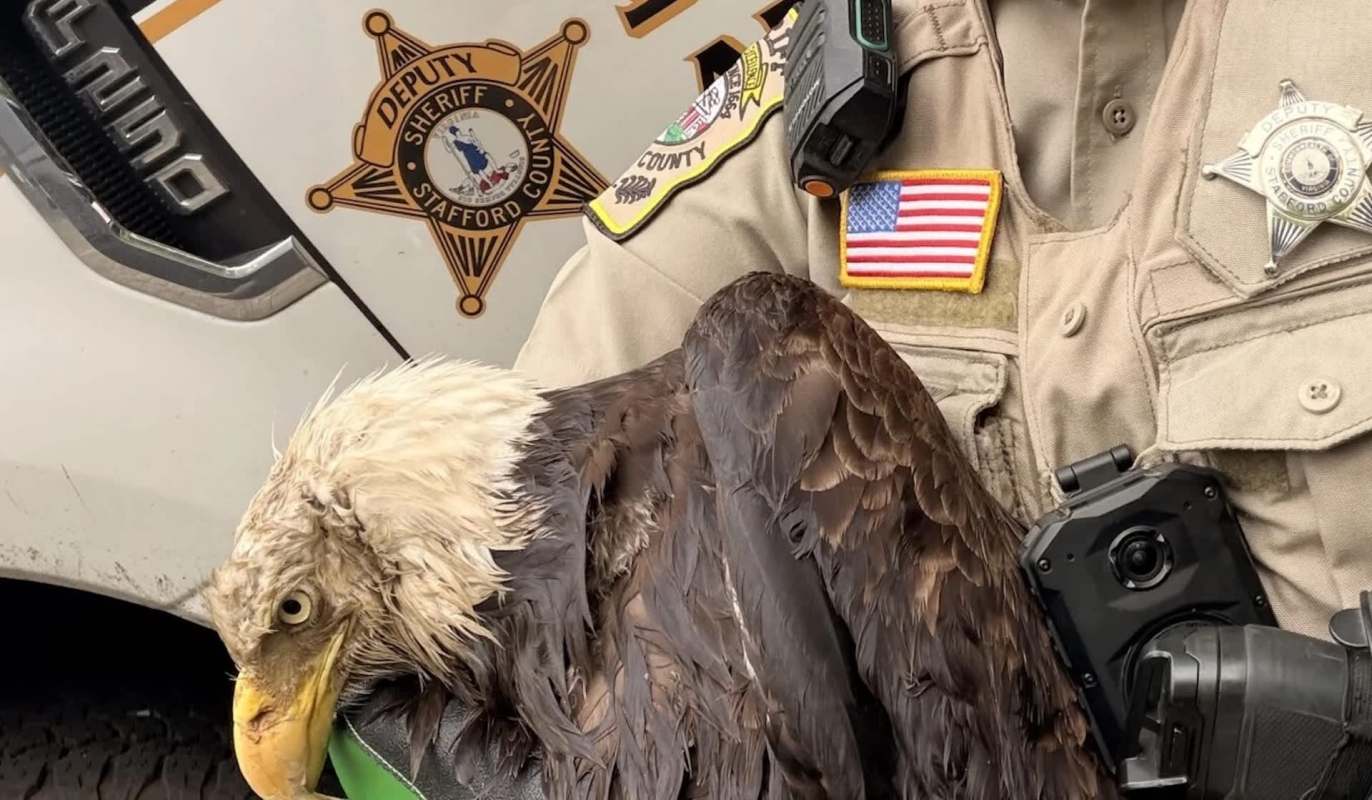
Over the course of a few days in Stafford County, Virginia, rescuers recovered four bald eagles in an unusually concentrated run of wildlife emergencies.
The results were mixed: The two young birds were expected to survive, while one of two adults died of lead poisoning and the other was euthanized.
What happened?
According to a TikTok posted by NBC4 Washington (@nbcwashington), Deputy Rachel Peterson and other responders recovered four bald eagles last month.
@nbcwashington After four eagles were rescued within days of each other in Stafford County, experts are sounding the alarm about the negative impact human activities can have on the creatures. #StaffordCounty #Virginia #NorthernVirginia #NoVa #DMV #Wildlife #AnimalRescue ♬ original sound - NBC4 Washington
"It's incredibly rewarding because not only is there the opportunity of being able to go out and help these gorgeous birds, but I'm also able to provide that community education," she said.
All four eagles were taken by a volunteer to the Blue Ridge Wildlife Center. One juvenile was quickly released, and the other was expected to return to the wild soon.
Veterinarians euthanized one adult because of severe bone fractures, and the other died from lead poisoning.
TCD Picks » EDF Spotlight
💡EDF's Vital Signs newsletter delivers stories about game-changing solutions close to home and around the world




"After four eagles were rescued within days of each other in Stafford County, experts are sounding the alarm about the negative impact human activities can have on the creatures," NBC4 stated.
Why does it matter?
Cases such as these show that even though bald eagles are one of the country's best-known conservation success stories, avoidable threats caused by people can still be fatal.
Dr. Jen Riley, hospital director at the Blue Ridge Wildlife Center, said the timing and location made the cluster stand out, noting, "We generally get about 20 to 40 eagles per year, so getting four from any location within a week is pretty abnormal."
What makes lead-poisoning deaths especially disturbing is that eagles are rarely shot directly. During deer hunting season, people who field-dress deer may leave gut piles behind for scavengers.
That can expose birds to deadly contamination through extremely small pieces of ammunition. "Even these tiny little fragments of ammunition can poison these eagles," Riley told NBC4. "And actually, the size of a grain of rice is enough to kill them."
Lead can harm many scavengers, including hawks, vultures, and other wildlife that keep ecosystems balanced.
What's being done?
Rehabilitators treat birds and other animals that can be saved, and rescuers use such episodes to talk with the public about preventable dangers.
Rescue work also creates opportunities for community education.
Riley urged hunters to use ammunition without lead. While it can cost more than lead ammunition, the choice can reduce the risk of poisoning eagles and other scavengers that feed on remains.

Get TCD's free newsletters for easy tips, smart advice, and a chance to earn $5,000 toward home upgrades. To see more stories like this one, change your Google preferences here.
Cool Picks