


Astronomers say they may be close to explaining a space mystery that has lingered for about 20 years: odd radio signals that continue much longer than the brief bursts usually seen in the cosmos.
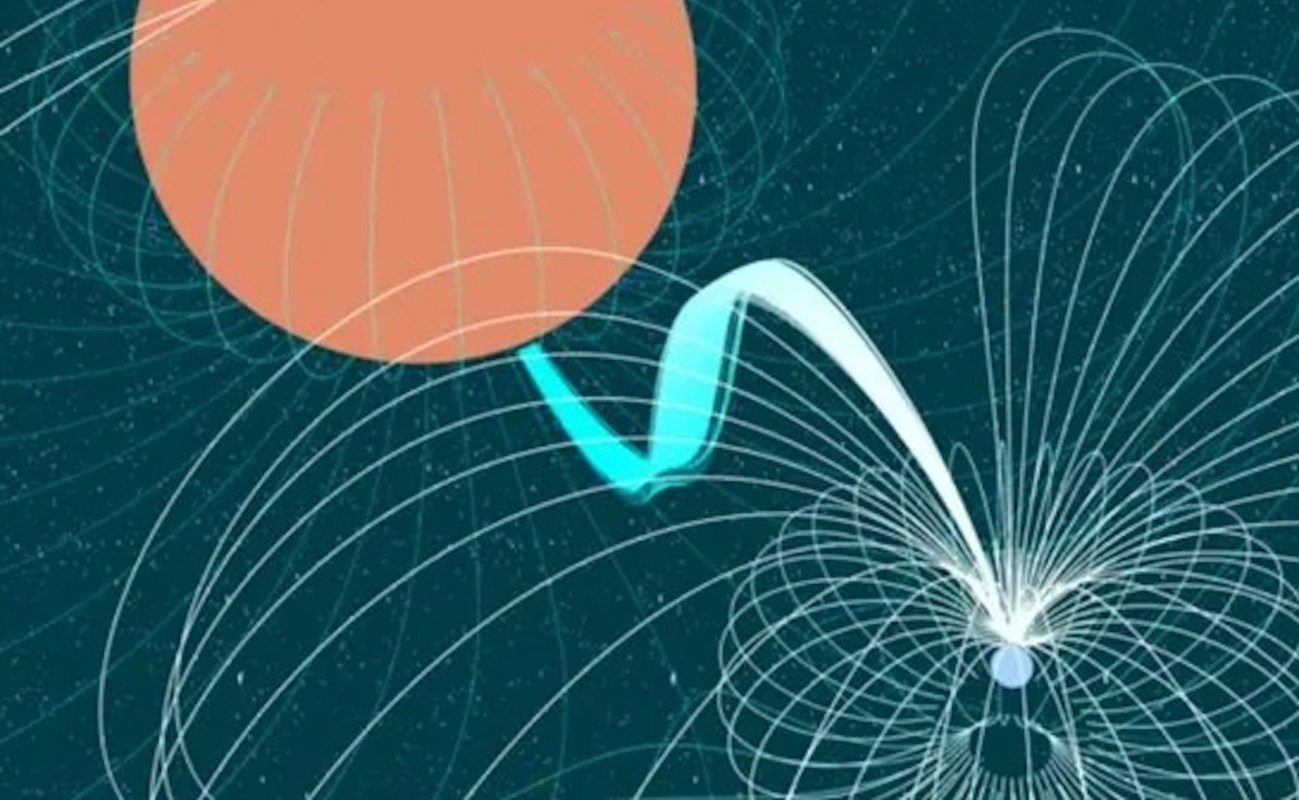
The suspected source is a tightly bound pair of stars, a white dwarf and a red dwarf, that generate bursts when their magnetic fields run into each other during their orbit.
What happened?
According to Space.com, researchers in Australia linked one example of a long-period radio transient to a binary system known as ASKAP J1745-5051.
Astronomers have been trying to understand these transients since they were identified in 2005. Unlike most radio bursts, which die out within seconds or less, these signals can last for minutes and sometimes more than an hour.
Using the Australian SKA Pathfinder radio telescope, the scientists traced the signal to a white dwarf — the dense remnant core left behind by a sun-like star — that is drawing material from a nearby red dwarf.
The two objects orbit each other every 1.4 hours, and the stretched shape of that orbit periodically brings them near enough for their magnetic fields to collide.
TCD Picks » Quince Spotlight
💡These best-sellers from Quince deliver affordable, sustainable luxury for all




Researchers said those magnetic encounters seem to strip charged particles from the stars and guide them along magnetic field lines, producing the radio emission.
The binary also gives off X-rays, but those do not reach their strongest levels at the same time as the radio bursts, which suggests the two forms of emission originate in different parts of the system.
Why does it matter?
The result gives scientists a stronger explanation for at least some of the universe's strangest radio emissions.
"Long-period radio transients have puzzled astronomers for years," lead researcher Kovi Rose said. "Now we've been able to show that the source for one of these transients comes from a white dwarf actively pulling material from a companion star."
For years, astronomers suspected magnetars — ultra-magnetic neutron stars — could be responsible for these emissions. This new result suggests that at least some of them come from a very different kind of system.
That distinction helps researchers better sort out what they are seeing in the sky instead of grouping several different phenomena into a single category.
"This system gives us a way to decode these signals," Rose said, "It could help us determine whether other long-period transients are more like pulsars or like white dwarf systems, acting like a stellar Rosetta Stone."
In practical terms, more accurate signal classification can make telescopes more effective and help scientists avoid spending time chasing the wrong explanations. It can also improve the tools used to process faint and messy deep-space data, work that can influence imaging, sensing, and signal-analysis technologies more broadly.

Get TCD's free newsletters for easy tips, smart advice, and a chance to earn $5,000 toward home upgrades. To see more stories like this one, change your Google preferences here.






