


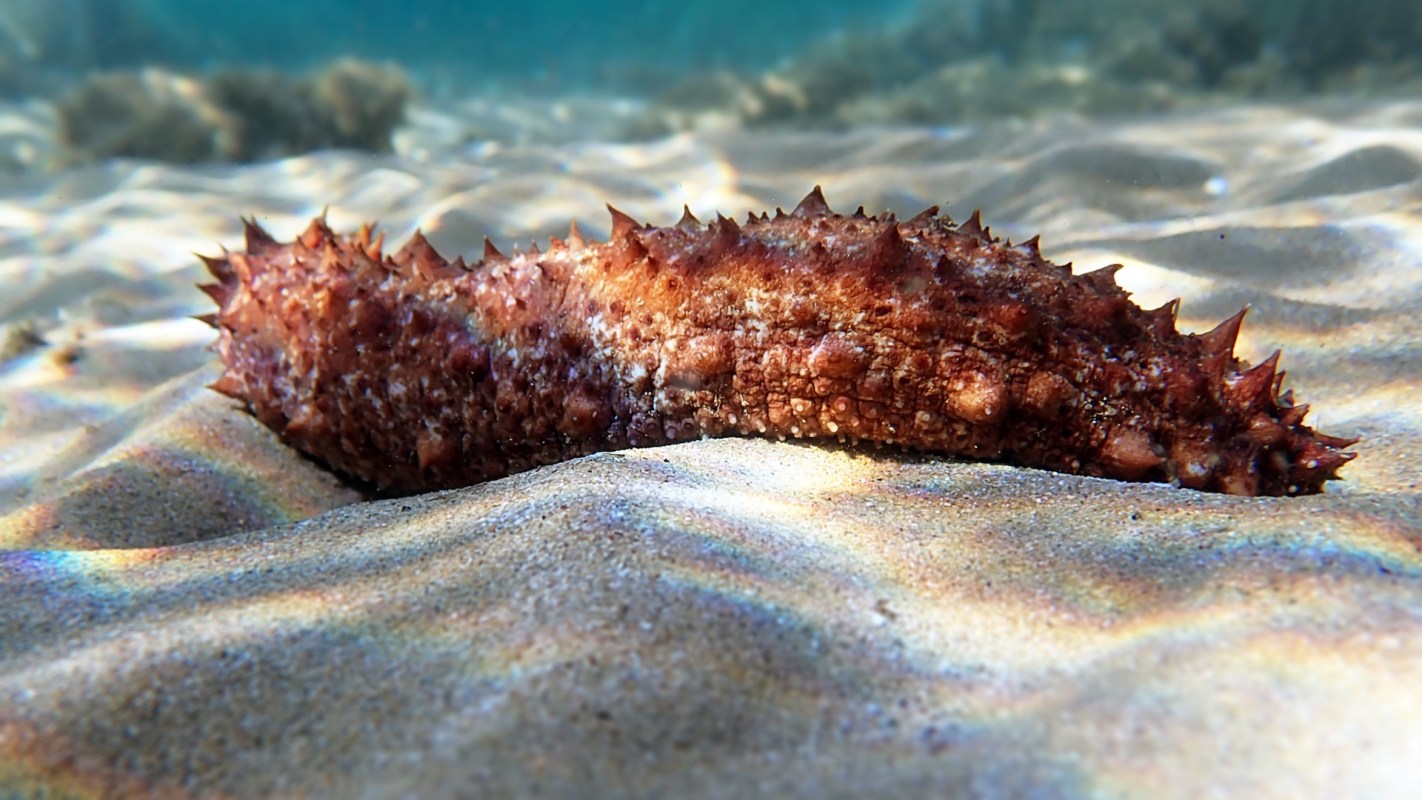
Sea cucumbers are having an unlikely viral moment after scientists discovered that tissue cut from their bodies can continue to live on its own for years, fascinating people interested in animal longevity and regeneration.
The discovery, described in a study published in the peer-reviewed journal Science Advances, centers on the scarlet sea cucumber, a species that may possess one of the strangest survival abilities ever documented.
In experiments on the sea cucumber, Canadian scientists removed fragments from the animal's tube feet and tentacles. These pieces of tissue taken from the body stayed alive instead of dying, and even after three years in natural running seawater, they still had not broken down.
Rather than simply persisting, the detached tissue kept functioning. It healed, absorbed nutrients from seawater, and reorganized itself, while immune, metabolic, and cellular activity continued.
Some isolated tentacles also still reacted to touch, suggesting that a neural network had been preserved.
The research team explained the importance of its findings, writing that the results "challenge conventional perceptions of tissue immortality and present a new class of experimental model, free from ethical concerns, with substantial implications for regenerative biology, biomedical research, and tissue engineering."
TCD Picks » Quince Spotlight
💡These best-sellers from Quince deliver affordable, sustainable luxury for all




Additionally, according to the team, the discovery creates "a redefinition of what it means for tissue to be alive."
One of the study's authors, marine biogeochemist Rachel Sipler, described the finding to Science Alert as unusual, saying, "It's like a lizard that loses its tail. We know some lizards can grow new tails; we're talking about whether the tail can grow a new lizard."
Scientists have produced immortal cell lines in controlled laboratory conditions before, but maintaining intact animal tissue for years is far harder. What makes the result even more striking is that the tissue endured in natural seawater, not in a tightly sterilized lab setting.
Sipler also noted to the outlet that, "Natural seawater is just about the most microbially diverse, least clean approach we could take experimentally, yet, that same rich environment full of bacteria and all this organic matter was actually feeding them and allowing this tissue to heal and grow."

Get TCD's free newsletters for easy tips, smart advice, and a chance to earn $5,000 toward home upgrades. To see more stories like this one, change your Google preferences here.






