


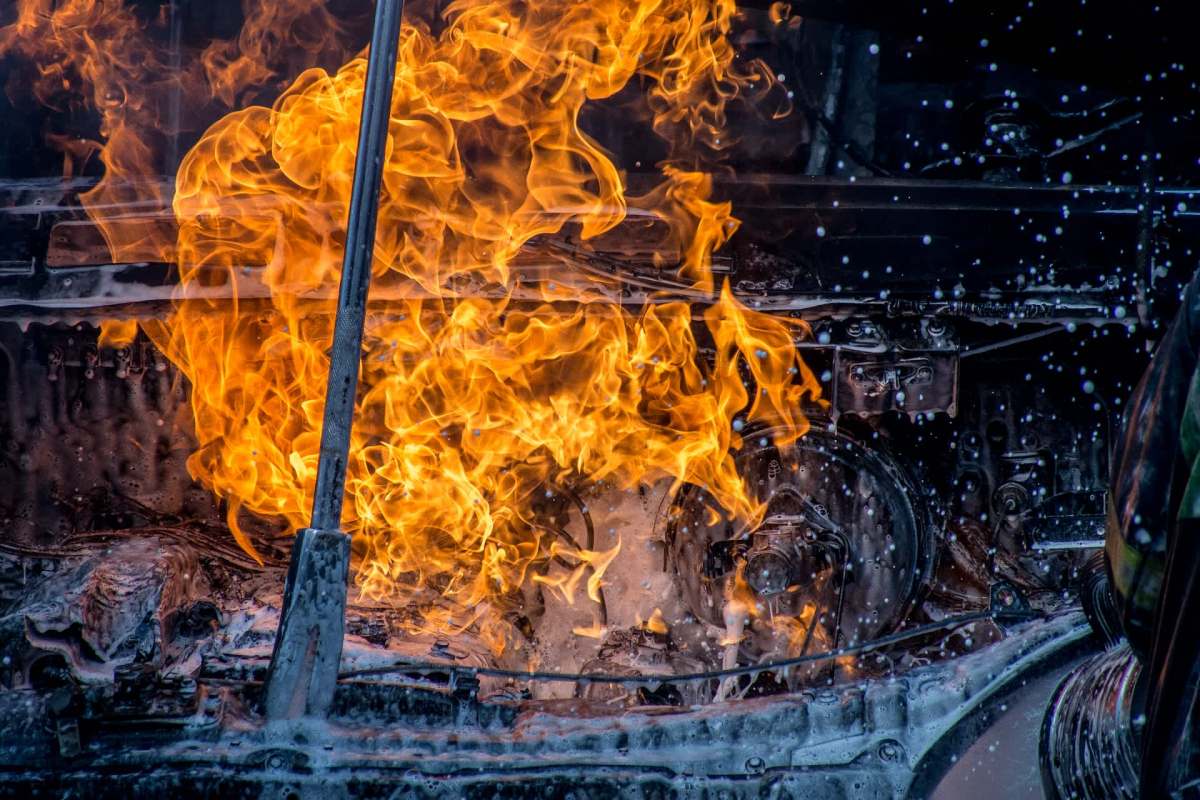
Even when an electric vehicle no longer appears to be burning, it can reignite hours later.
A recent training video makes it clear that fires involving EV battery packs must be handled differently from the vehicle fires most people know, according to Autoblog.
What's happening?
StacheD Training recently focused on a major EV hazard: a lithium-ion battery can enter thermal runaway, and that chain reaction may keep going after the visible flames are gone.
Because the problem continues inside the battery, common agents like foam or dry chemicals may do little to stop it. Crews often have to apply very large amounts of water so the pack cools enough to avoid flaring up again.
The car may look stable from the outside while the battery remains dangerously hot inside.
If responders leave before the heat is fully removed, the fire can return long after the incident seems to be finished.
TCD Picks » Quince Spotlight
💡These best-sellers from Quince deliver affordable, sustainable luxury for all




That makes for a more complicated and prolonged emergency than a typical gas-powered vehicle fire.
Why does it matter?
The greatest danger is not only the burning vehicle itself but also everything around it.
If a battery pack is not sufficiently cooled, residual heat can quickly spread to nearby vehicles or structures.
Another major concern is toxic smoke. It can pose a serious threat to civilians who try to help without proper protective equipment or who use ordinary fire blankets without the necessary follow-up water cooling.
This issue becomes more relevant as EVs become more common in residential parking garages, automotive shops, and fleet operations. Local emergency response systems are still adapting to these newer vehicles.
EV safety is not only about car design. It also depends on whether emergency responders have the training, access to water, and specialized equipment needed to protect the broader community.
What's being done?
Engineers and battery experts are developing new suppression systems designed to halt thermal runaway sooner, ideally before it breaches the battery enclosure and becomes a larger fire.
Until those technologies become more widely available, preparation remains the most immediate solution. Fire departments need updated training, clearer response protocols, and equipment built specifically for lithium-ion battery incidents.
Auto repair shops and fleet operators can review their emergency plans, especially if EVs are routinely parked or serviced on-site. Understanding where vehicles are stored and how cooling operations may need to unfold could make a significant difference in a real emergency.
If an EV fire seems finished, that appearance can be misleading. Until improved suppression tools are more widely used, sufficient cooling remains necessary to prevent reignition.

Get TCD's free newsletters for easy tips, smart advice, and a chance to earn $5,000 toward home upgrades. To see more stories like this one, change your Google preferences here.






